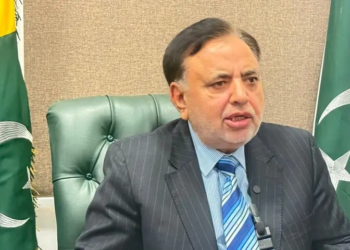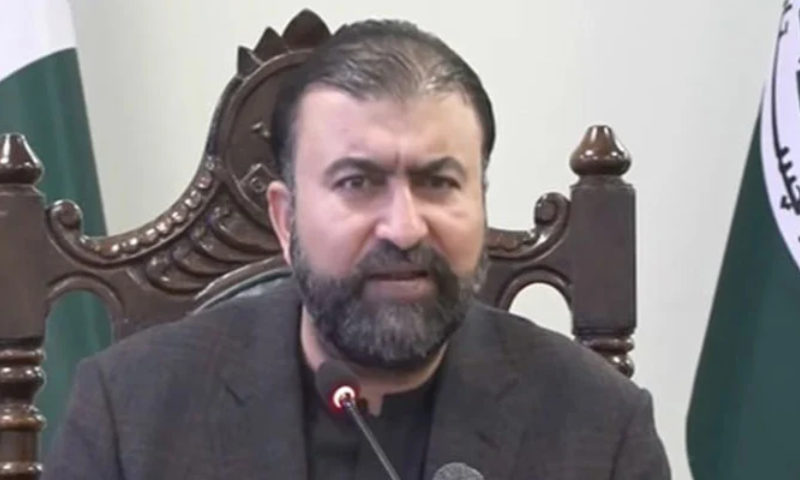
Quetta, February 1, 2026: Balochistan Chief Minister Sarfraz Bugti on Sunday vowed to eliminate terrorism from the province following a spate of coordinated attacks, revealing that 145 militants were killed within a span of 40 hours during intelligence-based operations.
Addressing a press conference in Quetta, CM Bugti said the bodies of the killed terrorists were in the custody of authorities, calling it the highest number of militant casualties since Pakistan began its war on terror. “This is the highest number since Pakistan is facing this war on terror,” he said.
According to the military’s media wing, the Inter-Services Public Relations (ISPR), terrorists belonging to what the state has designated as Fitna-al-Hindustan carried out multiple attacks across Balochistan on Saturday. In response, security forces killed 92 terrorists. The designation is used by the state to highlight India’s alleged role in terrorism and destabilisation efforts in Pakistan.
CM Bugti said that 17 law enforcement personnel, including police, Frontier Corps (FC), and one Navy official, were martyred, while 31 civilians were killed or injured. Earlier, ISPR had reported that 15 security personnel were martyred and 18 civilians, including women and children, were killed during the attacks.
Federal Interior Minister Mohsin Naqvi, accompanied by the Balochistan chief minister and the corps commander, visited injured policemen at the Combined Military Hospital in Quetta on Sunday.
The chief minister said the government shared the grief of the bereaved families and assured that the welfare of the martyrs’ children was the responsibility of the state. He disclosed that intelligence reports had indicated the planning of large-scale attacks, prompting pre-emptive operations a day earlier in Shaban and Panjgur, where around 40 terrorists were killed.
He said the terrorists had planned to attack Quetta from Shaban but were thwarted due to heightened vigilance by security forces. Describing the Gwadar incident as the “most painful,” CM Bugti said five women and three children were killed there and later played video statements of injured victims during the press conference.
Bugti accused India of directing terrorist elements, alleging that militants were using the Baloch population on India’s instructions. “Whenever Pakistan begins to take off economically or on foreign fronts, attempts are made to destabilise the country through such attacks,” he said.
He revealed that terrorists had planned to enter the Red Zone and occupy key assets, a plan that was foiled. Nushki, where disengagement took some time, was now “completely clear,” he added. Tracing and combing operations were ongoing, with the chief minister vowing that militants would not be allowed to escape.
Responding to reports about the abduction of the Nushki deputy commissioner, CM Bugti confirmed the official was safe and had escaped. He also rejected claims that any city was taken over, saying no bank was looted and normalcy prevailed.
Bugti said terrorists were using children as human shields while attempting to target a police station and strongly criticised efforts to portray terrorism as a political issue. He rejected dialogue with the Balochistan Liberation Army (BLA), stating that rationalising violence in the name of ethno-nationalism amounted to direct support for terrorism.
“We are not ready to surrender even for a second. We will fight this war for a thousand years,” he asserted, adding that Pakistan could not be broken by such attacks or by those backing them.
The chief minister said the state had kept the door open for talks only due to decades-long confusion in national discourse but stressed that terrorists were terrorists, not “Baloch terrorists.” He emphasised that operations in the province were intelligence-driven and not full-scale military operations.
Bugti accused India’s Research and Analysis Wing (RAW) of backing terrorist activities, claiming authorities had solid and circumstantial evidence. He said arms left behind after the US withdrawal from Afghanistan had entered black markets and were being supplied to militants.
He also blamed the post-2018 policy of appeasement for the resurgence of terrorism, asserting that there should be no appeasement for those who take up arms against the state.
Separately, Defence Minister Khawaja Asif said peace had been restored in Balochistan and security forces were conducting a “mopping-up operation.” Speaking in Sialkot, he said coordinated attacks had been fully repulsed, including attempts to target FC headquarters in Nushki and Dalbadin.
Asif alleged Indian involvement, saying intelligence and confessional statements proved linkages. He also revealed that the BLA was now using female suicide bombers, including in attacks in Pasni, and accused handlers based in Afghanistan of indoctrinating women and children.
Minister of State for Interior Tallal Chaudhry, in a separate statement, said terrorists were using civilians as human shields, forcing security forces to act with caution. He dismissed claims circulating on social media that militants had taken control of areas, calling them false and, in some cases, AI-generated narratives amplified by Indian media.
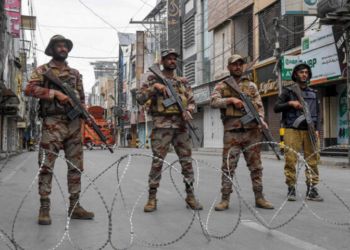
In response to the attacks, the Balochistan government imposed a one-month ban on gatherings of more than five people, covering faces in public, pillion riding, tinted vehicle windows, and the use of unregistered vehicles under Section 144 of the Criminal Procedure Code.
Meanwhile, the United States, Iran, France, the European Union, and several other countries condemned the attacks. US Chargé d’Affaires Natalie Baker said Washington strongly condemned the January 31 attacks claimed by the BLA, a US-designated Foreign Terrorist Organisation, and reaffirmed solidarity with Pakistan.
Iran’s embassy expressed condolences and condemned terrorism in all forms, while the French embassy and the EU also issued statements rejecting terrorism and offering sympathies to victims and their families.