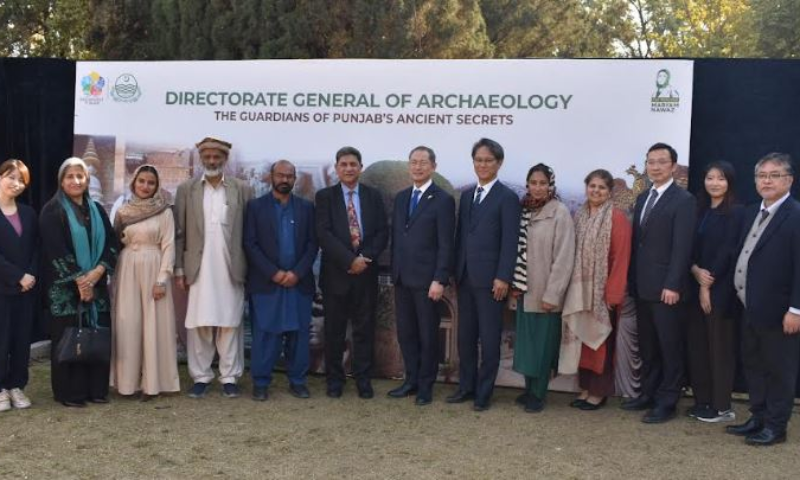
Islamabad, February 4, 2026: The Government of Japan, through the Japan International Cooperation Agency (JICA), has completed the provision of exhibition and conservation equipment to the Taxila Museum under the grant assistance project titled “Improvement of Equipment for Exhibition and Conservation of the Taxila Museum.” The assistance, amounting to 48.8 million Japanese Yen, reflects Japan’s continued commitment to preserving Pakistan’s cultural heritage.
Speaking on the occasion, Japanese Ambassador Akamatsu Shuichi highlighted the historical and spiritual significance of Taxila as a center of the Gandhara civilization and noted its close cultural connection with Japan. He expressed hope that the initiative would pave the way for further collaboration, including archaeological projects.
The ambassador emphasized that Japan intends to continue efforts aligned with the vision of Dr. Satoshi Naiki, a professor at Aichi Prefectural University and an expert on Gandhara civilization, to revive archaeological missions in Pakistan aimed at discovering, preserving, and promoting Gandhara heritage.
Representing Zaheer, Director General of Archaeology, Government of Punjab, Chief Conservationist of Punjab Archaeology Maqsood Ahmed Malik conveyed sincere appreciation to the Government of Japan and JICA for their generous support. He said the newly provided equipment would strengthen the museum’s capacity for modern exhibitions, scientific conservation, and long-term preservation of valuable artifacts, while also supporting academic research and public education.
JICA Pakistan Chief Miyata underscored the vital role museums play in safeguarding cultural heritage and fostering mutual understanding among nations. He expressed confidence that the project would help improve conservation standards, promote cultural tourism, and ensure sustainable heritage management.
The handover ceremony reaffirmed the strong and enduring partnership between Japan and Pakistan, highlighting their shared commitment to cultural cooperation, heritage conservation, and enhanced people-to-people exchanges.