Islamabad, February 12, 2026: Amid rising tensions with Kabul, Pakistan on Thursday reiterated its call for the Afghan Taliban regime to take concrete measures against terror groups operating from Afghan soil.
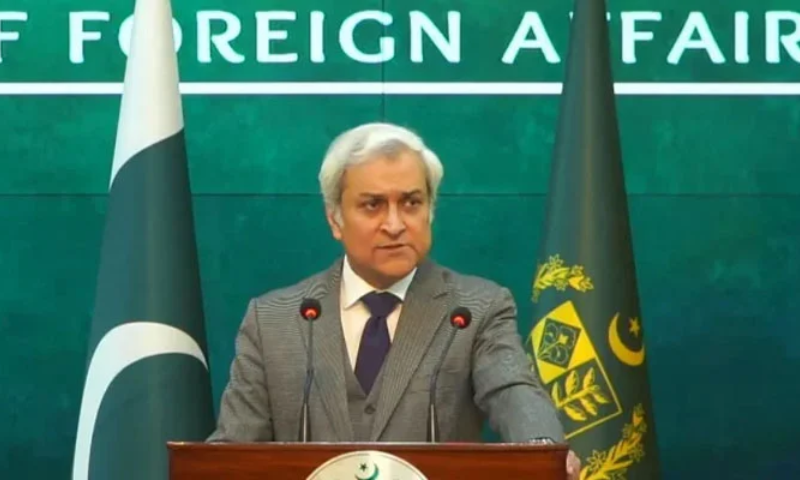
In his weekly press briefing, Foreign Office spokesperson Tahir Andrabi emphasized that Pakistan remains committed to diplomacy, stating, “Diplomacy continues even in wars. Diplomacy continues even during skirmishes.” He stressed that Pakistan seeks peace and prosperity for “our Afghan brothers and sisters” while addressing security concerns related to cross-border terrorism.
Referring to the recent United Nations Security Council (UNSC) report, Andrabi said the document validated Pakistan’s concerns regarding the Tehreek-e-Taliban Pakistan (TTP) and the permissive environment reportedly provided by the interim Afghan government. The report noted that al-Qaeda continues to operate as a facilitator for other armed groups and that the TTP enjoys operational freedom in Afghanistan, enabling attacks inside Pakistan. Andrabi highlighted that the TTP’s resurgence is linked to the post-2021 interim government takeover in Kabul, and Pakistan is engaging with the UN and international stakeholders to address the issue.
On regional diplomacy, the spokesperson confirmed that Prime Minister Shehbaz Sharif will attend the inaugural meeting of the Board of Peace on February 19, accompanied by Deputy Prime Minister and Foreign Minister Ishaq Dar. Pakistan’s participation, he said, represents a collective voice of eight Islamic countries advocating for peace and the progress of Palestine.
Addressing India, Andrabi criticized the External Affairs Ministry’s statement following the recent Islamabad blast, saying it reflects “an undertone of justification of terrorism” against Pakistan. He highlighted the ongoing lynching of Muslims in India, citing 55 cases last year, and urged the Indian government to investigate these incidents while calling on the international community to monitor the situation. He noted that Hindutva-driven narratives increasingly portray Muslims as outsiders, facilitating targeted violence.
On other matters, Andrabi welcomed US mediation during last year’s India-Pakistan 90-hour conflict, asserting that Pakistan successfully shot down several Indian Rafale jets, corroborated by international reports and the aircraft manufacturers. He expressed support for Iran-US diplomatic talks aimed at resolving outstanding issues, including nuclear negotiations.
Responding to queries about sports diplomacy, he said Pakistan’s decision to play a T20 match against India demonstrates magnanimity and a commitment to prevent the politicization of cricket, facilitated by efforts from Sri Lanka, Bangladesh, and international cricket authorities.
Andrabi further noted that two joint statements by foreign ministers of eight Muslim states condemned Israeli ceasefire violations in Gaza and unlawful settlement activities in the occupied West Bank, reaffirming their stance on establishing a Palestinian state based on the 1967 borders with Jerusalem as its capital.
Pakistan’s messaging underscores a dual approach of firm security measures coupled with sustained diplomatic engagement, both regionally and internationally.