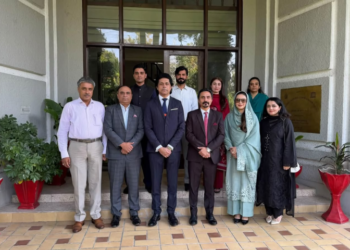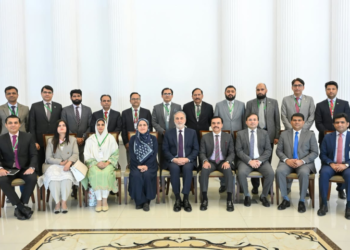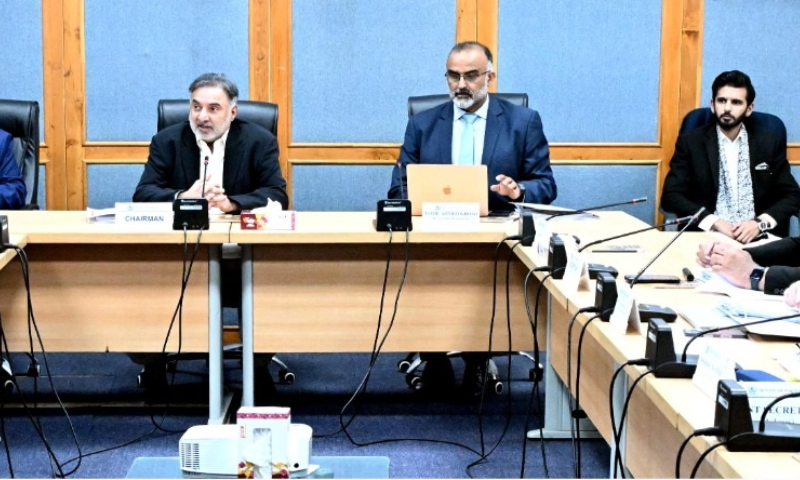
Islamabad, February 19, 2026: The Senate Standing Committee on Water Resources, chaired by Senator Jam Saifullah Khan, conducted a detailed review of water conservation, flood management, groundwater depletion, and institutional performance, concluding that unchecked encroachments, regulatory gaps, and capacity constraints are significantly exacerbating Pakistan’s water crisis. Senators Asad Qasim and Poonjo Bheel were present at the meeting.
The Committee observed that climate change, particularly accelerated glacier melt, has intensified both flood events and long-term water scarcity. Encroachments along natural waterways and floodplains were noted as key obstacles to water flow, amplifying flood damage and undermining national resilience. While Punjab has reportedly removed 2,625 encroachments along irrigation channels, similar challenges persist nationwide. The Committee called for time-bound, coordinated provincial action to clear waterways and enforce zoning laws.
Serious concern was expressed over unauthorized infrastructure development, including bridges reportedly built without approval from the Flood Planning Commission. The Chairman highlighted the high-risk vulnerability of Zameendara Bandh near cultivated areas and directed the Ministry to submit comprehensive provincial data on flood-prone zoning, including a standardized definition of “high risk,” to support evidence-based planning.
Institutional capacity issues were also reviewed. The Ministry of Water Resources reported that 15 of its 33 sanctioned posts remain vacant, a gap termed by the Committee as a structural weakness affecting oversight and implementation. Detailed vacancy data for BPS-16 and above was requested to ensure accountability.
On groundwater management, the Committee highlighted low recharge rates, insufficient reservoirs, and excessive pumping, particularly in urban centers, as systemic threats to water security. Stricter regulatory enforcement and sustainable extraction policies were urged. The Pakistan Council of Research in Water Resources informed the Committee that quarterly water quality monitoring is ongoing and that rainwater harvesting has been made mandatory for new housing societies in Islamabad.
Technological and infrastructure measures were also discussed. SUPARCO is using satellite imagery to identify encroachments and strengthen monitoring, while WAPDA reported that a PC-I for the flood telemetry system is under approval, with 17 operational sites currently providing early warning data. However, technical limitations in discharge calculations during flood events were noted, with immediate rectification directed by the Chairman.
Progress on major water infrastructure projects was reviewed. The Diamer-Bhasha Dam (30% complete) and Dasu Hydropower Project (21% complete), both funded under the PSDP, were described as strategically vital for long-term storage and energy security. The Committee recommended expediting the Hingol Dam to mitigate future flood risks and directed a visit to evaporation ponds in Sindh to address pollution and assess water reserve management.
Concluding the meeting, Senator Jam Saifullah Khan emphasized that Pakistan’s water crisis is not solely a resource issue but a governance challenge requiring integrated planning, strict enforcement of land-use regulations, strengthened institutional capacity, and coordinated federal-provincial action to ensure sustainable and climate-resilient water management.