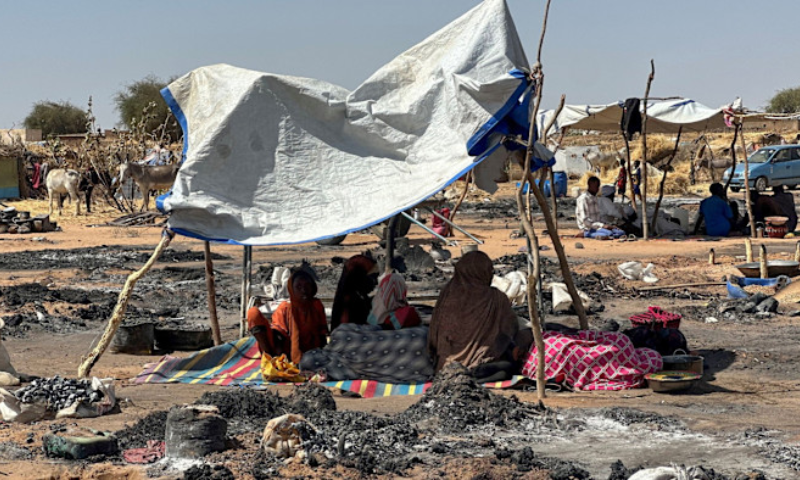
Geneva, February 19, 2026: The UN Human Rights Office has accused Sudan’s Rapid Support Forces (RSF) of committing widespread atrocities amounting to war crimes and possible crimes against humanity during its final offensive to seize the besieged city of El Fasher in October last year.
In a report released on Wednesday, the UN Human Rights Office said the RSF unleashed “a wave of intense violence… shocking in its scale and brutality” as it captured the capital of North Darfur after an 18-month siege. Based on interviews with more than 140 victims and witnesses conducted in Sudan’s Northern State and eastern Chad in late 2025, the report documents over 6,000 killings in the first three days of the offensive.
According to the findings, at least 4,400 people were killed inside El Fasher, while more than 1,600 others died along exit routes as civilians attempted to flee. The UN said the actual death toll over the week-long offensive was likely “significantly higher.”
The report details widespread violations by the RSF and allied Arab militias, including mass killings, summary executions, sexual violence, abductions for ransom, torture, enforced disappearances, pillage, and the recruitment and use of children in hostilities. Many of the attacks were deliberately directed against civilians and persons hors de combat, often based on ethnicity or perceived affiliation.
“These wanton violations underscore that persistent impunity fuels continued cycles of violence,” said Volker Türk, the UN High Commissioner for Human Rights. He called for “credible and impartial investigations” to establish criminal responsibility, including of commanders and superiors, and urged accountability through all available mechanisms, including Sudanese courts, universal jurisdiction in third states, and the International Criminal Court.
The report said there were reasonable grounds to believe the RSF and affiliated militias committed war crimes including murder, indiscriminate and targeted attacks against civilians and civilian objects, starvation of civilians as a method of warfare, attacks on medical and humanitarian personnel, rape and other forms of sexual violence, torture, pillage, and the conscription of children.
UN investigators said the patterns of abuse in El Fasher mirror earlier RSF offensives on Zamzam camp in April 2025 and in El Geneina and Ardamata in 2023, indicating an organized and sustained course of conduct that could amount to crimes against humanity.
The report documented several mass killing incidents, including one on October 26, 2025, when RSF fighters reportedly opened fire with heavy weapons on around 1,000 civilians sheltering at Al-Rashid dormitory of El Fasher University, killing approximately 500 people. Witnesses described bodies being hurled into the air “like a scene out of a horror movie.”
It also found that RSF fighters carried out summary executions of civilians accused of collaborating with the Sudanese Armed Forces and allied Joint Forces, often targeting non-Arab communities such as the Zaghawa. Adolescent boys and men under the age of 50 were particularly singled out.
Sexual violence was described as systematic, with survivors recounting rape, gang rape, abductions involving sexual abuse, and assaults during body searches. Women and girls from Zaghawa and other non-Arab communities were identified as being at heightened risk.
The report further documented widespread abductions for ransom, identifying at least 10 detention facilities run by the RSF in El Fasher, including a former children’s hospital. Poor conditions in these facilities reportedly led to disease outbreaks and deaths in custody, while thousands of people remain missing.
Renewing his call to end the violence, Türk urged parties to the conflict and states with influence to act urgently to prevent further atrocities, including by respecting the existing arms embargo and halting the supply of weapons to the warring sides. He also called for stronger support for local, regional, and international mediation efforts to secure a cessation of hostilities and a pathway toward inclusive civilian governance in Sudan.
“In a protection crisis of this scale, human rights must remain central to efforts to achieve a durable resolution of the conflict,” he said.