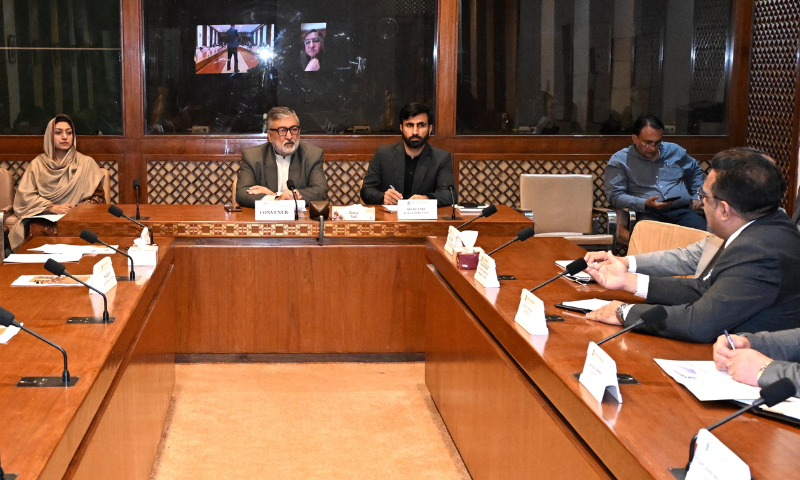
Islamabad, February 25, 2026: A Senate sub-committee on Wednesday directed the National Vocational and Technical Training Commission (NAVTTC) to submit a comprehensive record of its financial management, institutional partnerships and performance outcomes, following an in-depth review of the national technical and vocational education and training framework.
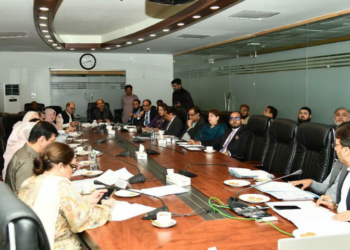
he meeting of the Sub-Committee of the Senate Standing Committee on Federal Education and Professional Training was held at Parliament House and was presided over by Kamran Murtaza. Initiated on the agenda of Rana Mahmood-ul-Hassan, the review examined NAVTTC’s governance structures, funding mechanisms, partner selection processes and employment outcomes over the past five years.
In its briefing, NAVTTC informed the Committee that it serves as the apex national body for policy formulation, regulation and strategic oversight of the technical and vocational education and training sector, operating under the Ministry of Federal Education and Professional Training. The Commission stated that partner institutions are selected through publicly advertised processes, programmes are monitored via independent evaluations, and funds are disbursed in phases against verified enrolments and performance benchmarks.
The Committee reviewed tracer study findings related to the Skills for All initiative and the Prime Minister’s Youth Skill Development Programme. According to the data presented, 53 percent of trainees were employed at the time of the survey, while 47 percent remained unemployed. Among those employed, 38 percent reported monthly earnings exceeding PKR 50,000, while 18 percent earned between PKR 31,000 and PKR 50,000.
Members stressed the need to strengthen post-training employment linkages and improve outcome-tracking mechanisms to enhance job placement rates.
During deliberations, Sarmad Ali raised concerns over the concentration of a Huawei-supported training programme for 2,000 trainees in Lahore, highlighting the importance of equitable provincial representation. NAVTTC clarified that training locations are determined by the corporate partner, while the Commission prioritises achieving a minimum employment rate of 60 percent in such collaborations. Officials added that future programmes are expected in Karachi.
Concluding its deliberations, the Committee directed NAVTTC and ministry officials to submit detailed documentation ahead of the next meeting, including funding allocations, disbursement procedures, lists of partner institutions, programme advertisements and third-party evaluation reports.
Senator Rana Mahmood-ul-Hassan also proposed holding future meetings or field visits in Quetta, Skardu, and Kashmir to assess on-ground implementation. The Convener welcomed the proposal, reaffirming the Sub-Committee’s commitment to effective oversight and balanced provincial representation.
In his concluding remarks, Senator Kamran Murtaza reiterated the Committee’s focus on measurable outcomes, fiscal discipline and transparent governance across all NAVTTC initiatives. The meeting was adjourned with directions for the submission of the requested records at the forthcoming session.