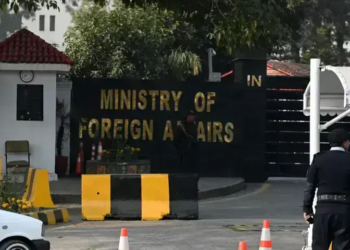
Islamabad, February 26,2026: Pakistan’s recent air strikes against targets inside neighbouring Afghanistan were carried out to ensure the safety of Pakistani citizens and to prevent imminent terrorist attacks, the Foreign Office of Pakistan said on Thursday.
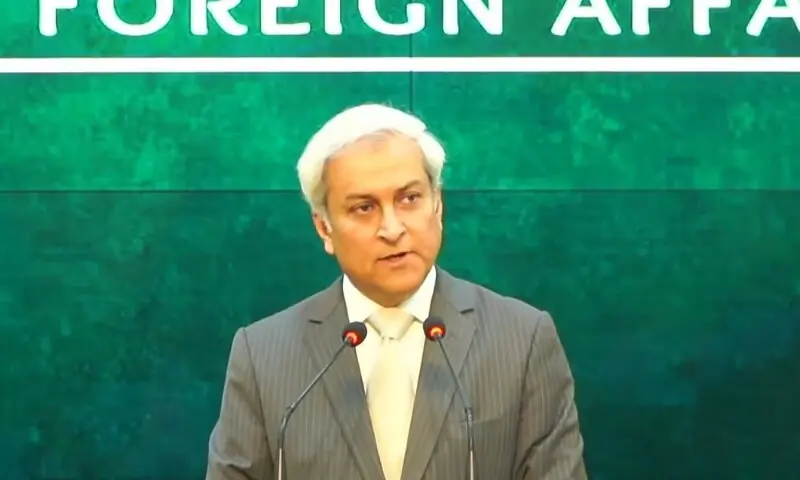
FO spokesperson Tahir Andrabi made the remarks while responding to questions during his weekly press briefing, following Pakistan’s overnight strikes on terrorist camps in Afghanistan’s Nangarhar and Paktika provinces over the weekend. According to officials, more than 80 terrorists were killed in the operation, marking the most extensive military engagement between the two neighbours since border clashes erupted in October last year.
Addressing concerns about civilian casualties and the scale of the operation, Andrabi said the intelligence-based strikes targeted seven identified terrorist camps and hideouts along the Pakistan–Afghanistan border region.
“Let me begin by reiterating that the intelligence-based selective targeting of these terrorist camps and hideouts was primarily to ensure the safety and security of Pakistani citizens and to prevent imminent terrorist attacks against Pakistan, particularly against our law enforcement officials and civilians living near border regions,” he said.
The spokesperson stressed that the strikes were proportional, carefully planned and conducted with due diligence, adding that they were directed solely against terrorist infrastructure. “We exercised utmost caution to prevent any harm to civilians,” he said.
Andrabi recalled statements by the United Nations Security Council condemning terrorist attacks against Pakistan, including the February 6 attack on an imambargah in Islamabad. He said the UNSC had repeatedly underscored the need to hold perpetrators, organisers, sponsors and abettors of terrorism accountable and to bring them to justice, while also urging states to cooperate with Pakistan.
He said Pakistan remained committed to peace in the region and called on the Afghan Taliban authorities to fulfil their obligations. However, he added that Pakistan would take all necessary measures under its right to self-defence against terrorist attacks emanating from Afghan soil.
Responding to questions about the exact locations of the camps and casualty figures, Andrabi referred to the February 21 statement issued by the Ministry of Information, saying he had nothing further to add.
Commenting on India’s response to the strikes, including a statement by its Ministry of External Affairs, the FO spokesperson rejected New Delhi’s remarks, saying they vindicated Pakistan’s long-held position that India continues to aid and abet terrorism in Pakistan through its support for the Balochistan Liberation Army and other militant outfits.
He said Pakistan possessed concrete evidence of India’s involvement in sponsoring and abetting terrorism, adding that recent Indian statements further reinforced this conclusion. Andrabi said Pakistan had conveyed its message of a swift and strong response in self-defence to all international stakeholders and reiterated the demand for action against terrorist outfits operating with impunity from Afghan territory.
On Pakistan–Afghanistan relations, the spokesperson said he was not aware of any structured dialogue between the two countries. Asked about Qatar’s potential diplomatic role, he said the issue may have arisen in a broader context during Prime Minister Shehbaz Sharif’s recent visit to Doha. Referring to the prime minister’s meeting with Qatar’s Emir Sheikh Tamim bin Hamad Al Thani, he said the leaders discussed regional developments and emphasised dialogue, diplomacy and peaceful dispute resolution.
Separately, responding to a question on the 19th anniversary of the Samjhota Express attack, Andrabi expressed Pakistan’s “severe disappointment” over what he termed India’s callousness towards the families of victims still awaiting justice. The February 18, 2007 attack killed 68 people, including 44 Pakistanis, when bombs exploded aboard the Delhi–Lahore train.
The FO spokesperson condemned the acquittal of the accused and demanded a fair trial for the perpetrators, saying the families of victims deserved justice. He alleged that Hindutva-driven extremism had motivated the attack and accused India of duplicity and state sponsorship of terrorism against Pakistan, while routinely engaging in what he described as anti-Pakistan propaganda.