Dubai, March 2, 2026: The United Arab Emirates has vowed to protect its people and critical infrastructure following what it described as “unlawful and unjustifiable” Iranian attacks across the Gulf, even as it continues to push for diplomacy to prevent a wider regional war.
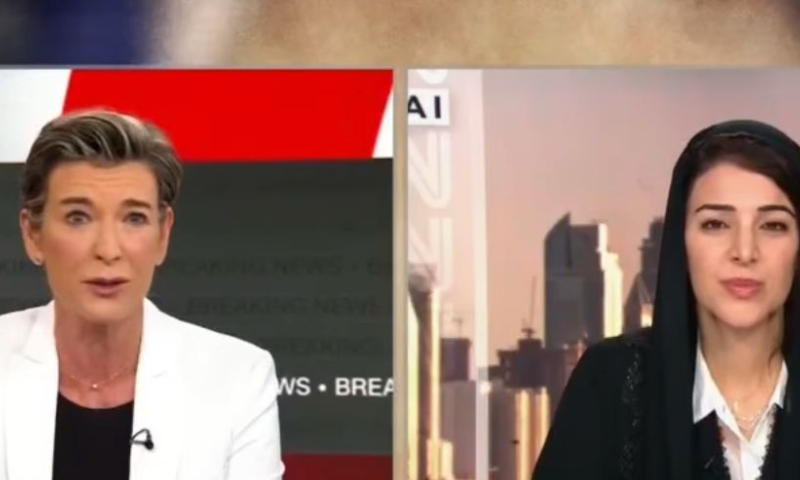
Speaking to CNN’s Becky Anderson from Dubai, Reem bint Ebrahim Al Hashimy, UAE Minister of State for International Cooperation, said the country was facing an unprecedented security situation but remained confident in its defensive capabilities.
“This is something we have tried to avoid for weeks and months by encouraging dialogue and de-escalation,” Al Hashimy said. “Unfortunately, we are now in a situation where Iran has taken very unjustifiable and unlawful measures, not just against the UAE, but against the wider Gulf and beyond.”
Al Hashimy confirmed that the UAE’s air and missile defence systems had intercepted more than 137 ballistic missiles and over 200 drones, describing the loud explosions heard by residents as largely the result of interception rather than direct hits.
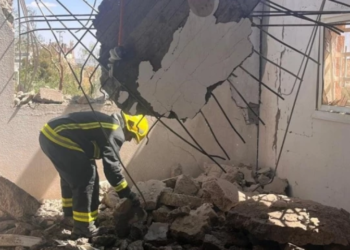
“Where there has been damage, it has primarily been from debris,” she said, urging calm among citizens and expatriates. “We have one of the best air-to-missile defence systems in the world, and we are doing everything to ensure people remain safe and secure.”
Iranian threats intensified following the killing of Supreme Leader Ali Khamenei, with Tehran warning of what it called the “heaviest offensive in its history.” While earlier threats focused on U.S. military bases, Al Hashimy noted that attacks had widened to include civilian infrastructure, including hotels, raising serious concerns.
Asked how much worse the situation could become, Al Hashimy said the UAE was preparing for all scenarios while continuing to urge restraint.
“We do not want further escalation. We are calling for calm and measured responses,” she said. “But rest assured, we will leave no stone unturned to defend ourselves if it comes to that.”
She added that the UAE was in constant coordination with international partners and had received strong assurances of support, alongside “severe condemnation” of attacks that have drawn other Gulf states into the conflict.
Al Hashimy reiterated that the UAE had long opposed allowing its territory to be used for attacks against Iran, stressing that the region “doesn’t need another war.” However, she warned that continued Iranian aggression could force a shift in posture.
“We have always wanted dialogue. But if it needs to come to that, it will come to that,” she said. “The ball is in Iran’s court right now.”
Despite the assassination of Khamenei and growing uncertainty over Iran’s leadership, Al Hashimy insisted diplomacy remained the only viable path forward.
“The door for diplomacy never closes,” she said. “But it takes two to tango. What we are seeing now is a massive escalatory measure that is not indicative of a country that wants to live peacefully with its neighbours.”
Asked about comments by U.S. President Donald Trump, who said he knew “exactly who is in charge” in Iran, Al Hashimy stressed that Iran’s future governance was for its own people to decide.
“The UAE does not interfere in how countries choose their governments,” she said. “We want a friendly neighbour that can live side by side with us.”
In a direct message to UAE residents, Al Hashimy sought to reassure both nationals and expatriates amid rising anxiety.
“You are safe with a leadership that truly cares for you,” she said, praising defence forces, police and civil defence teams for their response. “We are loud because we are intercepting threats, but compared to many other war zones, we are safe.”
As the Gulf braces for further uncertainty, the UAE’s message remains a careful balance: preparedness for confrontation, but an unrelenting call for de-escalation and diplomacy in a region already scarred by conflict.