Washington/Tehran, June 3, 2026: US President Donald Trump said on Wednesday that Iran had agreed not to develop nuclear weapons and suggested that he could meet Iran’s Supreme Leader, Mojtaba Khamenei, in the future if ongoing negotiations between the two countries produce positive results. His remarks came amid a sharp escalation in tensions across the Gulf region, including fresh military exchanges, attacks on critical infrastructure, and renewed diplomatic efforts to prevent the conflict from spiralling further.
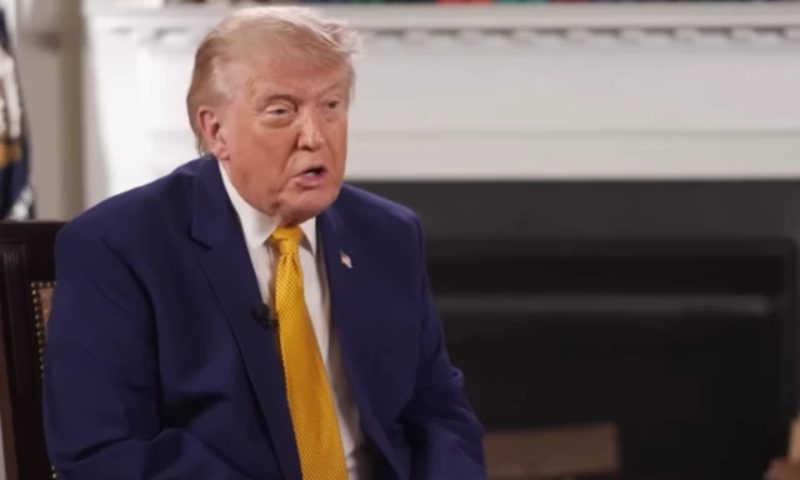
Speaking during an interview on the New York Post’s “Pod Force One” podcast, Trump said Tehran had already accepted a key American demand regarding its nuclear programme.
“They’ve already agreed they’re not going to have a nuclear weapon,” Trump said, expressing confidence that negotiations remained active despite recent hostilities.
The US president stated that Supreme Leader Mojtaba Khamenei was directly involved in discussions concerning the future of relations between Washington and Tehran and the broader effort to stabilize the region.
“He’s involved, absolutely. I think they have a lot of respect for him,” Trump said.
Asked whether he would be willing to meet the Iranian leader personally, Trump responded positively.
“I’d like to meet him. We probably will meet at some point, depending on how it all works out,” he remarked.
Trump also rejected suggestions that Iran currently holds a strategic advantage in the conflict.
“Iran has no navy. They have no air force. They have very few soldiers. They have no leadership,” he said. “Their economy is crashing. They have 250 per cent inflation. They have everything that you can have that’s bad.”
Commenting on the ongoing disruption in the Strait of Hormuz, one of the world’s most important energy corridors, Trump said he expected the situation to improve soon.
“I think this will resolve itself fairly quickly,” he said, while asserting that the United States was achieving “great success” militarily.
The president described the conflict as a success from Washington’s perspective and maintained that preventing Iran from acquiring a nuclear weapon remained his administration’s top priority.
“Iran’s a big success. We’ll see what happens. We’re working on a deal, and that happens fine. If it doesn’t happen, that’s OK too. We’ll do it the other way,” Trump said, in an apparent reference to the possibility of renewed military action.
Trump also rejected claims that Israeli Prime Minister Benjamin Netanyahu had influenced his decision to launch military operations against Iran.
“He tricked me? I’m the one that started it,” Trump said. “We can’t let them have a nuclear weapon.”
The US president further claimed that without his actions, Israel’s security would have been seriously compromised.
“If there wasn’t me, there would be no Israel right now,” he asserted.
At the same time, Trump revealed growing frustration with Israel’s continued military operations in Lebanon.
Referring to reports of a heated conversation with Netanyahu earlier this week, Trump said he had urged the Israeli premier to seek de-escalation.
“At some point, Bibi, we gotta stop this,” Trump said, adding that he remained on good terms with the Israeli leader despite differences over military operations.
The remarks came as hostilities intensified across the Gulf despite ongoing diplomatic contacts and a fragile ceasefire arrangement that has repeatedly come under strain.
Iran’s Foreign Ministry on Wednesday strongly condemned what it described as American attacks on an Iranian oil tanker in the Strait of Hormuz and a telecommunications facility on Qeshm Island.
Tehran said the strikes violated international law and breached understandings reached under previous ceasefire arrangements.
The ministry further accused Kuwait and Bahrain of facilitating American military operations, alleging that their territories and facilities had been used to support attacks against Iran.
Iran warned that it reserved the right to respond to future attacks and would employ all available means to defend its sovereignty.
In a strongly worded statement, Tehran declared that any country allowing its territory, airspace or facilities to be used for military operations against Iran would bear responsibility for the consequences.
The Islamic Revolutionary Guard Corps (IRGC) claimed responsibility for missile and drone attacks targeting American military assets in the Gulf region, saying the operations were carried out in response to recent US strikes.
According to Iranian state media, the IRGC launched attacks against facilities associated with the US Fifth Fleet and military installations in the region after what Tehran described as American aggression against Iranian civilian and commercial infrastructure.
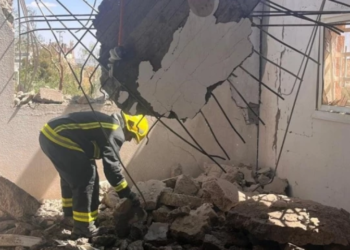
The escalation reached Kuwait, where authorities reported significant damage following Iranian drone and missile strikes.
Kuwaiti officials said attacks on Kuwait International Airport caused casualties, injuries and damage to vital facilities, prompting the temporary suspension of flight operations.
The Ministry of Health reported that dozens of people were injured during the attacks, while emergency teams conducted multiple major surgeries.
Although airport operations were later partially restored, the attacks heightened concerns about regional stability and the safety of civilian infrastructure.
Bahrain also reported intercepting several Iranian missiles and drones targeting sites within the kingdom.
Bahraini defence authorities accused Iran of continuing hostile actions against civilian facilities and urged residents to remain vigilant.
The latest developments prompted strong reactions from neighbouring Gulf states.
Qatar condemned attacks on civilian targets in Kuwait and Bahrain, describing them as violations of international law and humanitarian principles.
Doha called for immediate de-escalation and expressed solidarity with both countries.
Saudi Arabia also intensified diplomatic engagement, with Foreign Minister Prince Faisal bin Farhan holding consultations with Qatari Prime Minister and Foreign Minister Sheikh Mohammed bin Abdulrahman Al Thani regarding the deteriorating security situation.
China joined international calls for restraint, urging both Washington and Tehran to honour ceasefire commitments and continue negotiations.
Chinese Foreign Ministry spokesperson Mao Ning warned that renewed warfare served no one’s interests and stressed the need for a comprehensive and lasting ceasefire.
Meanwhile, Iranian officials maintained that while Tehran remained open to negotiations, it did not trust American assurances.
Deputy Speaker of the Iranian Parliament Mojtaba Nikzad said Iran would negotiate if necessary but would not rely on US promises.
“We will negotiate if necessary, but we do not trust any promises from the Americans,” he said.
Senior Iranian political and military figures also vowed that Iran would continue resisting what they described as American and Israeli aggression.
Mohsen Rezaee, a senior member of Iran’s Expediency Discernment Council and former IRGC commander, warned that any future attacks would be met with a stronger response.
“The response to every shot and aggression will be a barrage of missiles and drones,” he said.
The Iranian armed forces issued a separate statement marking the anniversary of the death of Islamic Republic founder Ayatollah Ruhollah Khomeini, pledging to defend the country and the ideals of the Islamic Revolution “to the death.”
The latest military exchanges have further complicated diplomatic efforts aimed at ending a conflict that began following US-Israeli strikes on Iran on February 28 and subsequently expanded across the Middle East.
The conflict has resulted in thousands of casualties, disrupted global energy markets, affected international shipping through the Strait of Hormuz, and triggered broader regional instability.
Oil prices rose following the latest escalation, reflecting market concerns over potential disruptions to energy supplies from the Gulf.
Despite the deteriorating security environment, both Washington and Tehran continue to signal interest in negotiations.
Trump insisted that talks had not stopped, while Iranian officials confirmed that diplomatic channels remained open, although significant differences persist regarding sanctions relief, maritime security, regional military activities and the future of Iran’s nuclear programme.
With military tensions continuing alongside diplomatic engagement, regional and international actors are increasingly focused on preventing a wider conflict that could further destabilise the Middle East and disrupt global energy markets.