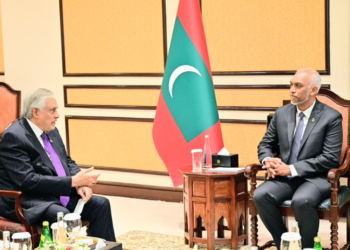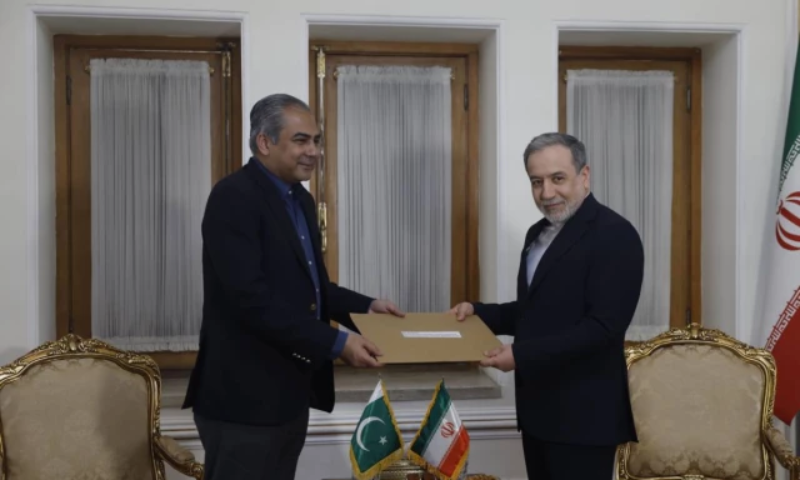
Tehran/Islamabad/Washington, June 7, 2026: Pakistan’s Interior Minister Mohsin Naqvi held talks with Iranian Foreign Minister Abbas Araghchi in Tehran on Sunday, with discussions focusing on bilateral cooperation, regional security, and ongoing diplomatic efforts involving Iran and the United States.
Pakistan-Iran engagement
According to Iran’s state news agency IRNA, Naqvi arrived in Tehran on Saturday carrying what Iranian media described as an important message from Pakistan’s Chief of Defence Forces Syed Asim Munir for Iran’s Supreme Leader Mojtaba Khamenei.
Iranian broadcaster Press TV reported that Naqvi was received by Interior Minister Eskandar Momeni
before meeting Araghchi. Sources familiar with the visit said Prime Minister Shehbaz Sharif had also provided Naqvi with special instructions concerning regional diplomacy and ongoing Iran-US discussions.
The visit is being closely watched by regional observers as Pakistan continues to position itself as an active diplomatic interlocutor between Tehran and Washington.
Iran’s Foreign Ministry spokesman Esmaeil Baghaei said the biggest obstacle in negotiations with the United States was Washington’s changing and contradictory positions.
“The main problem of negotiating with this administration is that you have to face so many changing positions, moving the goal posts, different statements, contradictory remarks by different officials,” Baghaei said in remarks to CNN in Tehran.
Baghaei said communication between the two sides was continuing through Pakistani mediation channels and insisted that any agreement must recognize Iran’s rights under international treaties, including the right to peaceful nuclear enrichment.
He also criticized the US stance on Iran’s frozen assets, arguing that Washington was unwilling to make meaningful concessions while discussing access to billions of dollars held abroad.
What are Iran’s frozen assets?
These are Iranian government funds and investments held in foreign banks or financial institutions that have been restricted by sanctions and legal measures. Tehran has long sought access to these funds as part of broader negotiations with Washington.
Meanwhile, a source familiar with US deliberations said Washington was examining ways to use Iranian assets to help compensate Gulf allies for damage caused by Iranian attacks.
The source said Treasury Secretary Scott Bessent had directed officials to assess reconstruction and repair costs in Gulf states affected by recent Iranian strikes.
The prospect of redirecting Iranian assets could become another point of contention in already difficult negotiations.
Ceasefire remains fragile
Although the United States and Iran remain engaged in indirect talks aimed at ending months of conflict, the situation on the ground remains volatile.
US forces reportedly struck Iranian coastal radar sites near the Strait of Hormuz after intercepting Iranian drones that were said to threaten maritime traffic.
Iran later claimed it retaliated against US bases in Kuwait and Bahrain with ballistic missiles. Gulf governments condemned the attacks, while the US military said most projectiles were intercepted.
The strait is one of the world’s most important energy chokepoints. A significant share of global oil and liquefied natural gas shipments passes through it, so disruptions there can affect fuel prices worldwide.
Oil markets watching OPEC+
Energy markets are also focused on an OPEC+ meeting on Sunday, where producers are expected to consider another increase in output quotas.
However, analysts say ongoing conflict in the Gulf is limiting several producers’ ability to raise actual exports, reducing the effectiveness of any announced increase.
Fighting continues in Lebanon
In a parallel conflict, hostilities between Israel and Hezbollah continue despite ceasefire efforts.
The Israeli military said it intercepted two projectiles launched from Lebanon, while Lebanese authorities reported additional casualties from Israeli strikes in the south.
Hezbollah has rejected proposals that would link a ceasefire to its disarmament, insisting that Israeli attacks and military presence in southern Lebanon must end first.
Iran has also made progress on the Lebanon front a condition for any broader understanding with Washington, further complicating negotiations.