Tehran/Washington/Beirut, March 8, 2026: The conflict between Iran, Israel, and the United States intensified on Sunday as the war entered its second week, spreading instability across the Middle East and raising fresh concerns over global energy supplies.
Iran’s elite Islamic Revolutionary Guard Corps (IRGC) said the country could sustain an intense war with the United States and Israel for up to six months, signaling Tehran’s readiness for a prolonged conflict.
Strikes across Tehran and Beirut
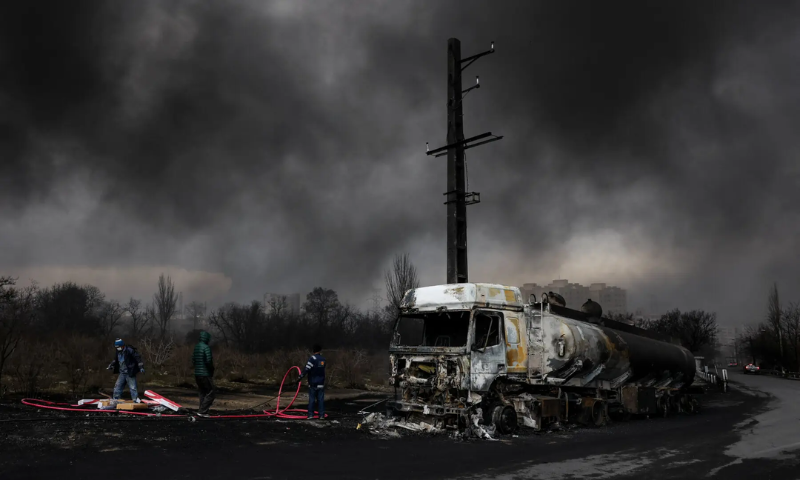
The Israeli military confirmed launching a new wave of airstrikes “across Tehran,” targeting fuel storage facilities and military infrastructure used by Iranian forces. Explosions were reported in the Iranian capital and the nearby city of Karaj.
Israel also said it carried out a precision strike against senior commanders of the IRGC’s Quds Force at a seaside hotel in central Beirut, Lebanon. The targeted unit, the Quds Force, oversees Iran’s overseas military operations.
The war’s regional repercussions intensified as drone and missile attacks spread across Gulf countries hosting US military facilities.
Saudi Arabia said its air defenses intercepted at least 15 drones targeting multiple locations, including the diplomatic quarter in the capital, Riyadh.
Meanwhile, Kuwait reported that Iranian drones struck fuel storage tanks at Kuwait International Airport early Sunday. Authorities said the attack targeted vital infrastructure, though air defenses intercepted several missiles and drones.
Iranian state media also reported attacks on US forces at a base in Bahrain.
Oil supply fears grow
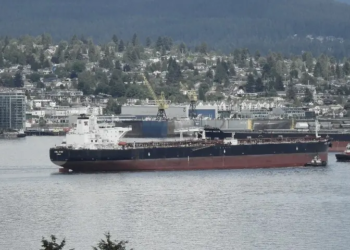
Energy markets reacted sharply as fears mounted over the security of the Strait of Hormuz, through which roughly one-fifth of global oil and gas shipments pass.
Kuwait’s national oil company announced a reduction in crude production due to security threats in the region, adding to earlier output cuts reported in Iraq and Qatar. Oil prices surged to multi-year highs while global stock markets declined.
Iran seeks to ease Gulf tensions
Iranian President Masoud Pezeshkian attempted to calm tensions with neighboring states, apologizing for attacks on US facilities located in Gulf countries.
He said Iran was forced to retaliate against attacks but did not intend to escalate tensions with regional neighbors.
“I personally apologize to neighboring countries that were affected by Iran’s actions,” Pezeshkian said, urging them not to join the US-Israeli military campaign.
Trump rules out negotiations
US President Donald Trump said he was not interested in negotiating with Iran, suggesting the conflict could end only when Tehran’s military capabilities and leadership structure are dismantled.
He also reiterated claims that Iran posed an imminent threat due to its nuclear ambitions, although no evidence was provided publicly.
Reports citing officials said Washington and Israel have discussed the possibility of sending special forces into Iran to secure its stockpile of highly enriched uranium later in the conflict.
According to Iran’s ambassador to the United Nations, the US-Israeli strikes have killed at least 1,332 Iranian civilians and wounded thousands. Iranian attacks have reportedly killed 10 people in Israel and six US service members.
The conflict has also intensified in Lebanon, where Israel launched airstrikes against positions of the Iran-aligned group Hezbollah.
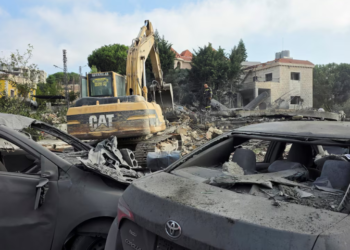
Lebanon’s health ministry said Israeli strikes have killed around 300 people since hostilities escalated last week. One strike hit an apartment inside the Ramada hotel building in central Beirut — the first such attack in the heart of the capital since fighting resumed.
The widening conflict has disrupted global logistics and energy supply chains. Analysts warn that prolonged instability could have significant consequences for international trade and oil markets if the Strait of Hormuz remains under threat.
With attacks continuing across multiple countries, diplomats fear the conflict could evolve into a broader regional war unless urgent diplomatic efforts succeed in halting the escalation.