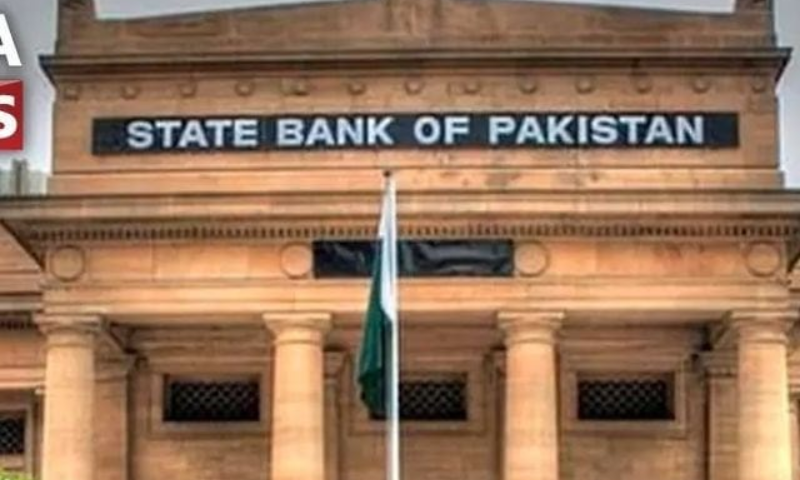
Karachi, March 9: The State Bank of Pakistan on Monday kept its key policy rate unchanged at 10.5 percent, pausing its monetary easing cycle amid growing uncertainty caused by the ongoing conflict in the Middle East and rising global energy prices.
In a statement, the Monetary Policy Committee (MPC) said it had decided to maintain the current policy rate after reviewing the evolving economic situation.
“The Monetary Policy Committee has decided to keep the policy rate unchanged at 10.5%,” the central bank said, adding that a detailed policy statement would follow.
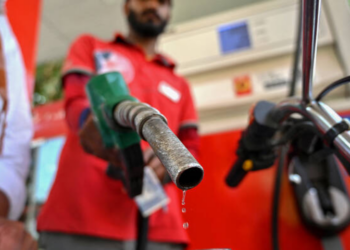
The central bank said the macroeconomic outlook had become “quite uncertain following the outbreak of the war in the Middle East,” which has triggered a sharp rise in global fuel prices.
According to the MPC, the conflict has also increased freight and insurance costs while affecting cross-border trade and travel, factors that could pose new inflation risks for Pakistan’s import-dependent economy.
The committee noted that the intensity and duration of the conflict would be key determinants of its impact on Pakistan’s domestic economy.
The SBP has reduced the key policy rate by a cumulative 1,150 basis points since mid-2024, when borrowing costs began to decline after peaking at a record 22 percent in 2023 amid multi-decade high inflation.
The central bank said Pakistan’s macroeconomic fundamentals were currently stronger compared to the start of the Russia-Ukraine war, particularly in terms of inflation trends, foreign exchange reserves and fiscal buffers.
Despite earlier improvements, inflation has shown an upward trend in recent months, rising to 5.8 percent in January and further to 7 percent in February 2026.
The MPC said the increase in inflation was partly due to the fading of the low base effect in food and energy prices and the rationalisation of fixed charges on household electricity bills.
The committee expects inflation to remain above 7 percent during the remaining months of FY2026 and into FY2027.
The central bank noted that the current account posted a surplus in January, which allowed the SBP to continue purchasing foreign exchange from the interbank market despite weak official inflows.
As a result, Pakistan’s foreign exchange reserves rose to $16.3 billion as of February 27.
The MPC also reviewed recent economic activity indicators.
Large-scale manufacturing (LSM) grew by 0.4 percent year-on-year in December 2025, while cumulative growth reached 4.8 percent during July–December FY2026.
Surveys showed improving consumer inflation expectations and confidence, while business sentiment remained broadly stable in February.
However, the Federal Board of Revenue (FBR) failed to meet its tax collection targets in both January and February, widening the cumulative revenue shortfall for July–February FY2026.
The MPC highlighted the high level of uncertainty surrounding international commodity prices and potential supply-chain disruptions caused by the Middle East conflict.
In this context, the committee described its decision to maintain the current policy rate as appropriate and reaffirmed its commitment to maintaining price stability.
At the same time, the central bank stressed the importance of accelerating structural economic reforms to ensure sustainable and long-term economic growth in Pakistan.