Islamabad, March 10, 2026: A top judicial body in Pakistan on Tuesday approved a series of energy conservation measures for courts, including a four-day working week and a reduction in fuel allowances, as the country moves to mitigate the impact of rising fuel prices triggered by tensions in the Middle East.
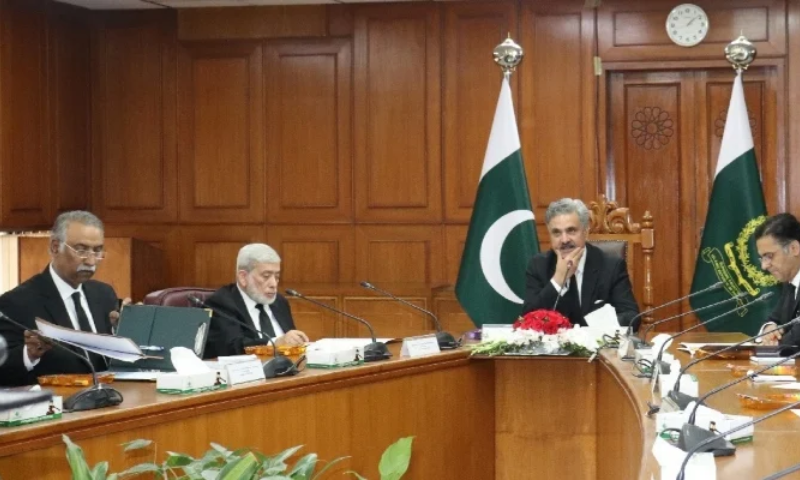
The decisions were taken during an emergent virtual meeting of the National Judicial (Policy Making) Committee (NJPMC) chaired by Yahya Afridi, the Chief Justice of Supreme Court of Pakistan. The meeting was attended by the chief justices of the Federal Shariat Court and various high courts, while the Attorney General for Pakistan participated on special invitation.
According to a statement issued by the apex court, the committee approved a comprehensive Judicial Austerity and Energy Conservation Strategy aimed at ensuring responsible use of national resources while maintaining uninterrupted access to justice.
The measures come in response to anticipated disruptions in petroleum supply and rising energy costs amid the ongoing Middle East conflict, reflecting the judiciary’s commitment to “national resilience and institutional responsibility.”
Under the approved plan, the Federal Shariat Court and all high courts will observe a four-day working week from Monday to Thursday. However, urgent judicial and administrative functions will continue on Fridays and Saturdays through internal arrangements made by the courts.
District courts will also operate fully from Monday to Thursday, while high courts may keep minimal staff on Fridays and Saturdays depending on workload and operational needs.
The committee further decided to reduce the monthly Petroleum, Oil and Lubricants (POL) allowance for judges of the Federal Shariat Court and high courts by 50 percent, while judicial officers will see a 25 percent cut.
In addition, no extra protocol or security vehicles will be deployed during movements within designated high-security zones, although existing route security arrangements will remain in place. The committee noted that judges and judicial officers serving in Khyber Pakhtunkhwa and Balochistan would maintain security measures according to prevailing circumstances.
To further reduce fuel consumption, litigants and lawyers will be encouraged to participate in court proceedings via video-link facilities, including through premises of high courts and district courts. Courts have also been directed to introduce rotational attendance for staff to minimise commuting while ensuring essential operations continue.
Meanwhile, the federal government has confirmed that the additional weekly holiday under its broader austerity measures will be observed on Fridays.
The decision follows a review meeting on fuel conservation chaired by Prime Minister Shehbaz Sharif, who earlier announced a wide-ranging austerity plan aimed at coping with the country’s fuel crisis.