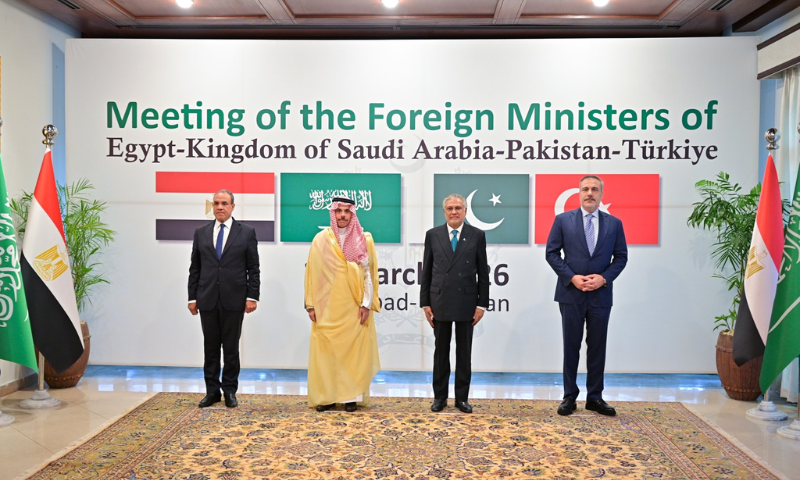
Islamabad, March 29, 2026: Pakistan has taken centre stage in global diplomatic efforts to defuse escalating Middle East tensions, hosting a high-level quadrilateral meeting of foreign ministers from Saudi Arabia, Türkiye, Egypt, and Pakistan to deliberate on the ongoing conflict involving the United States, Israel, and Iran.
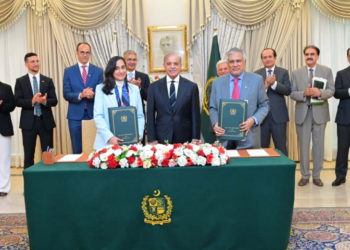
The meeting, held at the Ministry of Foreign Affairs Pakistan, focused on the evolving regional situation, with top diplomats exchanging views on peace, security, and coordinated efforts to reduce tensions.
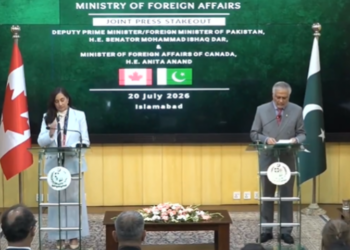
Deputy Prime Minister and Foreign Minister Ishaq Dar described the visit of the foreign ministers as a reflection of “strong fraternal ties,” noting that discussions were “candid and constructive,” aimed at advancing peace and stability while deepening cooperation.
Islamabad’s diplomatic engagement has intensified in recent weeks, positioning Pakistan as a key intermediary between Washington and Tehran. Officials confirmed that indirect talks between the United States and Iran are underway, facilitated through messages relayed by Pakistan, with support from Türkiye and Egypt.
In a significant development, Pakistan reportedly conveyed a US proposal to Iran as part of ongoing mediation efforts. While details remain undisclosed, Iranian officials have outlined conditions for ending the conflict, including a halt to hostilities, guarantees against renewed aggression, and recognition of its control over the Strait of Hormuz.
Prime Minister Shehbaz Sharif has been actively engaged in diplomacy, holding multiple conversations with Iranian President Masoud Pezeshkian, including a detailed call lasting over an hour. The discussions focused on de-escalation, dialogue, and Pakistan’s outreach to global and regional stakeholders.
On the sidelines of the quadrilateral talks, Saudi Foreign Minister Faisal bin Farhan Al Saud called on Prime Minister Shehbaz Sharif. The premier reaffirmed Pakistan’s unwavering solidarity with Saudi Arabia and appreciated the Kingdom’s restraint amid the crisis.
He also highlighted Pakistan’s diplomatic efforts to bring both the United States and Iran to the negotiating table and stressed the need for unity within the Muslim Ummah during this critical period.
Meanwhile, separate bilateral meetings were held between Ishaq Dar and his counterparts, including Türkiye’s Foreign Minister Hakan Fidan and Egypt’s Foreign Minister Badr Abdelatty.
Discussions with Egypt focused on Middle East tensions and strengthening bilateral ties, with Pakistan reaffirming support for the Palestinian people and appreciating Cairo’s humanitarian role in Gaza. Talks with Türkiye emphasized strategic partnership and the importance of sustained diplomatic engagement to promote regional peace.
In parallel, Ishaq Dar held a telephonic conversation with Iranian Foreign Minister Abbas Araghchi, reiterating the urgent need for de-escalation and an end to hostilities.
Officials said Pakistan remains committed to supporting all efforts aimed at restoring peace and stability, with dialogue and diplomacy identified as the only viable path forward.
The Islamabad talks come amid ongoing attempts to open a diplomatic window to end the conflict, which began on February 28 and has since expanded across the Middle East, impacting regional security and global energy markets.