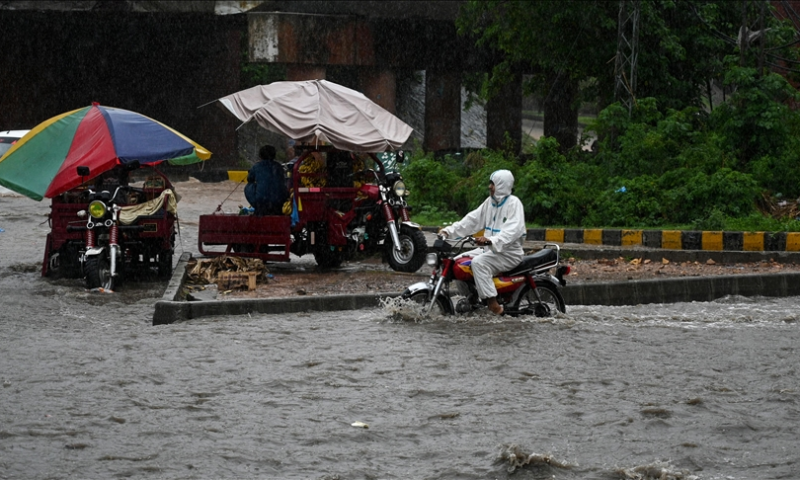
Islamabad, April 4, 2026: The Pakistan Meteorological Department (PMD) has forecast widespread heavy rains, thunderstorms, and hailstorms across Pakistan from April 5 to 9 as a strong western disturbance approaches the country.
According to the advisory, Balochistan will be the first region affected, with rain, windstorms, and thunderstorms expected in Quetta, Chaman, Ziarat, Khuzdar, and surrounding areas from the night of April 5 through April 7. Coastal areas, including Gwadar and Pasni, are likely to experience adverse weather on April 6.
In Khyber Pakhtunkhwa, widespread rain and thunderstorms, along with snowfall in mountainous regions such as Chitral, Swat, and Dir, are expected from April 6 to 9. Heavy downpours and hailstorms are forecast at scattered locations, particularly on April 7 and 8.
Punjab, including Murree, Rawalpindi, Lahore, and the Pothohar region, will experience rain, windstorms, and isolated heavy falls with hailstorms from the evening of April 6 to April 9. Similar conditions are expected in Islamabad during this period.
In Sindh, scattered rain and thunderstorms with isolated hailstorms are predicted in upper and central districts, including Sukkur, Larkana, and Jacobabad, on April 6, while Karachi and surrounding areas may receive light to moderate rainfall.
Gilgit-Baltistan and Azad Jammu and Kashmir are also expected to receive widespread rain, thunderstorms, and snowfall in higher altitudes from April 5 to 9.
The PMD has warned of potential landslides in vulnerable hilly areas of upper Khyber Pakhtunkhwa, Gilgit-Baltistan, and Kashmir. Flash flooding is also expected in parts of northeast Balochistan and various districts of KP between April 6 and 8.
Urban flooding risks have been highlighted for major cities, including Peshawar, Rawalpindi, Islamabad, Gujranwala, and Sialkot, particularly on April 7 and 8.
The Met Office cautioned that strong winds, hailstorms, and lightning could damage weak infrastructure such as electricity poles, billboards, and solar panels. Standing crops in Punjab, KP, and Sindh are also at risk, prompting advisories for farmers to take precautionary measures.
Tourists and travelers have been urged to avoid unnecessary travel during the forecast period and remain updated with official weather advisories.