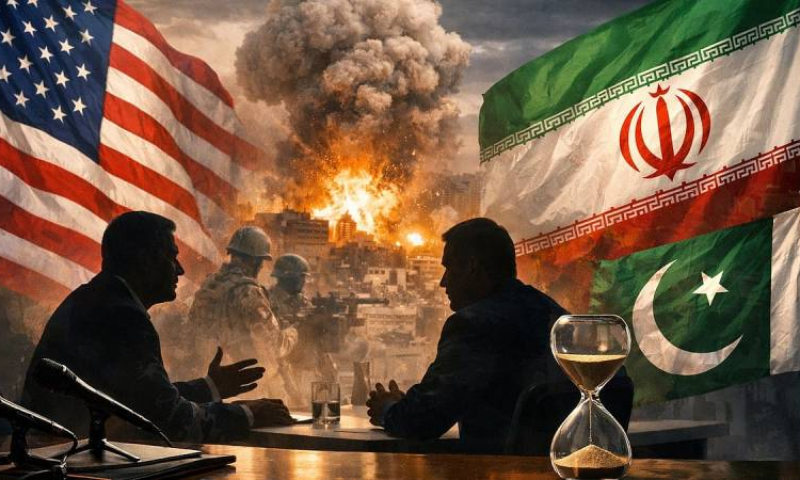
Tehran/Washington, April 18, 2026: Regional tensions remained high as Islamic Revolutionary Guard Corps (IRGC) announced that the strategically vital Strait of Hormuz would remain under “strict management and control” until the United States restores full freedom of navigation for Iranian vessels.
According to reports cited by Al Jazeera, Iranian authorities accused Washington of continuing “acts of piracy and maritime theft” under the guise of a blockade. The IRGC stated that control of the key waterway had reverted to pre-ceasefire conditions, with heightened military oversight.
Spy networks dismantled across Iran
In a parallel development, the IRGC claimed it had dismantled multiple alleged espionage networks linked to the United States, Israel, and the United Kingdom.
Iranian media, including Fars News Agency and Tasnim News Agency, reported that over 120 individuals were arrested across provinces such as East Azerbaijan, Kerman, and Mazandaran. Authorities alleged that the suspects were involved in espionage activities, transmitting sensitive coordinates, and preparing conditions for potential military action.
Shipping resumes amid uncertainty
Despite tensions, limited maritime activity resumed in the Strait of Hormuz, with several oil and liquefied petroleum gas tankers navigating the waterway—the first major movement since the outbreak of the US-Israel war on Iran seven weeks ago. However, uncertainty persists as shipping companies await clarity on security risks, including possible naval mines.
The waterway, which previously handled nearly one-fifth of global oil trade, remains critical to global energy markets. While Iran has allowed commercial vessels during the current truce, it requires coordination with its military, and vessels linked to the US and Israel remain restricted.
Trump signals optimism, warns of renewed strikes
Donald Trump signaled cautious optimism, citing “pretty good news” on negotiations with Iran but declined to provide details. He warned that military action could resume if a long-term agreement is not reached before the current ceasefire expires.
Trump reiterated that preventing Iran from acquiring nuclear weapons remains the top US priority, while also confirming that a blockade of Iranian ports would continue. He left open the possibility of renewed strikes if diplomacy fails.
In contrast, Mohammad Bagher Ghalibaf dismissed Trump’s claims as false and warned that the Strait of Hormuz could again be closed if US pressure persists.
Regional mediation efforts intensify
Diplomatic efforts are ongoing, with Egypt confirming coordination with Pakistan, Türkiye, and Saudi Arabia to develop a framework for a lasting peace between Washington and Tehran.
Pakistan, playing a central mediating role, continues high-level engagements, with Syed Asim Munir holding talks in Tehran aimed at bridging gaps between the two sides.
Talks remain uncertain
While Washington indicated that negotiations could continue over the weekend, logistical challenges have cast doubt on immediate direct talks in Islamabad, where previous high-level engagements ended without agreement.
Key sticking points remain, particularly over Iran’s nuclear program. The US has proposed long-term restrictions, while Tehran insists on its right to maintain a civilian nuclear program and rejects transferring enriched uranium abroad.
Despite signs of potential compromise, officials on both sides acknowledge that significant gaps remain, keeping the region on edge as the ceasefire deadline approaches.