By Shabbir Hussain
Islamabad, April 23,2026: At a moment when the Middle East stands on the edge of a profound geopolitical shift, triggered by escalating tensions between the United States and Iran, a new axis of regional cooperation is quietly taking shape.
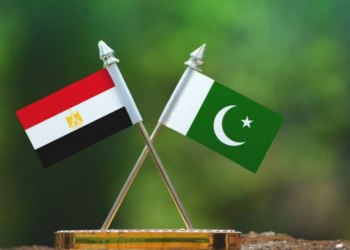
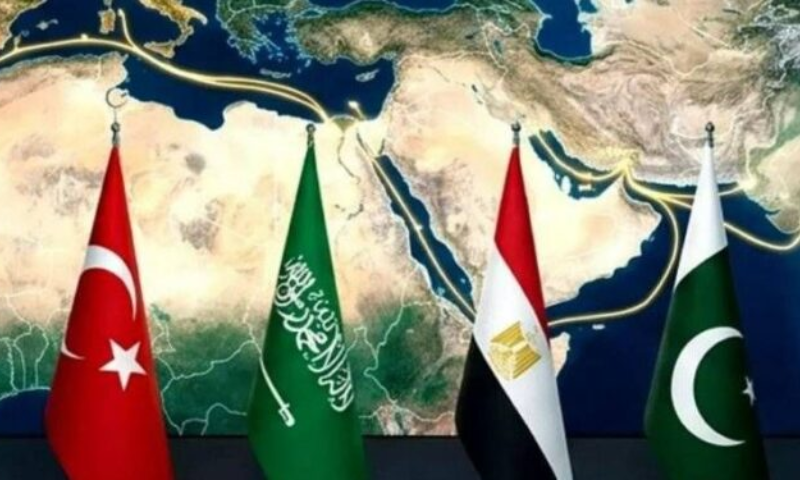
This evolving alignment, potentially bringing together Pakistan, Türkiye, Saudi Arabia, and Egypt, is increasingly being viewed by strategic circles as a decisive force capable of reshaping the region’s security architecture and recalibrating global power equations.
In an exclusive interview with Sub News, Muhammad Mehdi, Founder and Chairman of the Institute of International Relations and Media Research, outlined how a potential alliance among Pakistan, Türkiye, Saudi Arabia, and Egypt could redefine regional geopolitics amid the ongoing crisis involving Iran.
Speaking on what he described as a “historic inflection point,” Mehdi argued that the evolving alignment should not be narrowly interpreted through a sectarian lens.
He emphasized that Pakistan’s identity remains fundamentally non-sectarian, citing the legacy of Muhammad Ali Jinnah and the country’s diverse religious composition, including one of the largest Shia populations globally.
According to him, this inclusivity positions Pakistan as a credible bridge-builder in an increasingly polarized region.
He noted that prior to the current crisis, Israel had been expanding its political footprint in the Arab world under frameworks such as the Abraham Accords.
However, the present conflict has disrupted these trajectories and compelled key regional actors to reassess their strategic priorities. Mehdi observed that Saudi Arabia now views its security environment through a broader prism, where stability in Iran is intrinsically linked to its own long-term security.
“Even without Iran’s formal inclusion, such an alignment would carry significant strategic weight,” Mehdi said, adding that it could serve as a balancing mechanism against external interventions and competing regional ambitions.
Discussing feasibility, Mehdi described the proposed bloc as a “defensive and stabilizing alliance,” primarily aimed at safeguarding territorial integrity, securing maritime routes, and protecting vital energy corridors.
He acknowledged, however, that the principal challenge would come from how global powers, particularly the United States, perceive and respond to such a configuration, given its geographic span across Asia, the Middle East, and parts of Africa.
On diplomacy, Mehdi highlighted the coordinated role of Pakistan and Türkiye in de-escalation efforts, particularly Islamabad’s facilitation of dialogue between Washington and Tehran.
He credited Türkiye’s consistent diplomatic backing as a key factor in strengthening Pakistan’s mediation efforts, noting that both countries demonstrated restraint and strategic patience during heightened tensions.
Turning to the possibility of a formal defense pact, Mehdi expressed confidence that a trilateral framework involving Pakistan, Türkiye, and Saudi Arabia is “realistic and achievable.”
He pointed to existing security cooperation between Islamabad and Riyadh as a foundation upon which a broader agreement could be constructed.
“Pakistan’s strategic deterrence and trained manpower, Türkiye’s advanced defense industry, and Saudi Arabia’s substantial defense spending together constitute a formidable combination,” he said, adding that such cooperation could significantly influence not only regional stability but also the wider global strategic environment.
Mehdi concluded that while the contours of this emerging alignment are still evolving, the convergence of political will, security interests, and economic capabilities among these nations signals the potential emergence of a new geopolitical equilibrium in the Middle East.