Islamabad/Tehran/Washington, April 24, 2026: An Iranian delegation led by Foreign Minister Abbas Araghchi is expected to arrive in Islamabad late Friday for a potential second round of indirect peace talks with the United States, as Pakistan intensifies its diplomatic efforts to ease escalating regional tensions.
Government sources confirmed that a US logistics and security team has already reached the federal capital, signalling preparations for the high-stakes engagement. Pakistan has positioned itself as a key facilitator amid the ongoing conflict involving Washington, Tehran, and Israel.
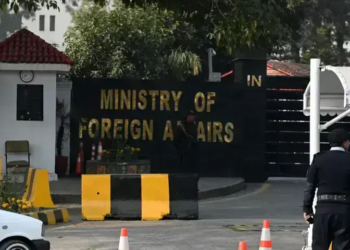
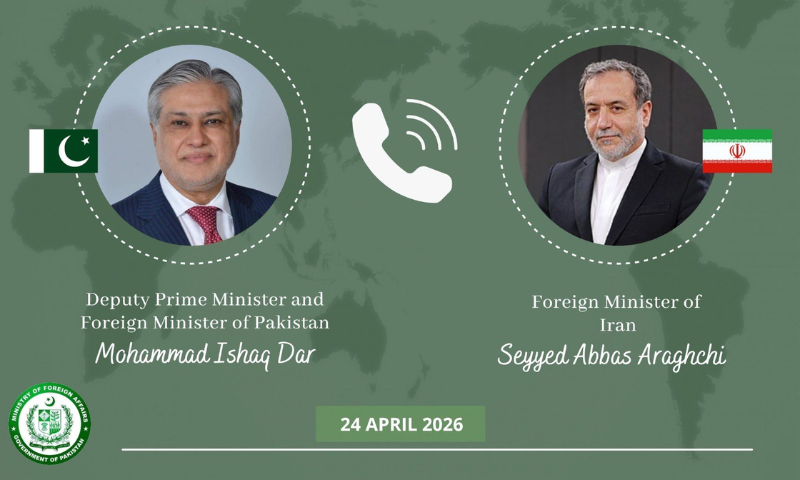
Earlier, Deputy Prime Minister and Foreign Minister Ishaq Dar held a telephone conversation with Araghchi, during which both sides reviewed the evolving regional situation, the fragile ceasefire, and Islamabad’s mediation efforts. According to the Foreign Office, Dar stressed the need for sustained dialogue to resolve outstanding issues and promote regional peace and stability. Araghchi, in turn, appreciated Pakistan’s “constructive and consistent” role.
Trump rules out nuclear option
In Washington, US President Donald Trump struck a cautious tone, ruling out the use of nuclear weapons in the conflict with Iran.
“Why would I use a nuclear weapon? We’ve achieved significant results through conventional means,” Trump told reporters at the White House. “A nuclear weapon should never be used by anybody,” he added, warning of catastrophic consequences for the Middle East and beyond.
Trump also signalled patience regarding a long-term agreement with Tehran. “I want to make the best deal — not a rushed one. It has to be lasting,” he said, while claiming that Iran’s conventional military capabilities, including its navy and air force, had been largely neutralized.
Strait of Hormuz: strategic pressure point
Meanwhile, tensions continue to mount around the Strait of Hormuz, a critical artery for global energy supplies that typically handles around 20% of the world’s oil and liquefied natural gas shipments.
Iran has reportedly granted certain “friendly” countries, including Russia, exemptions from potential transit fees through the strait, according to statements by Iranian Ambassador to Moscow Kazem Jalali cited by international media. Tehran has also floated plans to impose tariffs on shipping amid the ongoing conflict.
Despite US assertions that Iran’s conventional navy has been weakened, recent incidents suggest otherwise. Iranian forces have seized two container ships near the strait using swarms of small, fast-attack boats — a tactic analysts say reflects a shift toward asymmetric naval warfare.
Shift to asymmetric tactics
Security experts warn that Iran’s reliance on fast boats, equipped with heavy machine guns, rocket launchers, and even anti-ship missiles, poses a persistent threat to commercial shipping. These vessels are part of a broader “layered threat system” that includes shore-based missiles, drones, naval mines, and electronic interference.
Maritime analysts estimate Iran possessed hundreds — possibly thousands — of such boats before the conflict began in late February, many concealed in coastal tunnels or disguised among civilian vessels. While some have reportedly been destroyed, a significant number remain operational.
Experts say these boats enable “hit-and-run” operations that are difficult to detect and counter, complicating US efforts to fully secure the maritime corridor. However, their limitations are also evident: they are vulnerable to air power and less effective in rough sea conditions.
Shipping industry on edge
The escalation has heightened risks for global shipping, with increased insurance costs and operational uncertainty. Analysts note that civilian vessels remain largely defenseless against coordinated seizure operations involving multiple armed boats.
The latest maritime incidents follow Washington’s imposition of a naval blockade targeting Iranian trade and its interception of Iran-linked oil shipments.
Wider regional developments
In a related development, Trump announced that Israel and Lebanon have agreed to extend their ceasefire by three weeks following a high-level meeting at the White House. He also indicated plans to host Israeli Prime Minister Benjamin Netanyahu and Lebanese President Joseph Aoun in future talks.
As diplomatic activity intensifies, Islamabad’s role as a neutral venue for dialogue is gaining prominence. However, with continued volatility in the Gulf and shifting military tactics on the ground, the path to a durable peace remains uncertain.