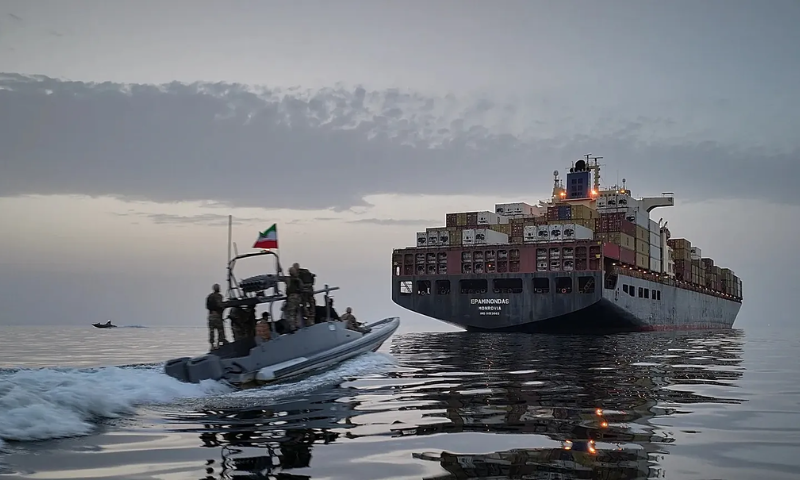
Washington/Moscow, April 28, 2026: President of United States Donald Trump has claimed that Iran informed the United States it was in a “state of collapse” and requested the immediate reopening of the Strait of Hormuz, a critical global oil transit route.
In a post on his Truth Social platform, Trump said Tehran had made the request as it attempted to stabilise its leadership situation, though no independent confirmation of the claim has emerged.
Meanwhile, Qatar has voiced strong support for diplomatic efforts led by Pakistan to defuse tensions in the region.
Qatar’s Foreign Ministry spokesperson, Majed Mohammed al-Ansari, reiterated that Doha’s position has remained consistent, stressing that all conflicts should be resolved through dialogue.
“We support Pakistani mediation and believe the Strait of Hormuz should never have been closed,” he said, calling for its immediate reopening regardless of broader geopolitical considerations.
Al-Ansari added that Qatar favours a “comprehensive deal” to end the conflict, warning that continued instability — including attacks on US bases in the region — threatens broader regional security.
Iranian Deputy Defence Minister Reza Talaei-Nik said Washington could no longer dictate policy to independent nations, signalling Tehran’s firm stance amid ongoing negotiations.
He also indicated Iran’s willingness to share its defence expertise with allied nations, particularly within the Shanghai Cooperation Organisation, during a recent defence ministers’ meeting in Kyrgyzstan.
At the United Nations, Russia’s ambassador Vassily Nebenzia defended Iran’s actions, stating that Tehran has the right to control navigation through the Strait during times of conflict.
He criticised Western countries, accusing them of double standards and likening their actions to “piracy” in reference to maritime tensions elsewhere.
Regional tensions have prompted leaders of the Gulf Cooperation Council (GCC) to gather in Jeddah for an emergency summit hosted by Saudi Arabia.
The meeting aims to coordinate a unified response following Iranian missile and drone attacks targeting Gulf states hosting US military bases. Though a ceasefire has been in place since April 8, concerns persist over a potential resurgence of hostilities.
Efforts to reach a lasting settlement appear stalled, with US officials indicating that Trump is dissatisfied with Iran’s latest proposal, which reportedly seeks to delay nuclear discussions until after the conflict ends.
The ongoing uncertainty has disrupted global energy markets. Oil prices have risen again as shipping through the Strait of Hormuz remains severely constrained — with maritime traffic dropping sharply from typical levels.
Analysts warn that continued disruptions could further strain global supply chains and fuel inflation, particularly if tensions escalate or negotiations collapse.
The crisis, now entering a critical phase, underscores the geopolitical significance of the Strait of Hormuz, through which a substantial portion of the world’s oil supply passes daily.