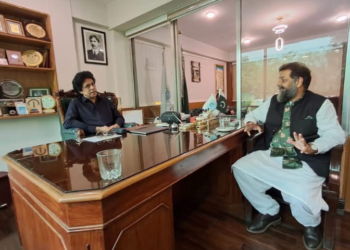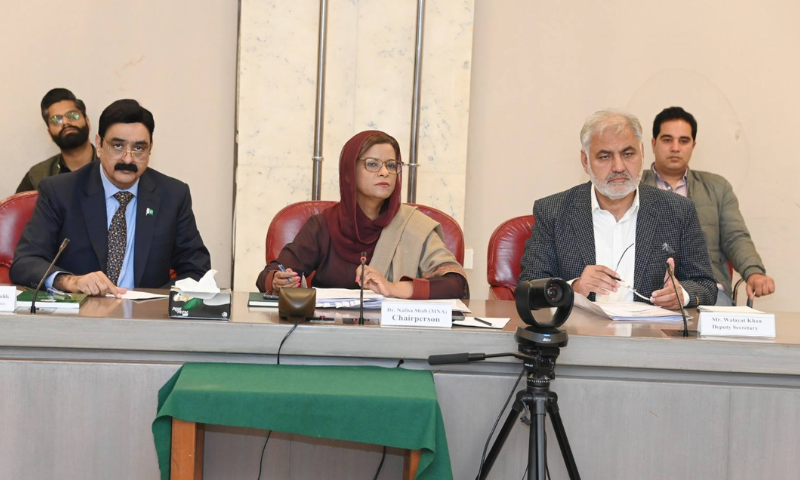
Islamabad, May 6, 2026: Chairperson of the Special Committee on Gender Mainstreaming Nafisa Shah on Wednesday emphasized that welfare programmes must ensure equity, transparency, and effective monitoring so that assistance reaches the most deserving segments of society.
Chairing a meeting at the headquarters of Pakistan Bait-ul-Mal (PBM), she stressed that short-term relief measures alone cannot eliminate poverty, calling instead for sustainable, long-term, and inclusive strategies to address the root causes of socio-economic deprivation.
The committee received a detailed briefing on PBM’s performance, ongoing initiatives, and institutional reforms. Officials informed that the organization, with a budget allocation of Rs14.2 billion for FY 2024–25, is delivering services nationwide in key sectors including healthcare, education, child protection, women empowerment, and food security.
During the briefing, it was revealed that between 2019 and 2025, PBM disbursed approximately Rs17.7 billion in healthcare assistance, benefiting over 120,000 patients, with cancer treatment accounting for the largest share. Scholarships worth over Rs13.5 billion have been awarded to more than 42,000 students across the country.
In the area of child protection, PBM is operating “Sweet Homes” for over 4,200 orphaned children, implementing support programmes for orphans and widows, and running 160 schools catering to more than 19,000 child labourers. Additionally, 165 Women Empowerment Centres have provided vocational and technical training to over 366,000 women, promoting economic participation and self-reliance.
Food security initiatives, including shelter homes and the “Khana Sab Kay Liye” programme, have served millions of meals to underprivileged individuals nationwide.
The committee was also briefed on ongoing reforms, including end-to-end digitization, OTP-based approvals, case tracking systems, and data-driven beneficiary selection mechanisms aimed at enhancing transparency and accountability.
While appreciating PBM’s contributions, Dr. Nafisa Shah highlighted persistent challenges in monitoring, beneficiary verification, institutional coordination, and equitable service delivery. She underscored the need for stronger oversight mechanisms, independent monitoring systems, and transparent disbursement procedures to restore public trust in welfare institutions.
The committee also took note of PBM’s recent initiatives, including Ramzan relief efforts and flood response operations, as well as collaborations with organizations such as Al-Khidmat Foundation and Saylani Welfare International Trust.
Calling for gender-responsive and people-centric welfare reforms, the chairperson emphasized the importance of data-driven policymaking, improved outreach, and targeted interventions for women, children, persons with disabilities, and marginalized communities.
The committee recommended enhancing budgetary allocations for PBM to strengthen poverty alleviation programmes, particularly scholarships, youth internships, and Women Empowerment Centres. It also suggested expanding the “Great Homes” pilot project to provincial capitals.
Concluding the meeting, the chair directed PBM to submit a comprehensive follow-up report on progress in institutional reforms, service delivery improvements, and measures taken to strengthen transparency and beneficiary targeting mechanisms.
The meeting was attended by MNAs Shaista Pervaiz, Shahida Rehmani, and Shahida Begum, as well as Senator Khalida Ateeb, senior officials from PBM, and representatives of the Ministry of Human Rights and the Ministry of Poverty Alleviation and Social Safety.