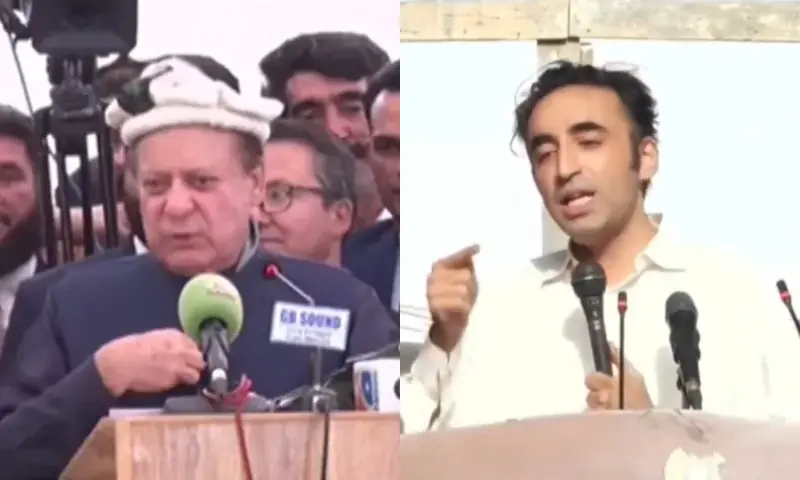
Gilgit/Skardu, June 2, 2026: Pakistan Muslim League-Nawaz (PML-N) President Nawaz Sharif and Pakistan People’s Party (PPP) Chairman Bilawal Bhutto-Zardari on Tuesday led major political rallies in Gilgit-Baltistan (GB), intensifying election campaigning ahead of the June 7 general elections in the region.
The polls, delayed for nearly four months due to severe winter conditions, have become a key political battleground, with both major parties focusing on development, governance rights, and constitutional issues in their campaign messaging.
Addressing a large public gathering in Skardu, where First Lady Aseefa Bhutto-Zardari was also present, PPP Chairman Bilawal Bhutto-Zardari urged what he described as a “new generation struggle” for the rights of Gilgit-Baltistan.
He said the PPP’s agenda centred on three core principles: “haq-i-hakimiyat” (right to govern), “haq-i-malkiyat” (right to ownership), and “haq-i-rozgaar” (right to employment), arguing that meaningful progress in GB was only possible if the region was granted governance protections similar to those under Pakistan’s 18th Constitutional Amendment framework.
Bilawal stressed that GB’s natural resources, land, and mineral wealth should belong to its people, adding that local communities must be given a share in development projects. He also pledged initiatives including a “Gilgit-Baltistan People’s Housing Initiative,” expanded healthcare facilities, and employment-focused programmes.
Highlighting the region’s hydropower potential, the PPP leader claimed GB could generate up to 50,000 megawatts of electricity based on historical studies, promising to develop infrastructure to harness this capacity.
He also criticised what he described as inadequate healthcare and employment policies by rival parties, asserting that the PPP represented “pro-poor and public-friendly politics”.
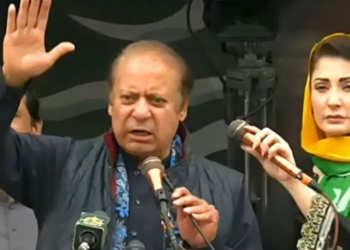
Earlier in the day, PML-N President Nawaz Sharif addressed a separate rally in Gilgit, where he expressed concern over what he termed the “lack of visible development” in the region.
Referring to road conditions, infrastructure gaps, and electricity shortages, Nawaz said it was “unacceptable” that residents continued to face long hours of load-shedding and underdeveloped transport networks despite GB’s strategic and tourism importance.
He highlighted past PML-N projects in the region, including road infrastructure and hydropower initiatives, and questioned why certain development plans had not been fully completed or expanded.
Nawaz also announced intentions to consult Prime Minister Shehbaz Sharif regarding airport expansion and improved connectivity for commercial flights, stressing that GB’s tourism potential remained underutilised.
He pledged renewed focus on health, education, and energy projects if his party formed the government, including expansion of a cancer hospital, new housing loan schemes, and interest-free loans for youth entrepreneurship.
Both leaders also framed GB as a strategically significant and economically important region, with Nawaz calling it a central part of the China-Pakistan Economic Corridor (CPEC), while Bilawal emphasised resource ownership and local empowerment.
The rallies were attended by senior party leadership, including federal ministers and provincial figures, reflecting the importance both parties are placing on the upcoming vote.
The Gilgit-Baltistan elections on June 7 come amid heightened political competition between the PPP and PML-N, with both parties seeking to consolidate support through promises of development, jobs, and constitutional reform.
The campaigns have increasingly focused on long-standing demands in GB, including constitutional status, representation, revenue sharing, and control over local resources—issues that continue to dominate political discourse in the region.