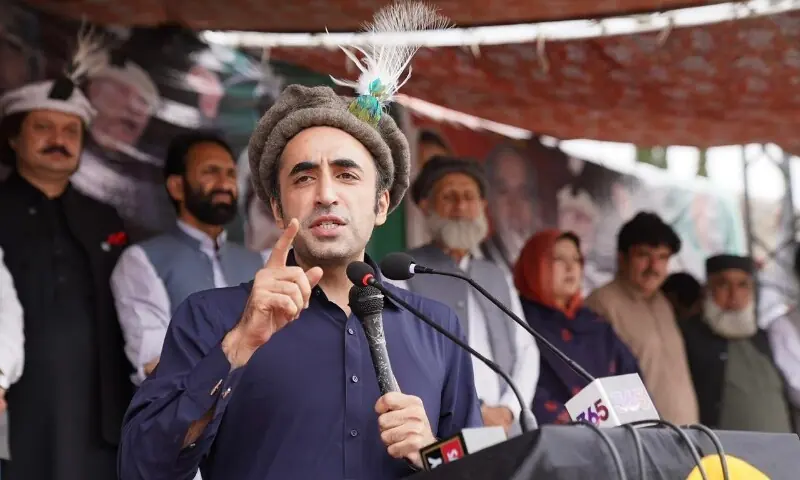
Diamer, June 3,2026: Chairman of the Pakistan Peoples Party, Bilawal Bhutto Zardari, on Wednesday pledged to address the long-standing resettlement concerns of people affected by the construction of the Diamer-Bhasha Dam on an immediate basis if his party forms the government in Gilgit-Baltistan following the June 7 elections.
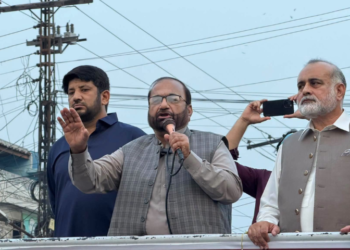
Addressing a public rally in Diamer, Bilawal said the dam project had witnessed significant progress during the PPP government and claimed that had the government of Asif Ali Zardari not ended in 2013, the project would have already been completed.
“It is unfortunate that the resettlement issues of the affected people have not yet been resolved,” he said. “After June 7, when the PPP forms the government in Gilgit-Baltistan, we will ensure that this work is completed and that resettlement issues are addressed on an immediate basis.”
Bilawal urged the federal government to accelerate work on the Diamer-Bhasha Dam, describing it as a national necessity.
“This is not only the right of the people of Diamer but also a necessity for Pakistan. No project is more important for Pakistan at this moment than the Diamer-Bhasha Dam,” he said.
Addressing Prime Minister Shehbaz Sharif, Bilawal called for expediting the project.
“We have heard of your ‘Shehbaz speed’ in Lahore. Please show that same speed to the people of Diamer and ensure the completion of this project,” he remarked.
The issue of compensation and rehabilitation has remained a major concern in the region. Earlier this year, the Diamer-Bhasha Dam Land-Affected Committee staged prolonged sit-ins in Chilas and Thore under the ‘Huqooq Do, Dam Banao’ movement, demanding implementation of agreements regarding compensation and resettlement.
The PPP chairman said his party remained the only political force genuinely representing the interests of the people of Gilgit-Baltistan.
“On June 7, the people of Gilgit-Baltistan will demonstrate their strength and elect a jiyala chief minister,” he said.
Bilawal credited President Asif Ali Zardari with granting Gilgit-Baltistan its present political identity, noting that the region was previously known as the Northern Areas.
He reiterated the PPP’s support for securing constitutional rights for the people of Gilgit-Baltistan and stressed that Pakistan’s prosperity was linked to the development of the region.
“Pakistan can only prosper if the people of Gilgit-Baltistan prosper,” he said.
Bilawal pledged that PPP’s public-private partnership model would help the region not only meet its own energy needs but also contribute electricity to the rest of the country.
He also promised greater economic opportunities, infrastructure development, and improved public services under a PPP-led government.
Taking a swipe at rival political parties, particularly the ruling Pakistan Muslim League-Nawaz, Bilawal said the people of Gilgit-Baltistan could not be influenced through financial incentives.
“Throwing money at things may work elsewhere, but the people of Gilgit-Baltistan are honourable and cannot be bought,” he said.
He further argued that many provincial development projects across Pakistan had been made possible through the Eighteenth Amendment to the Constitution of Pakistan and the National Finance Commission Award introduced during the PPP government.
Addressing a separate election rally, First Lady Aseefa Bhutto Zardari urged voters to support the PPP, describing the party’s electoral symbol, the arrow, as a symbol of rights, empowerment, democracy, and hope.
Supporting her brother’s vision for the region, Aseefa said a PPP government would focus on creating opportunities for young people through improved educational facilities, information technology parks, better internet connectivity, and employment generation.
“We want every youth of Gilgit-Baltistan to have a bright future, every citizen to have access to healthcare, and every child to receive quality education,” she said.