Islamabad/Washington/Tehran, June 15, 2026: Prime Minister Shehbaz Sharif on Monday hailed the United States-Iran peace agreement as a “historic victory for peace and diplomacy,” announcing that the formal signing ceremony of the landmark accord will take place in Geneva on June 19 following months of intense negotiations facilitated by Pakistan.
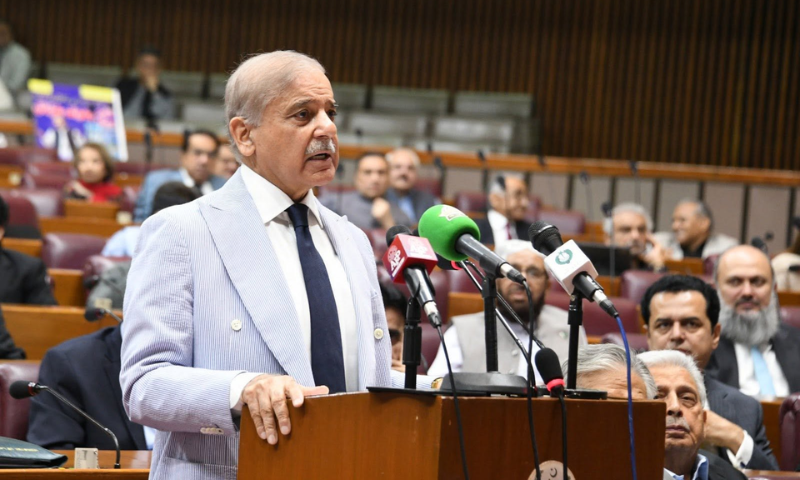
Addressing the National Assembly shortly after US President Donald Trump and Iranian officials confirmed the breakthrough, the prime minister described the agreement as a monumental milestone that could reshape the geopolitical landscape of the Middle East and restore stability to global energy markets.
“Today, the world has witnessed that the pursuit of peace has achieved a great victory, and the flames of war have begun to subside. This is a historic moment that historians will record in golden letters,” Shehbaz Sharif told lawmakers.
The agreement, currently framed as a Memorandum of Understanding (MoU), represents the most significant breakthrough since the conflict erupted following joint US-Israeli strikes on Iran in February. The war resulted in thousands of casualties across Iran and Lebanon, disrupted international shipping routes, and sent global energy prices soaring.
The prime minister said the accord provides for the immediate and permanent cessation of military operations on all fronts, including Lebanon, and marks “a victory of peace, dialogue and diplomacy over the devastation of war.”
Pakistan’s mediation role praised
Sharif credited Pakistan’s diplomatic efforts for helping bridge differences between Washington and Tehran, describing the achievement as a matter of national pride.
He thanked former prime minister and PML-N leader Nawaz Sharif for his guidance throughout the process and also acknowledged President Asif Ali Zardari, PPP Chairman Bilawal Bhutto Zardari, and leaders of all political parties for supporting efforts aimed at securing peace.
The prime minister paid special tribute to Chief of Army Staff and Chief of Defence Forces Field Marshal Syed Asim Munir, saying he worked tirelessly throughout the negotiations and played an extraordinary role in preventing further escalation.
“There were many moments when the negotiations appeared on the verge of collapse, but Pakistan remained steadfast in pursuing peace,” he said.
Sharif also commended Deputy Prime Minister and Foreign Minister Ishaq Dar, Interior Minister Mohsin Naqvi, and Pakistani diplomats and officials involved in the process.
Global leaders welcome agreement
The prime minister congratulated US President Trump, Iran’s Supreme Leader Mojtaba Khamenei, Iranian President Masoud Pezeshkian, and members of both negotiating teams for showing patience and wisdom during months of difficult talks.
He also acknowledged the contributions of Sheikh Tamim bin Hamad Al Thani, Saudi Crown Prince Mohammed bin Salman, Turkish President Recep Tayyip Erdogan and Chinese President Xi Jinping for supporting diplomatic efforts.
The agreement was welcomed by several countries, including Egypt, Jordan, the United Arab Emirates, Indonesia, China and Germany, all of which described it as a significant step toward restoring regional stability and preventing a broader Middle East conflict.
Trump confirms deal, signals Hormuz reopening
Speaking alongside French President Emmanuel Macron ahead of the G7 Summit, President Trump confirmed that the agreement had been finalized.
“I’m very happy to say the deal’s all signed,” Trump said, adding that the Strait of Hormuz would reopen and become fully operational for international shipping.
The US president reiterated that Iran would not be permitted to obtain a nuclear weapon under any future arrangement and said sanctions relief would be linked to Tehran’s compliance with its commitments.
Trump also indicated that the text of the memorandum would be released after the Geneva signing ceremony and confirmed that Vice President JD Vance would attend the event.
The announcement triggered an immediate positive response in global markets, with oil prices falling sharply amid expectations that shipping and energy exports through the Strait of Hormuz would resume after months of disruption.
Key provisions of the draft agreement
According to details published by Iranian media, the draft 14-point memorandum outlines a framework aimed at ending hostilities and creating conditions for a comprehensive settlement.
The reported provisions include:
- An immediate and permanent ceasefire across all fronts, including Lebanon.
- Reopening of the Strait of Hormuz within 30 days.
- Lifting of the US naval blockade on Iran.
- A 60-day negotiation period to finalize arrangements on Iran’s nuclear program and sanctions relief.
- Suspension of restrictions on Iranian oil exports.
- Release of approximately $24 billion in frozen Iranian assets during the negotiation period.
- US commitments to respect Iran’s sovereignty and refrain from additional sanctions during talks.
- Future negotiations focused on nuclear issues and economic normalization.
Iranian officials emphasized that Tehran’s missile program and support for regional allied groups would remain outside the scope of the negotiations.
Iran cautiously welcomes accord
Iranian Parliament Speaker Mohammad Bagher Ghalibaf described the agreement as “a great stride toward final victory,” while Foreign Ministry spokesman Esmaeil Baghaei said those who initiated the war had suffered a major defeat.
Iranian Foreign Minister Abbas Araghchi stressed that Washington now bore responsibility for implementing its commitments under the Pakistan-mediated framework and called for an end to Israeli military operations in Lebanon.
Meanwhile, a Hezbollah official told Reuters that the group had not conducted any operations since the announcement of the agreement and linked its future position to Israel’s adherence to ceasefire arrangements.
Israel voices reservations
Despite the breakthrough, Israel signaled that significant differences remain.
Israeli Defence Minister Israel Katz stated that Israeli forces would continue operating in areas under their control in southern Lebanon, Gaza and Syria, regardless of the US-Iran agreement.
National Security Minister Itamar Ben-Gvir also criticized the deal, insisting that the agreement would not be binding on Israel.
The Israeli government has yet to formally endorse the arrangement, particularly provisions relating to Lebanon and regional security.
Path toward a comprehensive settlement
While officials from both Washington and Tehran acknowledged that important issues remain unresolved—particularly the future of Iran’s nuclear programme—the agreement is widely being viewed as the most promising diplomatic opening in years.
The Geneva signing ceremony on June 19 is expected to launch a 60-day period of intensive negotiations aimed at converting the preliminary framework into a comprehensive peace agreement.
For Pakistan, the breakthrough represents one of its most significant diplomatic achievements in recent decades, placing Islamabad at the centre of an international effort credited with averting a wider regional war and helping restore stability to global energy markets.