Islamabad, July 24, 2026: The Senate Standing Committee on Devolution on Friday constituted a sub-committee to examine alleged violations of the 18th Constitutional Amendment and review the re-establishment of federal ministries dealing with subjects devolved to the provinces.
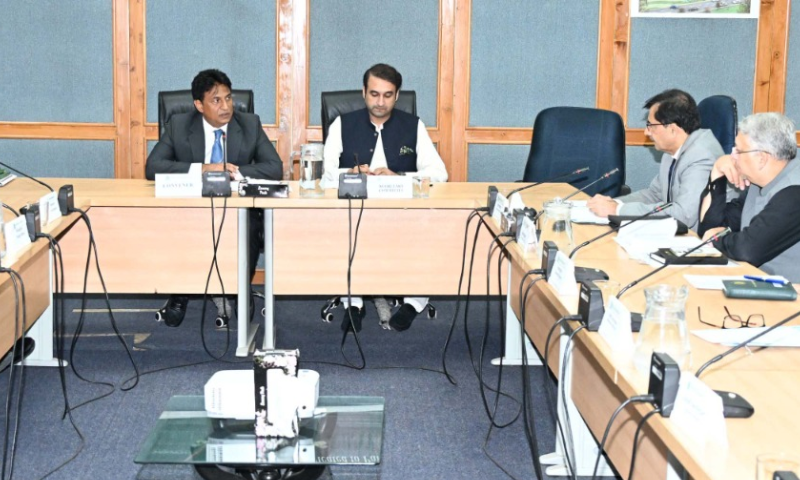
The requisitioned meeting of the committee was held at Parliament House under the chairmanship of Senator Zamir Hussain Ghumro. Senators Poonjo Bheel and Jan Mohammad Buledi also attended the session.
Addressing the meeting, Senator Ghumro expressed serious concern over what he termed the reversal of the devolution process initiated under the 18th Constitutional Amendment. He recalled that notifications issued on December 2, 2010, April 15, 2011, and June 29, 2011 transferred 17 ministries dealing with concurrent and provincial subjects to the provinces.
He argued that the subsequent re-establishment of ministries and institutions on devolved subjects, including education, health, national food security, culture and heritage, climate change, social initiatives, housing, Employees’ Old-Age Benefits Institution (EOBI), Evacuee Trust Property Board and Zakat and Ushr, was contrary to the constitutional framework.
Senator Ghumro said ministries such as education, health, food and agriculture, and environment had already been devolved, but similar federal entities were later created under different names while continuing to perform functions assigned to the provinces. He maintained that retaining federal ministries on devolved subjects not only violated the Constitution but also imposed an unnecessary financial burden on the national exchequer.
Committee members were informed that the re-established ministries were functioning only in relation to the Islamabad Capital Territory (ICT) and other federal responsibilities. However, Senator Ghumro contended that the federal government’s administrative structure had expanded to 31 ministries instead of being confined to what he described as nine constitutionally mandated ministries, including defence, foreign affairs, finance, commerce, communications, maritime affairs, science and technology, law and justice, and parliamentary affairs.
Highlighting fiscal concerns, Senator Ghumro said federal expenditure had risen to approximately Rs19 trillion against total tax and non-tax revenues of around Rs20 trillion. He argued that, apart from defence spending necessitated by prevailing security challenges, the federal government’s expenditure on ministries should remain limited. According to him, reducing expenditure on ministries dealing with devolved subjects could save between Rs5 trillion and Rs6 trillion annually and lessen the country’s dependence on external borrowing.
The committee also expressed concern over the functioning of the permanent Secretariat of the Council of Common Interests (CCI), stressing the need to restructure the federal administrative framework in line with constitutional provisions.
On the committee’s recommendation, a sub-committee was constituted to examine devolution-related matters, including alleged violations of the notifications issued in 2010 and 2011 on the recommendations of the Implementation Commission constituted under Article 270AA of the Constitution.
Senator Ghumro maintained that no ministry could be created solely for the ICT because such matters fall under the ICT Division. He directed the Cabinet Division to review and withdraw the creation of such ministries and submit a report to the committee. Senator Poonjo Bheel supported the proposal, saying the ministries should be abolished as the matter had already been settled through constitutional implementation. Senator Jan Mohammad Buledi also called for restoring the effective functioning of the CCI.
The committee reviewed submissions by the Establishment Division regarding appointments in departments dealing with devolved subjects. It recommended that the division refrain from making appointments in such departments and ensure the constitutional share of the provinces is protected in appointments and promotions. The Establishment Division was directed to provide a timeline of appointments in all grades and submit a compliance report within 15 days.
The committee also discussed implementation of constitutional provisions relating to the distribution of revenues from oil and gas resources. Senator Ghumro observed that while the federal government continued to receive its constitutional share, provinces were not receiving their due entitlements, creating a sense of deprivation. The committee directed the relevant authorities to provide complete details of payments made to the provinces over the past 16 years and called for greater provincial representation in institutions responsible for managing oil and gas resources.
During the meeting, members were informed that Rs46 billion allocated for the development of Quaid-e-Azam Muhammad Ali Jinnah’s mausoleum had not been released last year and was instead diverted to the Ministry of Education. The committee recommended that monthly progress reports on the development and maintenance of Mazar-e-Quaid be submitted for review.
The committee also received a briefing on the tenure policy for federal secretaries and directed the Establishment Division to provide a complete list of serving secretaries along with details of their tenure.
Concluding the discussion, the committee reiterated that executive authority over subjects listed in Part II of the Federal Legislative List rests with the Council of Common Interests under the Constitution. It maintained that ministries dealing with industries, statistics, petroleum, railways, inter-provincial coordination, planning and development, and WAPDA should function under the constitutional oversight of the CCI.