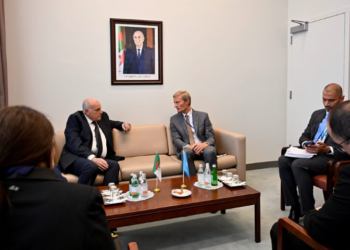
Tehran, August 7, 2026: Diplomatic efforts to ease tensions in the Gulf gathered momentum on Friday as Iran confirmed that a preliminary framework of understanding with Oman regarding the Strait of Hormuz had been agreed, raising hopes for the reopening of one of the world’s most strategically important shipping routes despite continued military tensions across the region.
According to Iran’s state news agency IRNA, spokesperson for the Iranian Parliament’s National Security Commission, Hassan Ghashghavi, said the general framework had been finalized but would require approval from senior Iranian authorities before the final agreement and its details could be officially announced.
The development comes after weeks of escalating confrontation between Iran and the United States that disrupted maritime traffic through the Strait of Hormuz, a vital passage for global energy supplies.
US President Donald Trump said Iranian officials were seeking an agreement with Washington and wanted to avoid further military escalation.
“Look, it’s obvious they don’t want to be hit. They want to make a deal. So, we’ll see,” Trump said in an interview released on Friday. He later told reporters that negotiations to reopen the Strait of Hormuz were progressing well and that an agreement could be reached soon, while stressing that the US Navy continued to maintain security in the area.
Trump also dismissed concerns over America’s military readiness, saying the United States possessed “massive amounts of ammunition” despite reports questioning Pentagon stockpiles following recent military operations.
Iran’s Parliament Speaker and chief negotiator Mohammad Bagher Ghalibaf criticized Washington’s negotiating approach, accusing the United States of pursuing “theatre diplomacy” through threats followed by renewed calls for negotiations. He urged Washington to honor its commitments instead of relying on pressure tactics.
Meanwhile, Iranian President Masoud Pezeshkian said recent US and Israeli attacks had damaged power plants and disrupted nearly 230 million cubic meters of Iran’s daily gas production. He acknowledged that sanctions continued to create economic challenges but said the government had managed to avoid widespread electricity shortages and was expanding cooperation with neighboring countries to offset economic pressures.
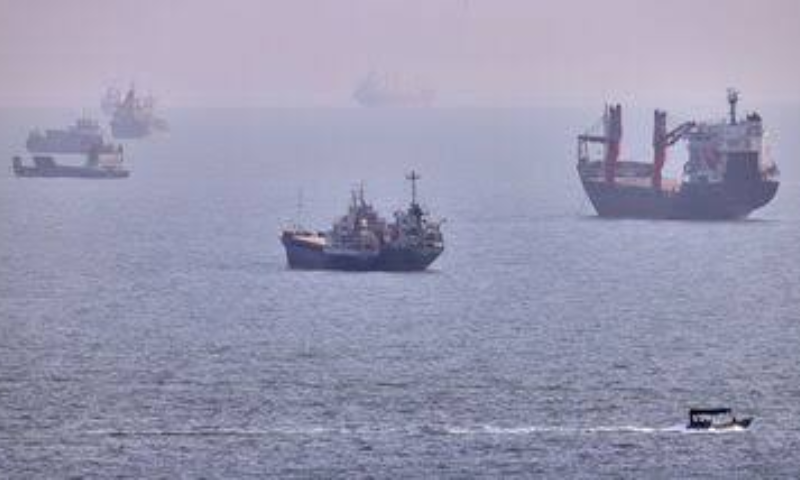
Shipping activity through the Strait of Hormuz remained significantly below normal levels. Maritime tracking data showed only 33 vessels transited the waterway between Monday and Thursday this week, compared with around 50 during the previous week and roughly 130 to 140 vessels before the latest conflict erupted.
Industry sources said many shipowners remained reluctant to enter the strait despite steep discounts being offered on Iraqi crude exports due to security concerns and uncertainty surrounding freedom of navigation.
The uncertainty pushed global energy prices higher, with Brent crude rising nearly five percent to around $82 per barrel, while European natural gas prices also climbed sharply.
Regional security concerns also intensified as Yemen’s Houthi movement continued attacks against government forces.
Yemen’s military said 17 soldiers and officers were killed in ballistic missile and drone attacks claimed by the Houthis, while Health Minister Qasim Buhaibeh reported that shelling of residential neighborhoods and displacement camps in Marib killed at least two civilians and injured fourteen others.
Houthi officials also issued fresh threats against Saudi Arabia and its allies, warning that military operations would continue until what they described as their national objectives were achieved.
Saudi officials, according to international media reports, remain on alert over the possibility of coordinated attacks by Yemen’s Houthis and allied Iraqi armed groups.
In Israel, media reports claimed that Mossad chief Roman Gofman dismissed two senior intelligence officials following the failure of an alleged plan aimed at destabilizing Iran’s government. Israeli authorities have not officially commented on the reports.
The latest diplomatic developments follow months of negotiations between Washington and Tehran after both sides signed a framework agreement in June 2026. Those talks later stalled over disagreements concerning security guarantees and freedom of navigation through the Strait of Hormuz before renewed military exchanges further complicated the process.
Despite the continuing violence across the region, diplomatic contacts between Iran, Oman and the United States have generated cautious optimism that a negotiated arrangement on maritime security could help restore commercial shipping and reduce tensions in one of the world’s most critical energy corridors.