
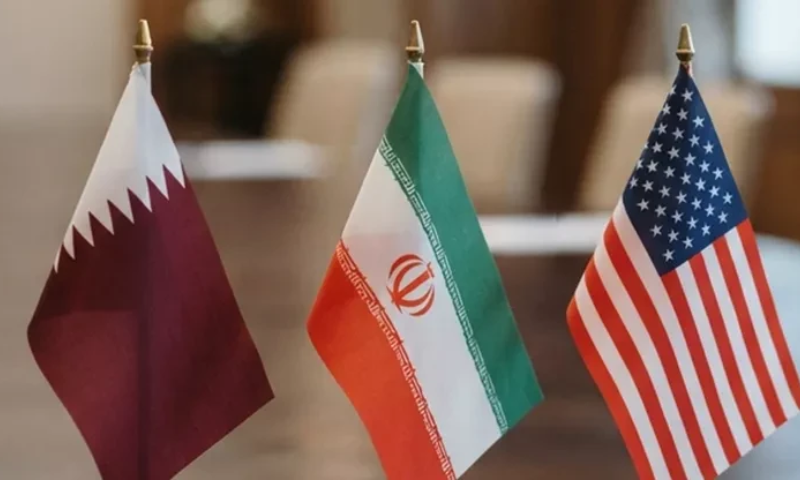
Washington/Tehran, November 3,2026: The United States has approved a draft memorandum of understanding presented to Iran by Qatari mediators, raising hopes of progress towards a diplomatic agreement, although Tehran has described Washington’s response to its demands as inadequate.
Sources familiar with the matter told Qatari newspaper Al-Araby Al-Jadeed that the mediation team had also briefed Saudi Arabia and the United Arab Emirates (UAE), which approved the draft.
According to the sources, Washington and Tehran have made concessions concerning Iran’s nuclear programme and frozen assets. Under the proposed arrangement, Tehran would announce a concession on its nuclear programme in return for Washington agreeing to release part of Iran’s frozen assets.
The announcements are expected to be made simultaneously, with discussions underway on initial steps and an interim arrangement that could pave the way for renewed negotiations.
However, Iran’s Supreme National Security Council Secretary Mohsen Rezaei said the US response to Tehran’s demands was “not convincing” and insisted that the Strait of Hormuz would remain closed until Washington fulfilled seven Iranian conditions.
“The US response to Iran’s rights and demands was not convincing,” Rezaei said in a post on X, adding that Washington must respond fully and explicitly to the conditions.
Iran’s reported demands include a ceasefire across the Middle East, the release of frozen Iranian assets, lifting sanctions on its oil sector, ending the US naval blockade, payment of war reparations, withdrawal of US forces and an end to threats and interference.
Qatar has said both Washington and Tehran remain committed to mediation and are reviewing proposals aimed at bridging their differences.
Foreign Ministry spokesperson Majed al-Ansari told reporters that Doha was facilitating the real-time exchange of proposals between the two sides.
“We remain hopeful that there is still a chance for a deal to set the environment for future negotiations,” he said.
Al-Ansari said the Qatari delegation that travelled to Tehran had returned to Doha, but diplomatic contacts were continuing amid intensive regional efforts to prevent further escalation.
Meanwhile, Iran’s Revolutionary Guards Navy said three oil tankers struck mines and caught fire in the Strait of Hormuz on Tuesday after entering unauthorised shipping lanes with their navigation and identification systems switched off.
The semi-official Tasnim news agency quoted the force as saying the vessels were left burning off the southern coast of the strait. It warned other ships against violating Iranian regulations or cooperating with the US military to use unauthorised routes.
The reports came as diplomatic efforts continued, despite signs that a comprehensive agreement remained out of reach.
A senior Iranian official told Reuters on Tuesday that Tehran and Washington were still far from a deal to end the conflict, despite intensified mediation efforts.
The official said nuclear negotiations could begin only after Iran’s conditions were met, adding that Tehran would not accept what it described as excessive US demands. The official also warned that Iran would respond forcefully, regionally and beyond, to any further US strikes.
The comments followed reports that the United States had carried out overnight “defensive” strikes on Iran’s Qeshm island. A US official said the strikes targeted surface-to-air missile systems used against American assets, while another described the operation as limited and not an indication of a return to major combat operations.
Iran’s Revolutionary Guards also claimed to have shot down a US MQ-9 drone and two Lucas drones near the Strait of Hormuz.
Oil prices rose by around one dollar on Tuesday after falling more than seven per cent a day earlier on hopes that diplomatic efforts were making progress.
Tensions have remained high since the United States and Israel launched attacks against Iran on February 28. Tehran retaliated by targeting Israel and US assets in the region before a ceasefire agreement was reached in April.
Washington and Tehran signed a memorandum of understanding on freedom of navigation in the Strait of Hormuz on June 18, but its implementation stalled over disagreements concerning security arrangements in the strategic waterway.