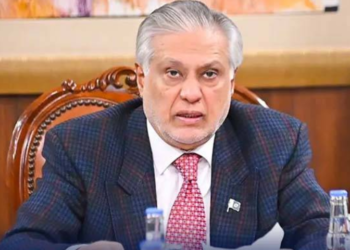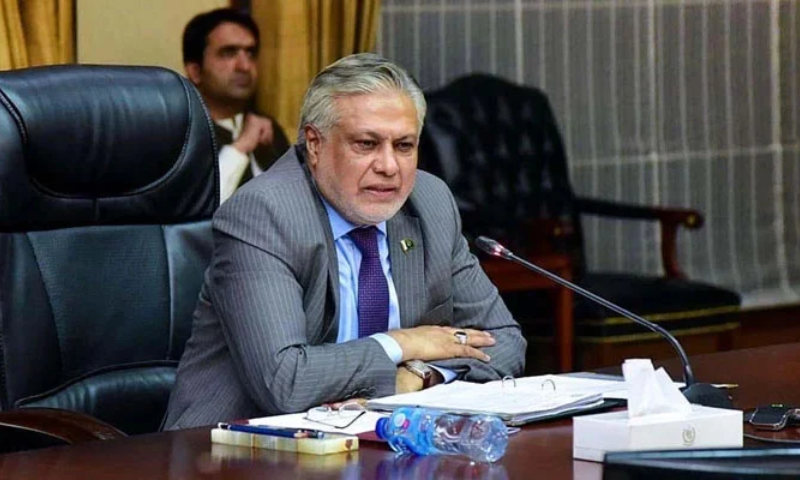
Islamabad, May 22, 2025: Deputy Prime Minister and Foreign Minister Ishaq Dar on Thursday described his recent three-day visit to China as a major success, highlighting key diplomatic, security, and economic milestones achieved through high-level engagements in Beijing.
Speaking at a press conference, Dar said the visit was far more than a routine diplomatic exercise. “This was a mission with clear and urgent objectives,” he stated, noting productive bilateral meetings with the Chinese leadership and a trilateral dialogue involving Afghanistan.
One of the major achievements of the visit was a joint understanding among Pakistan, China, and Afghanistan that no terrorist group — including the Tehrik-i-Taliban Pakistan (TTP) or Balochistan Liberation Army (BLA) — would be allowed to use one country’s territory to target another.
“We have reached consensus with our regional partners on a zero-tolerance policy for cross-border terrorism,” Dar said. He also noted that security cooperation with China would be institutionalized through a permanent mechanism to address threats to Chinese nationals and investments in Pakistan.
On the economic front, Dar said the groundwork had been successfully laid for CPEC Phase 2, under the broader Belt and Road Initiative (BRI). He announced that China had expressed its intent to finance the Pakistan-Afghanistan-Uzbekistan railway project, calling it a “transformative step for regional integration.”
A draft framework for the railway project has already been shared with Kabul and Tashkent, with the aim of finalizing it by early June. The project will complement the ML-1 railway upgrade and Peshawar-Kabul Highway, significantly enhancing Pakistan’s trade access to Central Asia and the commercial potential of its ports.
Dar reaffirmed that China reiterated its support for Pakistan’s sovereignty and territorial integrity, including backing its position on Jammu and Kashmir. “The Chinese leadership stood firmly by us, calling for a resolution of the Kashmir dispute in line with UN Security Council resolutions,” he said.
Pakistan, in turn, reaffirmed its full support for the One China Policy, including on Tibet and other sensitive issues.
Addressing recent regional tensions, Dar criticized Indian military actions that led to a four-day conflict between the two nuclear-armed neighbors. “India launched over 75 aircraft, dropped 24 payloads, and suffered losses including Rafale jets and a drone,” he said, adding that Pakistan’s response was proportionate, transparent, and fully in line with the UN Charter.
He confirmed that a ceasefire agreement brokered through U.S. Secretary of State Marco Rubio was holding and that military-to-military communication through Directors General of Military Operations (DGMOs) was ongoing.
“Pakistan’s nuclear and missile deterrence is defensive — not offensive. We will never compromise on our sovereignty,” he added, while condemning recent provocative statements by Indian Defence Minister Rajnath Singh as “regrettable.”
Dar emphasized the importance of normalizing relations with Afghanistan. “We have cultural, historical, and religious ties. Our outreach has been positively received across Afghan society,” he said.
To further facilitate bilateral ties, Pakistan has extended the existing transit document regime for Afghan drivers until June 30, and introduced a new multiple-entry visa for Afghan citizens at $100, aimed at easing cross-border movement and trade.
Marking the 74th anniversary of diplomatic ties between China and Pakistan, Dar invited Chinese officials to Islamabad for the second round of the Pakistan–China Strategic Dialogue, following the first round held in Beijing.
He also revealed that the Chinese Minister for International Development and a senior Communist Party official had praised Pakistan’s global engagement efforts. “China has proposed the creation of a Global Political Parties Forum. I confirmed that Pakistan will be represented by a PML-N senator at the upcoming session beginning May 24,” Dar said.
Recalling past counterterrorism efforts, Dar highlighted Pakistan’s success in dismantling terror networks through Operation Zarb-e-Azb, funded with over $4 billion during the PML-N’s 2013–2017 tenure. “Regrettably, lax border policies and the release of hardcore militants under the previous government reversed our gains. We are now resetting our course,” he declared.
He congratulated Field Marshal Asim Munir on his promotion, calling it “a well-earned recognition of his decisive leadership.”
During the recent Pakistan-India crisis, Dar said he had made over 60 calls to international leaders, including deputy prime ministers and foreign ministers of key allies such as Qatar, to convey Pakistan’s stance.
“The world now better understands Pakistan’s reality — not only as a frontline state in the war on terror but also one of its most impacted victims, with over 85,000 lives lost and $150 billion in economic damages,” he concluded.