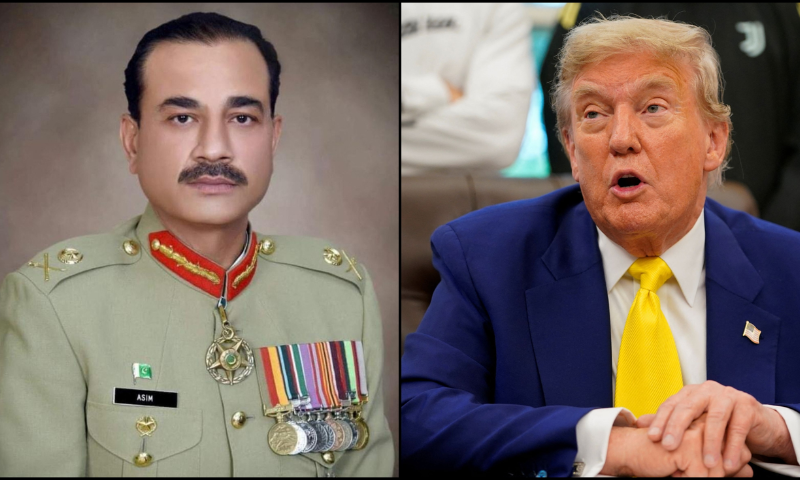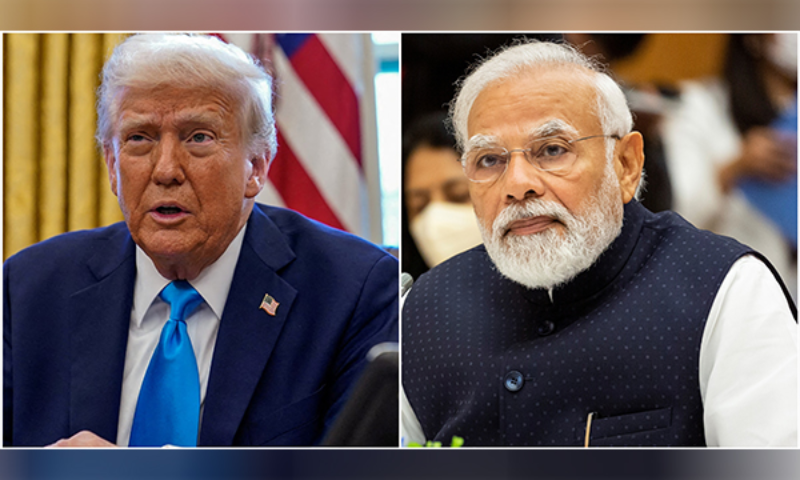
New Delhi, June 18, 2025: Indian Prime Minister Narendra Modi has categorically rejected any possibility of third-party mediation with Pakistan over the Kashmir dispute, reaffirming India’s longstanding position during a phone conversation with U.S. President Donald Trump on Tuesday, according to Foreign Secretary Vikram Misri.
“Prime Minister Modi conveyed very clearly and strongly that India does not accept third-party involvement on the Kashmir issue,” Misri said in a media briefing. “This has been our consistent policy, and the Prime Minister reiterated it during his call with President Trump.”
The phone call between the two leaders followed recent claims by President Trump that the United States had played a key role in brokering a ceasefire between India and Pakistan after a four-day military conflict in May. Trump has publicly asserted that U.S. diplomatic and trade leverage brought both nuclear-armed neighbors to the table.
However, India has firmly denied any such role by Washington.
“During the entire duration of the conflict, there were no talks with the U.S. on mediation or trade,” Misri emphasized. “The de-escalation happened through direct military channels between India and Pakistan, as per existing protocols.”
In stark contrast, Pakistan has welcomed Trump’s mediation claims. Islamabad’s foreign ministry previously acknowledged that multiple countries, including the U.S., facilitated backchannel diplomacy to reach the May ceasefire.
On May 10, President Trump declared via Truth Social that a “full and immediate ceasefire” had been achieved between India and Pakistan with U.S. assistance, and hinted at resolving the Kashmir issue: “I will work with you both to see if, after a thousand years, a solution can be arrived at, concerning Kashmir.” (The Kashmir dispute formally dates back to 1947.)
The following day, U.S. Secretary of State Marco Rubio stated that the two countries had agreed to begin discussions on broader regional issues at a neutral venue.
India, however, has remained adamant that Kashmir is a bilateral issue and an integral part of its sovereign territory. New Delhi has consistently ruled out foreign involvement, and maintains that any resolution must come through direct India-Pakistan dialogue—when conditions permit.
Tensions between the two neighbors escalated sharply after a deadly attack in Indian-occupied Kashmir on April 22, in which 26 people, mostly tourists, were killed. India blamed Pakistan-based groups for the assault—a charge Islamabad has denied.
India responded with air strikes on what it described as terrorist infrastructure inside Pakistan, triggering four days of military action, including cross-border missile exchanges and airspace violations. Both nations accused each other of targeting military installations.
While President Trump has claimed the U.S. used trade incentives to influence the ceasefire, Foreign Secretary Misri dismissed any such linkage. “India’s trade negotiations with the U.S. are being conducted independently and were not discussed during the conflict,” he stated.
India is currently engaged in fast-tracked trade talks with the U.S. ahead of a July 9 deadline, when a 90-day tariff moratorium ends. Analysts believe Trump’s public comments equating India and Pakistan as regional equals—especially in his social media posts—have irked New Delhi.
“India has always discouraged Western powers from drawing parallels between the two countries or undertaking joint visits to both capitals,” said a senior Indian diplomat. “Washington’s tone, at times, does not reflect that sensitivity.”
Despite the diplomatic discomfort, observers say it remains unclear whether the Kashmir mediation rhetoric will impact the ongoing India-U.S. trade discussions. However, Delhi continues to tread cautiously, determined to keep its core red lines intact.