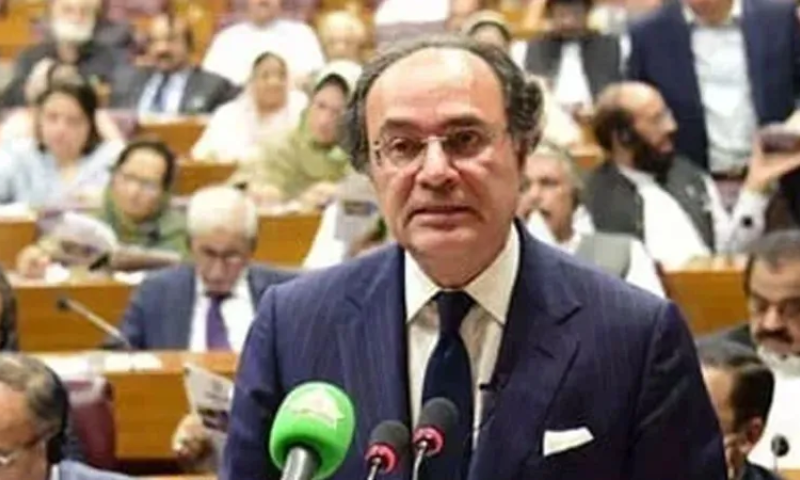
Islamabad, June 23, 2025: Finance Minister Muhammad Aurangzeb on Monday presented a robust defence of the Rs17.57 trillion federal budget for fiscal year 2025–26, describing it as a balanced strategy aimed at public relief, industrial expansion, fiscal discipline, and sustainable, export-led economic growth.
Winding up the general debate on the budget in the National Assembly, Aurangzeb announced several revisions in tax and relief measures, following feedback from parliamentary finance committees.
He underscored the government’s resolve to maintain economic stability amid heightened regional tensions, particularly following the recent Iran-Israel conflict, which he said poses risks to the broader region.
The finance minister revealed key tax reliefs for the salaried middle class, reducing the proposed income tax from 2.5% to 1% for individuals earning Rs600,000 to Rs1.2 million annually. Pensioners were also provided relief, with no tax on pension commutation or gratuity, and full exemption granted to those above 75 years of age.
On the contentious solar energy tax, Aurangzeb clarified that the previously proposed 18% sales tax on imported components was reduced to 10%, applying to only 46% of imported items, translating to an estimated 4.6% price hike.
He condemned market speculation and hoarding amid budget announcements, warning that legal action would be taken against those creating artificial shortages and price hikes.
Under directives from Prime Minister Shehbaz Sharif, the powers of the Federal Board of Revenue (FBR) to arrest tax defaulters have been strictly limited. In cases involving over Rs50 million, arrests can only be made after three prior notices, evidence of an attempt to flee or destroy records, approval from a three-member FBR committee, and issuance of a court warrant.
Arrested individuals must be presented before a judge within 24 hours, ensuring protection from abuse of authority.
Addressing concerns about taxation on property and assets, Aurangzeb said the proposed restrictions on undocumented high-value purchases would not apply to residential properties up to Rs50 million, commercial properties up to Rs100 million and vehicles up to Rs7 million.
He added that capital gains tax would not apply to properties sold after six years, if purchased before July 1, 2024. However, a withholding tax of 4.5–6% would apply at the time of purchase but could be reclaimed upon tax filing. Properties held for over 15 years for personal use would be exempt from this tax.
Aurangzeb highlighted that export-oriented industries remain largely exempt from new taxation. He also announced new taxes on inter-corporate dividends (raised from 25% to 29%), returns on government securities (now 20%), and a Rs10 tax per broiler chick due to under-taxation in the poultry sector.
To support farmers, the government will launch a collateral-free loan programme offering up to Rs1 million to farmers with holdings of up to 12.5 acres. The loans will cover seeds, fertilisers, fuel, and pesticides, along with health and crop insurance. An electronic warehouse receipt system will also be introduced to ensure better pricing and storage.
To correct a market imbalance affecting local cotton farmers, a sales tax on imported raw cotton and yarn was proposed to reduce the price disparity and encourage domestic production.
The minister announced a significant increase in the Benazir Income Support Programme (BISP) budget — from Rs592 billion to Rs716 billion — to benefit over 10 million low-income households. He pledged to empower these families with resources and skills for economic self-reliance.
He also highlighted the Women Inclusive Finance Programme, under which over 193,000 women received loans worth Rs14 billion. A similar amount will be extended this fiscal year with support from the Asian Development Bank.
Additionally, a 20-year housing loan scheme will help low-income citizens build or purchase homes.
Aurangzeb said a new Industrial Policy, progress on the Electric Vehicle (EV) Policy, and comprehensive energy reforms are on the agenda to modernize the economy. The government will also collaborate with the British Asian Trust to provide youth with market-aligned skills for long-term employment.
The finance minister concluded by stressing the need to document the informal economy, calling it a cornerstone of the budget. “This will enhance revenue, reduce inequality, and promote transparency,” he said.
“The budget is not just a financial document — it’s a blueprint for sustainable growth, inclusive development, and national resilience,” Aurangzeb added.