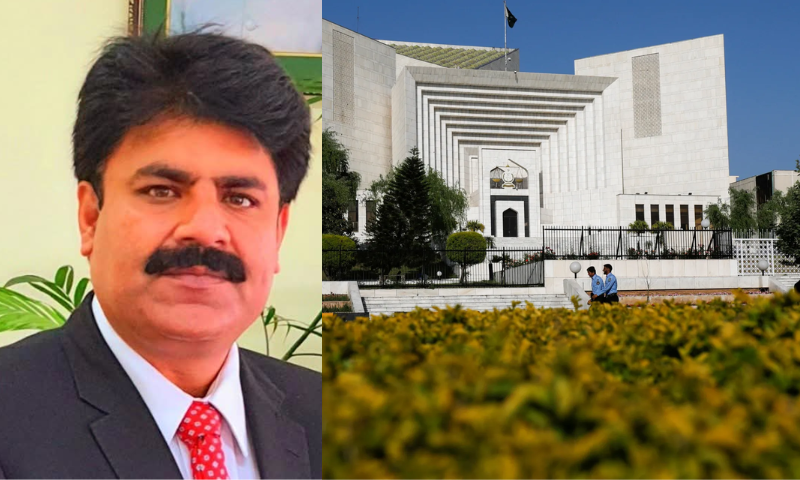
By Hafiz Ahsaan Ahmad Khokhar, Advocate Supreme Court of Pakistan
The post-election legal and constitutional saga following the general elections of 8 February 2024 is one of the most consequential in Pakistan’s parliamentary history. The core legal dispute centered around the allocation of reserved seats for women and non-Muslims, and more specifically, the validity of independent candidates—primarily backed by Pakistan Tehreek-e-Insaf (PTI)—joining the Sunni Ittehad Council (SIC) to claim entitlement to those seats.
The outcome of this miscalculated legal maneuver has been settled by the Supreme Court’s majority judgment dated 27 June 2025, which rightly declared that SIC was never constitutionally or legally entitled to reserved seats under Articles 51 and 106 of the Constitution. This judgment corrected the course previously taken by the Court’s 12 July 2024 decision, which had ventured into impermissible judicial reengineering.
I. The Constitutional and Statutory Scheme on Reserved Seats
The Constitution lays down a strict and structured mechanism for the allocation of reserved seats:
Article 51(6)(d) and Article 106(3)(c) unambiguously provide that reserved seats for women and non-Muslims are to be allocated only to political parties in proportion to the number of general seats won by them in the respective assemblies.
Section 104 of the Elections Act, 2017 requires independent members to submit a declaration within three days of the notification of returned candidates if they wish to join a political party, and such party must have representation in the Assembly.
Sections 57 and 58, read with Rule 94 of the Election Rules, 2017, make it mandatory for political parties to submit lists of candidates for reserved seats before the elections. A party that fails to do so cannot later claim entitlement to those seats.
SIC neither participated in the general elections nor submitted pre-election party lists under Section 104. It had no elected presence in any legislature. It was, therefore, legally and constitutionally disqualified from claiming any share in reserved seats.
II. PTI’s Strategic Misstep: Backing an Ineligible Political Entity
Despite the constitutional limitations and statutory prohibitions, PTI-backed independent members were advised—or permitted—to join SIC post-election, and a concerted legal campaign was launched before the ECP, the High Courts, and ultimately the Supreme Court to claim reserved seats through this route.
This strategic decision was not only devoid of constitutional support, but it also violated the clear scheme and letter of the Constitution. The correct legal path was available: these independent candidates could have either:
Declared affiliation with PTI within the three-day timeframe, or
Remained as independents and formed an independent parliamentary group in the legislature, retaining autonomy and preserving PTI’s indirect legislative influence.
Instead, PTI persisted from day one in backing SIC, without at any stage challenging the legality of SIC’s ineligibility, nor did it argue that the declaration of joining SIC should be disregarded to allow these members to be considered independent or PTI-affiliated. This persistent stance ultimately led to an irreversible constitutional setback.
III. The 12 July 2024 Judgment: Judicial Activism or Constitutional Overreach?
The Supreme Court’s 12 July 2024 decision attempted to extend the scope of Article 17(2) and Article 187 of the Constitution to justify entitlement of reserved seats through SIC. However, the judgment:
Ignored Articles 51 and 106, which are specific provisions governing seat allocation,
Failed to enforce Sections 57, 58, 104 of the Elections Act and Rule 94, and
Transgressed the limits set by Article 175(2), which prohibits the judiciary from rewriting or expanding the constitutional text.
The Supreme Court has repeatedly held that its role is to interpret, not to legislate or redesign electoral frameworks. In decisions such as Sindh High Court Bar Association v. Federation and District Bar Rawalpindi v. Federation, the Court emphasized that no judicial forum can override or supplement express constitutional provisions.
IV. The 27 June 2025 Judgment: Reaffirmation of Constitutional Discipline
The recent 10–3 majority judgment of 27 June 2025 has restored constitutional discipline. It categorically held that:
SIC was never a political party entitled to reserved seats, having neither contested the general elections nor fulfilled pre-election requirements,
Independent members’ declarations in favor of SIC were legally inconsequential, and thus,
Those members shall be treated as independents, not bound by party discipline, nor eligible for application of Article 63A in cases of defection.
The 27th June judgment has reaffirmed the role of supreme court and primacy of the Constitution over political convenience, and correctly restricted the judiciary’s function to interpretation rather than invention in constitution.
V. Legal and Political Consequences for PTI
PTI’s insistence on backing SIC has proven to be legally disastrous and constitutionally self-defeating. The consequences are manifold:
1. Loss of all reserved seats in the National and Provincial Assemblies, which PTI may have indirectly influenced had it adopted a lawful strategy.
2. The independent MNAs and MPAs, no longer affiliated with any party, now stand outside the ambit of Article 63A and cannot be disqualified for voting against PTI’s directions in critical legislative matters such as:
Vote of confidence or no-confidence,
Budgetary or money bills,
Constitutional amendments.
3. In Khyber Pakhtunkhwa, this has made the PTI-led government vulnerable to a vote of no-confidence, as the so-called SIC-affiliated members are now constitutionally independent.
4. The ruling coalition has benefited by securing two-thirds majority in the National Assembly, facilitating amendments or other political maneuvers.
This outcome was avoidable. At no stage—neither before the ECP, nor in constitutional petitions, nor during the Supreme Court review—did PTI challenge the legality of joining SIC or seek correction of declarations made under Section 104. The party not only pursued a flawed strategy but also doubled down on a legally unsustainable position, which has now completely collapsed.
VI. Conclusion: A Defining Case of Constitutional Misjudgment
The saga of independent members joining SIC and the resultant litigation underscores a profound lesson in constitutional fidelity and legal prudence. The Constitution of Pakistan, particularly Articles 51 and 106, is unequivocal in its provisions on reserved seats. Statutory requirements under the Elections Act and its Rules are not optional—they are mandatory prerequisites to political entitlements.
The Supreme Court, in its 27 June 2025 ruling, has rightly interpreted the constitutional balance, rectified an earlier error, and emphasized the non-negotiable boundaries of judicial authority under Article 175(2).
For PTI, the episode marks a critical legal and political setback, resulting from persistent misreading of constitutional provisions and misplaced confidence in a post-election alliance with a legally disqualified entity. This miscalculation has now not only cost the party representation on reserved seats but has also weakened its institutional coherence and parliamentary strength.
Future political strategies must be guided not by expediency but by a firm adherence to constitutional mandates. Only then can Pakistan’s fragile democratic order avoid such costly constitutional and legal misadventures.
Hafiz Ahsaan Ahmad Khokhar is a Constitutional and international law expert, Advocate of the Supreme Court of Pakistan with 25 years of legal standing. He can be reached at 9300 8487162