New York, July 8, 2025: Pakistan has urged the United Nations to ensure Afghanistan does not become a breeding ground for terrorism, warning that the Tehreek-e-Taliban Pakistan (TTP) poses a significant threat not only to Pakistan but also to the wider region and the world.
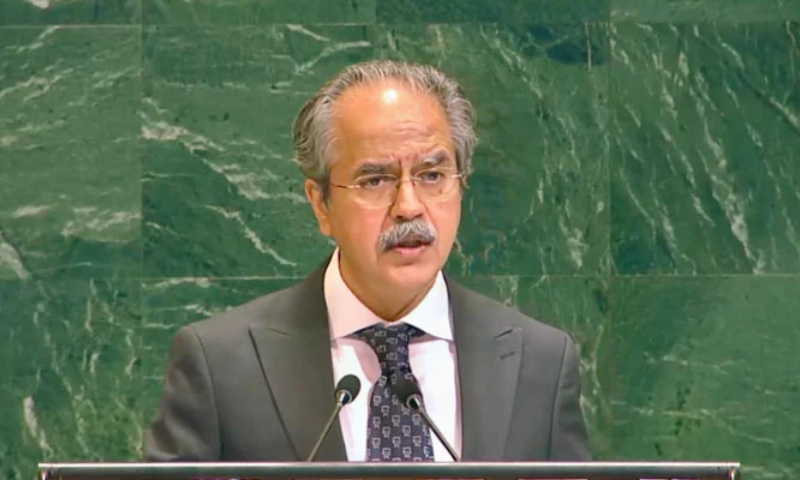
Speaking at a UN General Assembly plenary session on the situation in Afghanistan, Pakistan’s Permanent Representative to the UN, Ambassador Asim Iftikhar Ahmad, reiterated Islamabad’s concerns over the use of Afghan territory by terror groups to launch cross-border attacks.
“We must ensure that Afghanistan does not become a breeding ground for terrorists that threaten not only its neighbours but the region and beyond,” the ambassador said.
The statement comes in the wake of recent attacks by Afghanistan-based militants. Just last week, Pakistan’s security forces eliminated at least 30 militants — reportedly backed by India — attempting to infiltrate the border in Khyber Pakhtunkhwa’s North Waziristan district.
Since the Taliban’s return to power in 2021, Pakistan has seen a rise in cross-border attacks, particularly in the border provinces of Khyber Pakhtunkhwa and Balochistan. A slight uptick in militant activity was also reported in May 2025, though tensions with India did not result in wider conflict.
The ambassador’s remarks followed a bilateral meeting in Islamabad a day earlier between Pakistani and Afghan officials, which covered trade, security, transit, and regional connectivity. Both sides acknowledged terrorism as a major challenge to regional peace.
During the discussions, Pakistan called for concrete steps against terrorist groups operating from Afghan soil, noting that their activities threaten national security and undermine regional cooperation.
Ambassador Iftikhar stressed the growing threat posed by the TTP and other terrorist outfits, including Daesh, Al-Qaeda, and Baloch separatist groups, who continue to operate from ungoverned spaces in Afghanistan.
“Daesh continues to target the de facto authorities, while other entities such as Al-Qaeda, the TTP, and Baloch militants remain active,” he said. “The TTP, with an estimated 6,000 fighters, is the largest UN-designated terrorist group based in Afghanistan.”
He warned that cross-recruitment between groups like TTP and Daesh was amplifying the threat, making the TTP not only a national but a global security concern.
Ambassador Iftikhar also voiced concern over the use of sophisticated weapons and equipment by terrorists in recent cross-border attacks.
“These incidents highlight the scale and severity of the threat we face. Pakistan will continue to take every possible measure to safeguard its people,” he stated.
He further revealed credible evidence of collaboration between the TTP and other militant groups, including the Balochistan Liberation Army (BLA) and the Majeed Brigade, aimed at disrupting critical infrastructure and economic projects in Pakistan.
“Regrettably, Afghan soil continues to be used by terrorists — often proxies — against other countries, particularly Pakistan,” he noted.
Highlighting the humanitarian and security dimensions of the Afghan crisis, the envoy emphasized that instability in Afghanistan directly impacts Pakistan.
“Pakistan has hosted millions of Afghan refugees for decades. Since August 2021, over one million additional undocumented individuals have entered Pakistan, creating significant challenges, including law and order issues,” he said.
He called on the international community to shoulder this burden more equitably and advocated for the revival of Afghanistan’s economy, including unfreezing its financial assets to facilitate trade and investment.
“Pakistan remains committed to regional connectivity and economic development projects such as TAPI, CASA-1000, the Uzbekistan-Afghanistan-Pakistan railway, and the extension of CPEC to Afghanistan — all of which can contribute to regional peace and prosperity.”
Looking ahead, the ambassador expressed cautious optimism for Afghanistan’s future.
“For the first time in over four decades, active fighting within Afghanistan has ceased. There is renewed hope for an Afghanistan that is at peace with itself, its neighbours, and the global community.”
He concluded by calling for inclusive governance in Afghanistan that respects all citizens regardless of gender, ethnicity, political affiliation, or religion.
“Afghanistan must not be abandoned. Only sustained, pragmatic engagement through dialogue and diplomacy can bring lasting peace and integration into the international community,” he said.