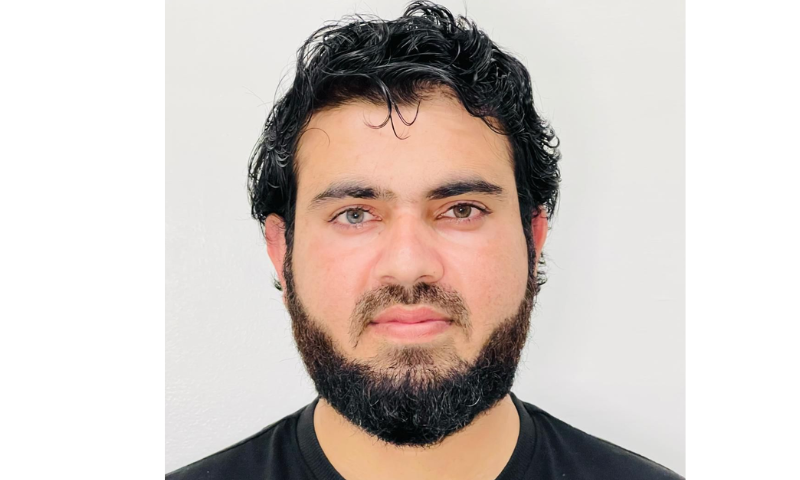
Shah Khalid
Galveston, TX, July 14, 2025: Researchers at the University of Texas Medical Branch (UTMB) have unveiled an innovative diagnostic platform that could revolutionize how physicians evaluate a patient’s risk of developing dangerous arterial blood clots. Published in the journal Nature Communications, the study introduces a novel mechanobiology-based device that simulates the mechanical stress inside narrowed arteries, offering a personalized “barcode” of a patient’s clotting behavior.
The study was led by Misbahud Din, a biomedical researcher at UTMB and the paper’s first author, under the guidance of Dr. Yunfeng Chen, Assistant Professor of Biochemistry and Molecular Biology and principal investigator of the project.
Addressing a critical gap in clinical diagnostics, the UTMB team designed a miniaturized microfluidic device that replicates the dynamic conditions of stenotic (narrowed) arteries. Unlike traditional clotting tests, which fail to mimic these mechanical stresses, the new system uses fluorescent dyes and controlled fluid flow to measure seven key indicators of thrombus formation, including clot size, platelet activation, and biochemical composition.
“Standard lab assays don’t capture the physical forces acting on blood inside constricted arteries,” said Misbahud Din. “Our device recreates those conditions to show how an individual’s blood behaves under stress—providing insights that conventional methods often miss.”
The result is a personalized thrombus “barcode” that reveals a detailed profile of each patient’s clotting tendencies. This approach has significant implications for early detection and prevention of life-threatening cardiovascular events such as heart attacks, strokes, and ischemia.
“The larger and more activated the thrombus, the more likely it is to cause a fatal blockage,” explained Dr. Chen. “Our system gives clinicians a clearer, more accurate picture of individual thrombotic risk.”
The study found that mechanical stress dramatically increases platelet adhesion and aggregation—key factors in clot formation. This insight, coupled with the device’s ability to profile blood behavior in real-time, marks a major advance in personalized medicine.
The breakthrough has already gained attention from the broader scientific community and media outlets, including UTMB News and Hoodline, for its potential in transforming cardiovascular care.
“What makes this platform so powerful is that it doesn’t just look at clot size,” Din added. “It captures size, activation state, and composition all at once—delivering a comprehensive risk assessment tailored to each patient.”
As arterial thrombosis remains a leading cause of death globally, this research paves the way for a new era of personalized diagnostics, offering hope for more targeted prevention and treatment strategies.