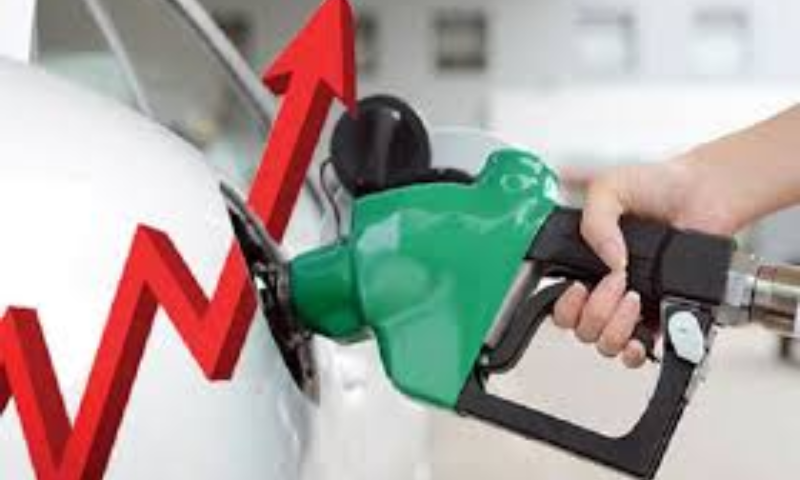
Lahore, July 14, 2025: Petroleum prices in Pakistan are expected to witness a sharp increase in the upcoming fortnightly review, effective from July 16, amid an upward trend in global oil markets. Industry sources revealed that the local oil sector has completed its calculations based on international pricing patterns and submitted its recommendations to the Oil and Gas Regulatory Authority (OGRA).
According to the preliminary estimates, petrol prices are likely to go up by Rs6.60 per litre, while high-speed diesel may see an increase of Rs5.27 per litre. The price of kerosene oil is expected to rise by Rs3.74 per litre, and light diesel oil may go up by Rs2.32 per litre. These price revisions are pending final approval from Prime Minister Shehbaz Sharif and are expected to be officially announced on the night of July 15 for implementation the following day.
The projected increase is driven by rising international oil prices, which have been gaining steadily in recent days. On Monday, Brent crude rose by 21 cents, or 0.3 percent, reaching $70.57 per barrel, building on a 2.51 percent gain recorded on Friday. Similarly, U.S. West Texas Intermediate (WTI) crude futures climbed 20 cents, or 0.3 percent, to $68.65, after gaining 2.82 percent in the previous session.
Last week, Brent crude posted an overall gain of 3 percent, while WTI recorded a weekly increase of around 2.2 percent. The price surge follows a report by the International Energy Agency (IEA), which warned that the global oil market may be tighter than it appears, driven by increased summer refinery runs and high travel-related demand. Meanwhile, geopolitical concerns, particularly the prospect of new U.S. sanctions on Russia, have added to supply-side uncertainties. However, the impact of these factors is being somewhat offset by Saudi Arabia’s gradual ramp-up in oil output and continued uncertainty over U.S.-China trade tariffs.
If implemented, the anticipated price hike would place additional financial strain on consumers, especially as inflationary pressures continue to affect household and transport costs. The final decision now rests with the federal government.