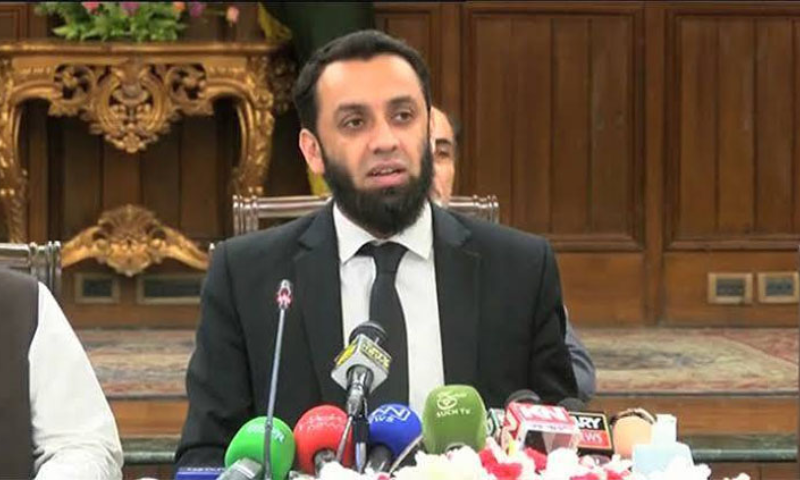
Islamabad, July 16, 2025: Federal Minister for Information Attaullah Tarar clarified on Wednesday that recent amendments to the Prevention of Electronic Crimes Act (PECA) and the establishment of a new cyber agency are intended to address the growing threats in the digital space—not to stifle freedom of expression.
Speaking at a press briefing in Islamabad, the minister said the updated legislation is aimed at enhancing online accountability and protecting vulnerable segments of society, particularly women. He emphasized that the government’s objective is to make digital spaces safer, not to silence dissent.
“These laws are not meant to suppress free speech,” Tarar asserted. “Even the most advanced democracies in the world have legal frameworks to ensure accountability and justice in the digital realm.”
His remarks come amid mounting concerns over curbs on media and online expression. Just days earlier, an Islamabad court suspended an order that had banned 27 YouTube channels run by journalists and political commentators. The ban, requested by the newly formed National Cyber Crime Investigation Agency (NCCIA), had accused the channels of spreading anti-state and defamatory content under PECA provisions.
Tarar addressed the controversy, stressing that the misuse of social media has become one of the most pressing challenges of the modern era. Citing a report by the World Economic Forum, he warned that the spread of misinformation and propaganda on digital platforms is now a global concern.
“Fake news and hate speech are among the most dangerous threats to democratic societies,” he said. “With a single post, someone can incite unrest or even violence. That is why a balanced regulatory approach is essential.”
The minister acknowledged that political parties across the spectrum bear responsibility for the unchecked spread of online disinformation. He called for a national consensus on promoting responsible digital conduct, arguing that the country needs a shared framework to combat online harm while preserving rights.
Highlighting the rapid shift from traditional media to unregulated digital platforms, Tarar pointed out that much of this transition occurred without adequate oversight. He called on political leaders and influencers to use their digital reach to address deeper societal issues, such as gender discrimination and patriarchy, rather than just promoting entertainment content.
“Social media platforms that can attract millions of views for fashion or celebrity content should also be leveraged for constructive, inclusive dialogue,” he said. “It’s time to ensure these spaces contribute meaningfully to national discourse.”
Tarar concluded by urging support for a new digital framework that encourages both freedom and responsibility, with the aim of fostering safer, more informed, and equitable online communities.