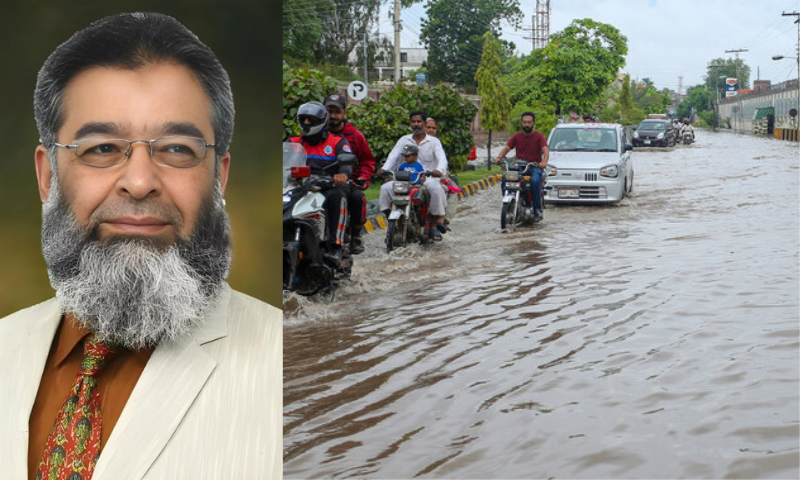
By Muhammad Mohsin Iqbal
Even before the arrival of the monsoon, various parts of Pakistan were already overwhelmed by destruction. Unseasonal and unrelenting rains descended upon the land, bringing with them torrents that swept away homes, roads, crops, and lives. Rainfall during these months is not an unfamiliar visitor, but the scale of devastation now experienced is a marked departure from the seasonal showers of years past. Floods that once came with warning and a rhythm now descend like a curse, sudden and unforgiving. The nation finds itself asking a dire question; is this destruction the work of shifting weather, human recklessness, or divine displeasure?
There is no doubt that climate change plays a formidable role in this pattern. Pakistan, though one of the least contributors to global carbon emissions, is counted among the most vulnerable countries to the effects of environmental degradation. Erratic weather patterns, prolonged dry spells followed by cloudbursts, melting glaciers in the north, and rising sea levels in the south—all converge to paint a grim reality. However, to lay the blame solely at the feet of nature is to ignore our own hand in this unfolding tragedy.
The carelessness and heedlessness of the people, especially tourists and thrill-seekers, cannot be overlooked. Each year, as warnings are issued by the meteorological departments, many still choose to venture into unsafe zones, pitching camps near rivers or ascending mountain passes vulnerable to landslides. Such negligence has repeatedly cost lives—not just of the risk-takers, but often of the rescue workers who must retrieve them.
But the deeper and more dangerous threat lies not in individual misjudgment, but in systemic failure and unbridled urban greed. In recent decades, the unchecked expansion of housing societies—often operating with influential patronage and with little regard for environmental codes—has encroached upon vast swathes of agricultural land and natural waterways. These societies, in their race for profit and concrete, have blocked or diverted the ancient paths of rivers and stormwater runoffs. The result is that when the rains come, there is no longer a path for the water to escape; instead, it floods residential areas, submerges roads, and tears through anything that obstructs its natural flow.
Agricultural fields, once capable of absorbing rainwater, have been replaced by asphalt and stone. Canals and tributaries have been narrowed or redirected. In some cases, housing developers have built over dried riverbeds, not realizing—or choosing to ignore—that these dry tracts are dormant, not dead. When nature reclaims her space, the consequences are catastrophic. The once fertile belt between Lahore and Sheikhupura, the surroundings of Islamabad, and the outskirts of Karachi all serve as bitter examples of how unregulated development has led to ecological imbalance and human suffering.
Adding to this woe is the criminal negligence in the maintenance of drainage systems. Major cities of Pakistan suffer annually from choked sewer lines and uncleared storm drains. Despite repeated incidents, local administrations seldom initiate timely cleaning drives. Thus, even modest rainfall can inundate entire localities, paralyze urban mobility, and cause irreparable damage to public and private property.
Some look at these events through the lens of spirituality, interpreting them as signs of divine displeasure. In a society marred by injustice, corruption, and widening moral decline, such calamities are viewed as warnings rather than mere accidents of nature. Whether one accepts this view or not, the need for introspection is undeniable. It is not merely the skies that have changed; the ground beneath us—social, ethical, and literal—has shifted too.
According to the National Disaster Management Authority (NDMA), over 180 lives have been lost this year due to rain-induced incidents, while property and infrastructure damage has crossed 60 billion rupees. Thousands of people have been rendered homeless, and entire villages in flood-prone districts have been submerged or cut off. Crops have been swept away just weeks before harvest, inflicting further hardship on an already struggling rural population.
If we are to avert such losses in the future, immediate and long-term measures must be taken. First and foremost, the establishment of a comprehensive, technologically advanced early warning system is imperative. Local governments must be equipped and empowered to act swiftly upon such warnings. Urban planning must include proper drainage and water flow considerations, and illegal constructions on flood plains must be removed without exception. The annual cleaning of storm drains should be conducted with transparency and regular monitoring.
There must be a moratorium on the approval of housing societies on agricultural lands and near natural waterways. The land development authorities must be reformed to prioritize environmental sustainability over short-term revenue. In addition, educational campaigns are needed to sensitize citizens, especially travelers and tourists, about safety protocols during the rainy season. Finally, Pakistan must advocate at international forums for climate justice and seek technology transfers, funding, and partnerships to build resilience.
The challenge before us is immense, but not insurmountable. If we learn from past errors, combine wisdom with science, and align our actions with both reason and righteousness, we may yet find a path to safety. Otherwise, the rains will return next year—and with them, another chapter of sorrow.