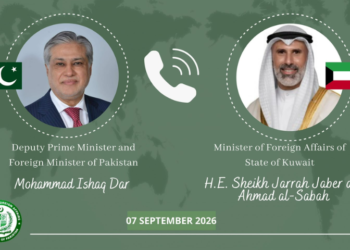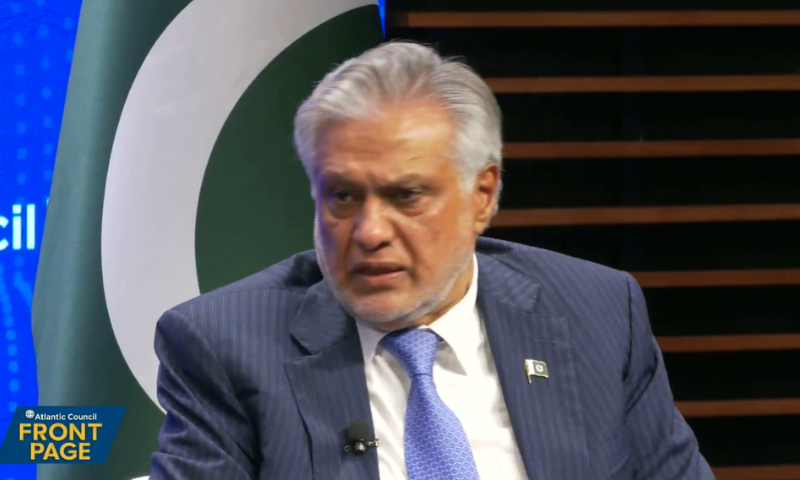
Washington, July 26, 2025: Deputy Prime Minister and Foreign Minister Ishaq Dar emphasized the need for all countries in the region to play a constructive role in promoting peace and stability, stating that “India’s efforts to assert dominance and hegemony in the region were decisively buried between May 7 and 10.”
Speaking at a session hosted by the U.S.-based think tank Atlantic Council, Dar underscored that the region cannot progress while remaining mired in conflicts. “Just two days ago, I reiterated at a UN Security Council meeting the importance of peaceful conflict resolution—an approach that received exceptional consensus,” he said.
Highlighting the Kashmir issue, Dar noted that it remains the core dispute between Pakistan and India. “UN Security Council resolutions validate the right to self-determination of the Kashmiri people, yet India has denied this right for over seven decades while maintaining its occupation,” he added.
Referring to India’s unilateral move in August 2019 to revoke Jammu and Kashmir’s special status, Dar condemned the action as illegal and aimed at altering the geography of a disputed territory. “Such actions violate international law, including the Geneva Conventions, and are unacceptable to anyone who believes in justice and peace,” he stressed.
Dar further criticized India’s persistent attempts to malign Pakistan under the guise of terrorism. “This pattern continued most recently on April 22, when India wrongfully blamed Pakistan for the Pahalgam incident,” he said.
Describing the tensions between Pakistan and India in May, Dar said the region was brought to the brink of disaster due to mutual distrust and conventional hostility. However, “backchannel diplomacy, international mediation—particularly by the United States and friendly countries—played a vital role in de-escalation.”
He thanked U.S. President Donald Trump and Secretary of State Robio for their efforts in facilitating a ceasefire and reaffirmed Pakistan’s commitment to upholding it. “In contrast, our neighbor has dismissed the development as a temporary arrangement, demonstrating political aggression,” he remarked.
Dar asserted that Pakistan has never initiated hostility and always responded within the framework of Article 51 of the UN Charter, which recognizes the right to self-defense. “Nonetheless, we cannot rely on fate or last-minute interventions. Lasting peace in South Asia is essential, and both countries must commit to playing a constructive and stabilizing role.”
He reiterated that Pakistan does not seek conflict with any of its neighbors. “We believe in cooperation, not confrontation. A recent example is my visit to Kabul on July 17 after two years of efforts, where a trilateral agreement was signed between Uzbekistan, Afghanistan, and Pakistan on the Trans-Afghan Railway Project.”
Dar concluded by stressing that regional peace hinges on the conduct of all parties, including India, who must engage in dialogue based on international norms. “India’s ambitions to dominate the region and act as a net security provider were decisively buried between May 7 and 10,” he declared.