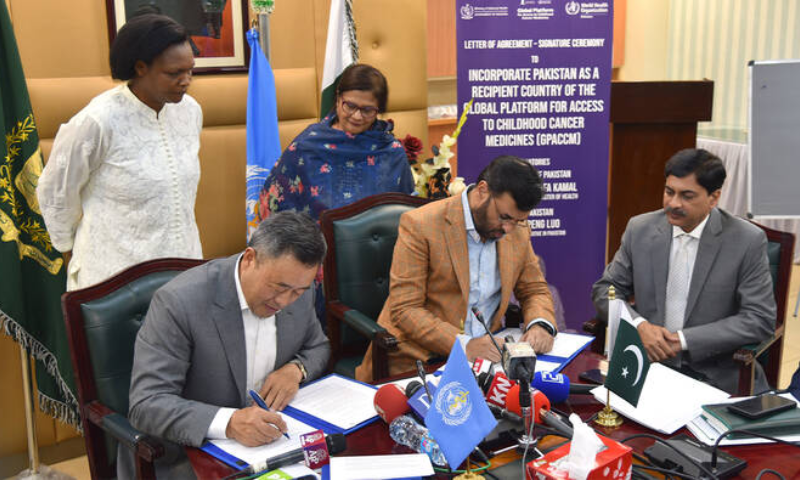
Islamabad, July 30, 2025: In a significant step toward improving childhood cancer care, Pakistan has signed an agreement with the World Health Organization (WHO) to provide free cancer medication to thousands of children across the country each year, state media reported Tuesday.
The agreement makes Pakistan part of the Global Platform for Access to Childhood Cancer Medicines (GCCM) — a WHO-led initiative designed to expand equitable access to life-saving cancer treatment for children in low- and middle-income countries.
Health Minister Dr. Mustafa Kamal announced that under the new agreement, Pakistan will receive a steady supply of essential pediatric cancer medicines annually, benefitting around 8,000 children diagnosed with cancer each year.
“Our goal is simple but profound: to save lives,” Kamal said at the signing ceremony. “The survival rate for children with cancer in our region currently stands at just 30 percent. With this initiative, we aim to double that rate by ensuring timely access to quality treatment.”
According to figures from the Aga Khan University Hospital (AKUH), fewer than half of the pediatric cancer cases reported in Pakistan receive a timely diagnosis or treatment, primarily due to limited access to pediatric oncology centers. Mortality rates remain high, with survival hovering between 10–30 percent — starkly lower than the over 80 percent survival rate in high-income countries.
Under the agreement, WHO will provide technical and operational support, while the United Nations Children’s Fund (UNICEF) will oversee procurement and delivery of the medicines to Pakistan.
“Today is a milestone in our journey toward a healthier Pakistan,” said Kamal. “We are proud to join global efforts to ensure that no child dies from a treatable disease. I thank WHO, UNICEF, GCCM, and all our partners for their unwavering support.”
Dr. Dapeng Luo, WHO Representative in Pakistan, praised the collaboration, emphasizing the importance of equitable access to treatment:
“No child should die of cancer because they lack access to medicine. WHO will stand side by side with Pakistan’s Ministry of Health and partners to ensure every child gets the care they need — regardless of where they live or who they are.”
The agreement is expected to not only improve survival outcomes but also strengthen Pakistan’s pediatric cancer care infrastructure and promote early diagnosis and treatment — crucial steps in tackling one of the leading causes of death among children globally.