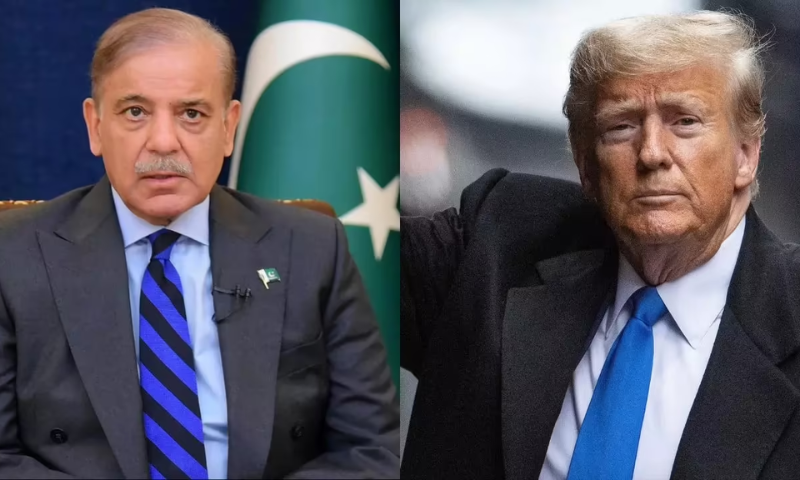
Islamabad, July 31, 2025: Prime Minister Shehbaz Sharif on Thursday thanked U.S. President Donald Trump for playing a pivotal role in finalizing a “historic” trade agreement between Pakistan and the United States, centered on energy cooperation and oil exploration.
In a post on X (formerly Twitter), Prime Minister Shehbaz wrote: “I wish to convey my profound thanks to President Trump for his leadership role in the finalization of the historic US-Pakistan trade agreement, successfully concluded by our two sides in Washington last night.”
Calling it a “landmark” deal, the premier said the agreement would deepen bilateral cooperation and “expand the frontiers of an enduring partnership” between the two countries in the days ahead.
The White House has not yet released official details of the deal, but President Trump, writing on his social media platform Truth Social, confirmed that the agreement involves joint efforts to develop Pakistan’s oil reserves.
“We have just concluded a Deal with the Country of Pakistan, whereby Pakistan and the United States will work together on developing their massive Oil Reserves. We are in the process of choosing the Oil Company that will lead this Partnership. Who knows, maybe they’ll be selling Oil to India someday,” Trump stated.
The announcement signals a breakthrough in U.S.-Pakistan economic ties, especially in the energy sector, and could pave the way for increased American investment in Pakistan’s natural resources. The move is being seen as a potential boost for Pakistan’s cash-strapped economy, which has been seeking long-term foreign partnerships to stabilize its energy needs and balance of payments.
Trump’s remarks also come amid escalating trade tensions with India. In a separate post, he announced that his administration is imposing a 25% tariff along with additional penalties on Indian goods beginning August 1, citing what he described as “unacceptable” trade barriers and high tariffs imposed by New Delhi.
“India has some of the highest tariffs and most obnoxious non-monetary trade barriers in the world. We’ve done relatively little business with them because of this. That changes now,” Trump wrote.
The shift in tone — with Washington pursuing deeper cooperation with Islamabad while taking a harder line on New Delhi — has caught the attention of analysts, who see it as a potential rebalancing of U.S. strategic interests in South Asia.
The trade agreement is expected to be formally signed during an upcoming high-level visit, with further details on implementation and energy sector investment likely to follow.