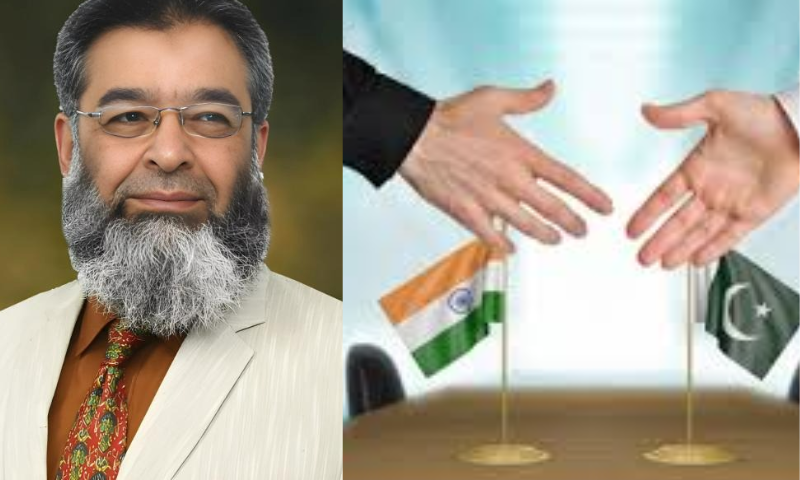
By Muhammad Mohsin Iqbal
After the partition of British India in 1947, two sovereign states emerged on the world map—Pakistan and India. The creation of these two nations was not merely a geographical separation; it was the beginning of a complicated and often hostile relationship, born out of historical grievances and political miscalculations. Nearly eighty years have passed since independence, and while Pakistan and India continue to celebrate their respective Independence Days with zeal, the lingering bitterness between the two neighbors remains unresolved. Where nations elsewhere have turned old enmities into partnerships, India has consistently refused to accept Pakistan with the generosity and recognition that neighbors ought to extend to each other.
From the very first day, India’s attitude towards Pakistan has been one of suspicion, resistance, and often outright hostility. Instead of building bridges of trust, India chose to fan the flames of division. The consequences of this approach have been tragic and long-lasting. Several wars have been fought, thousands of lives lost, and vast resources diverted from development to defense. The most painful wound came in 1971, when India played an undeniable role in the dismemberment of Pakistan and the creation of Bangladesh. This event, etched deeply into the Pakistani psyche, remains a grim reminder of how geopolitical rivalries can tear apart nations.
It is a rare and unfortunate reality in today’s interconnected world that two neighboring countries, bound by geography and shared history, remain locked in such deep-rooted hostility. Across the globe, former adversaries have reconciled. Europe, once a theatre of devastating wars, has formed a union. Southeast Asia has progressed through regional cooperation. Even countries like Vietnam and the United States, once locked in a bitter war, have forged economic and diplomatic ties. Yet, India and Pakistan continue to spend billions on arms, missiles, and military preparedness. Instead of moving towards economic growth and social advancement, both nations remain trapped in an arms race.
Must it always be this way? Is there no alternative to confrontation? One must ask, with sincere reflection; can’t Kashmir, water disputes, and other long-standing issues between the two countries be resolved through honest and meaningful dialogue? History shows us that even the greatest wars—the World Wars, the Cold War, the Vietnam War—eventually ended at the negotiating table. Nations that suffered untold horrors found it within themselves to speak, to compromise, and to make peace. Is it then too much to expect the same wisdom and maturity from India and Pakistan?
Despite Pakistan’s repeated commitment to resolving issues through dialogue, the leadership of Indian side unfortunately often succumbs to populist sentiments, election slogans and political posturing, rather than confronting the reality that dialogue is not a weakness—it is the only path to sustainable peace. Dialogue does not mean surrender. It means recognizing the humanity of the other side, acknowledging grievances, and striving for solutions through law, diplomacy, and mutual respect. When doors of communication are closed, misunderstandings multiply, and the space for extremism expands. In contrast, when dialogue is open, hope is rekindled.
Pakistan has constantly expressed its willingness to engage in talks on all core issues, including Kashmir, water distribution under the Indus Waters Treaty, trade, and cross-border terrorism. Yet India has often chosen to either rebuff these overtures or set preconditions that render genuine talks impossible. The cost of this stalemate is borne not by politicians, but by the common people on both sides—farmers in Punjab, students in Karachi and Delhi, workers in Lahore and Mumbai, who deserve better lives, not an inheritance of animosity.
Economic development is being strangled by this toxic political climate. South Asia remains one of the least economically integrated regions in the world. Trade between India and Pakistan is negligible compared to its potential. If normalized relations were established, industries in both nations could benefit immensely. Shared markets, reduced tariffs, and joint ventures could create jobs, improve living standards, and reduce dependence on foreign aid or exploitative loans.
Beyond economics, both nations could gain from cooperation in health, education, and technology. In an age when diseases recognize no borders, and when climate change threatens both monsoon patterns and food security, joint research and policy coordination are not luxuries—they are necessities. Collaborative efforts in public health, vaccine development, water management, and disaster response would uplift millions.
Education offers another bridge. Students and scholars from both sides could engage in academic exchange, fostering mutual understanding and breaking down long-held prejudices. Media, literature, and the arts—already so intertwined in language and culture—could be vehicles of reconciliation, rather than conflict.
But none of these possibilities can take root in soil poisoned by hatred. For peace to bloom, the political will must be cultivated. The media on both sides must cease their sensationalism and begin nurturing narratives of peace, commonality, and shared human aspirations. Civil society must rise above fear and demand from their leaders a future free of inherited enmity.
It is often said that the relationship between India and Pakistan is destined to remain hostile until the end of time. But fatalism is not a policy. It is a surrender. History is shaped not by inevitabilities, but by choices. There is still time to choose the path of wisdom.
Peace between India and Pakistan is not only possible—it is necessary. It requires courage, not cowardice. It requires dialogue, not diatribe. And above all, it requires the recognition that the people of both nations have more to gain from cooperation than from conflict.
Both countries owe this to their future generations. They owe it to the innocent who have died in wars they never asked for. And they owe it to the millions still living in poverty, yearning for education, clean water, good health, and dignity. The question is not whether peace is possible. The question is whether the will exists to pursue it.