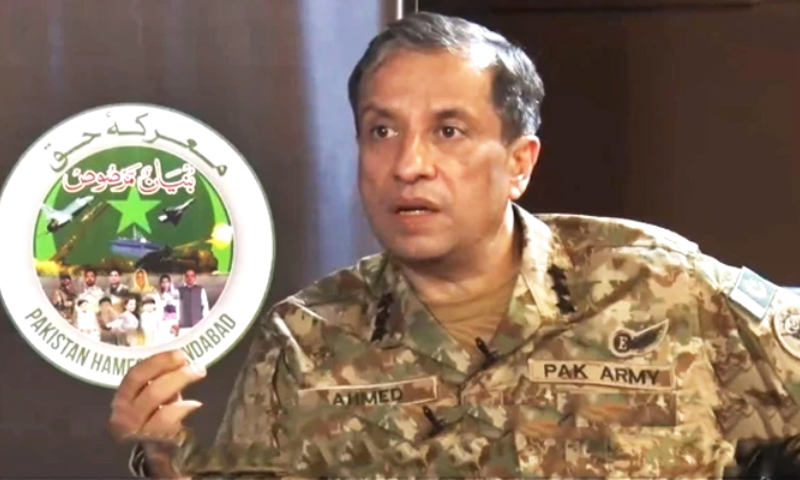
Rawalpindi, August 16, 2025: Director General Inter-Services Public Relations (ISPR) Lt Gen Ahmed Sharif Chaudhry has stressed that counterterrorism operations in Balochistan can only succeed if local communities themselves identify and reject militants.
Speaking to students under the military’s internship programme, the DG ISPR highlighted that insurgent violence in Balochistan has escalated in recent months. He noted that in February alone, the province accounted for nearly 62 per cent of terrorism-related deaths nationwide.
“An operation in any area is successful when the people themselves identify the terrorists,” Lt Gen Chaudhry said.
He acknowledged growing calls for a major military campaign but cautioned that sustainable peace required grassroots cooperation. “It is often suggested that resentment is brewing in Balochistan, but the reality is that its people and youth understand their deep bond with Pakistan — and they are tired of terrorism,” he said.
The army’s media chief urged the youth to witness first-hand the resilience of Baloch communities. “Go to Balochistan and see how sensible and far-sighted the people are,” he remarked, pointing to success stories such as Cambridge graduate Dr Yarjan Abdul Samad, karate champion Shahzaib Rind, and women serving as deputy commissioners in various districts.
He also paid tribute to the late Major Muhammad Anwar Kakar, calling him a “brilliant officer and a great son of the soil” who played a key role in neutralising terrorists during the Gwadar PC Hotel attack.
Explaining the army’s strategy, Lt Gen Chaudhry said counterterrorism efforts are carefully intelligence-led to avoid civilian harm. “It is not that the army vacates an area, conducts an operation, and leaves — only for terrorists to return. That is why intelligence-based operations are critical,” he stated.
“The army has no interest in harming innocent citizens,” he clarified. “But if anyone shelters terrorists or stores explosives in their home, they will have to face the consequences.”
He underscored that entire communities cannot be punished for the actions of a few individuals. “We must work together with the people and the administration of Balochistan. The people themselves are now standing up against terrorism,” he concluded.