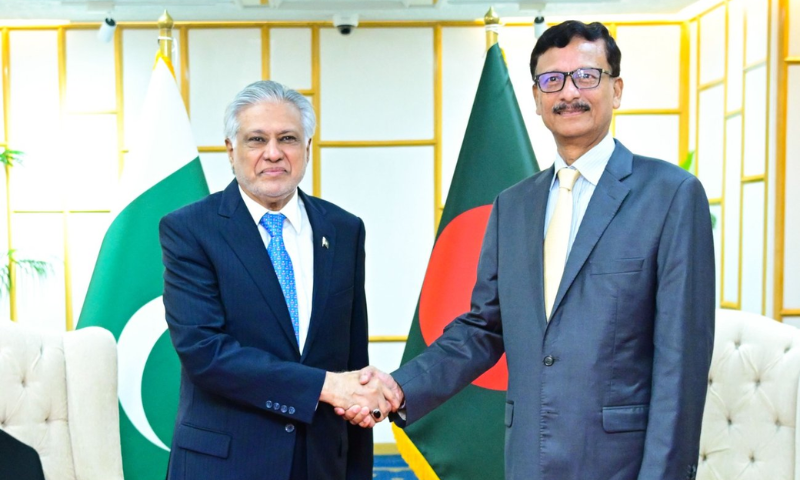
Dhaka, August 24, 2025: Pakistan and Bangladesh on Sunday reaffirmed their commitment to elevate bilateral ties, with a particular focus on expanding trade and economic cooperation.
Deputy Prime Minister and Foreign Minister Ishaq Dar, currently on a two-day official visit to Dhaka, held talks with Bangladesh’s Foreign Adviser Touhid Hossain covering the full spectrum of relations. According to the Foreign Office, discussions included high-level exchanges, trade, people-to-people contacts, cultural cooperation, education, capacity-building, and humanitarian issues.
Regional and international developments also featured in the dialogue, with both sides underscoring the need to revive SAARC and calling for just resolutions to the Palestine and Rohingya crises. “The talks were held in a constructive atmosphere, reflecting the goodwill and cordiality between the two countries,” the FO noted.
Dar’s visit, the first by a Pakistani foreign minister in 13 years, follows an invitation from the Government of Bangladesh and comes amid a visible thaw in ties since the ouster of former PM Sheikh Hasina after a student-led uprising. Both nations launched sea trade last year and expanded government-to-government commerce earlier this year, while Prime Minister Shehbaz Sharif has held multiple engagements with Chief Adviser Professor Muhammad Yunus.
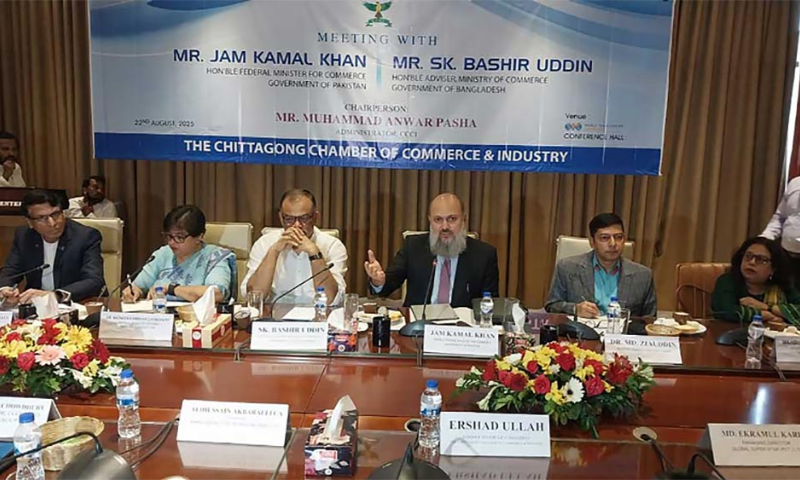
On Sunday morning, Dar, joined by Commerce Minister Jam Kamal, met Bangladesh’s Commerce Adviser Sk Bashir Uddin and senior officials over breakfast to explore avenues for boosting economic cooperation, trade, and connectivity.
Later, following delegation-level talks, Dar and Hossain witnessed the signing of six key agreements, including:
- Abolition of visas for diplomatic and official passport holders,
- MoU on establishing a Joint Working Group on Trade,
- MoU between the foreign service academies of both countries,
- MoU between Associated Press of Pakistan and Bangladesh Sangbad Sangstha,
- MoU between the Institute of Strategic Studies Islamabad and the Bangladesh Institute of International and Strategic Studies,
- A Cultural Exchange Programme.
“These agreements will institutionalise and strengthen cooperation in trade, economics, diplomacy, academia, media, and culture,” the FO said.
Coinciding with the visit, Islamabad also launched the Pakistan-Bangladesh Knowledge Corridor, offering 500 scholarships to Bangladeshi students for higher education in Pakistan over the next five years — a quarter reserved for medical studies. Additionally, Pakistan will provide training for 100 Bangladeshi civil servants and expand annual scholarships under its Technical Assistance Programme from five to 25.
Dar also held a meeting with Jamaat-e-Islami Bangladesh Emir Shafiqur Rahman, during which both leaders emphasised the importance of strengthening bilateral ties.