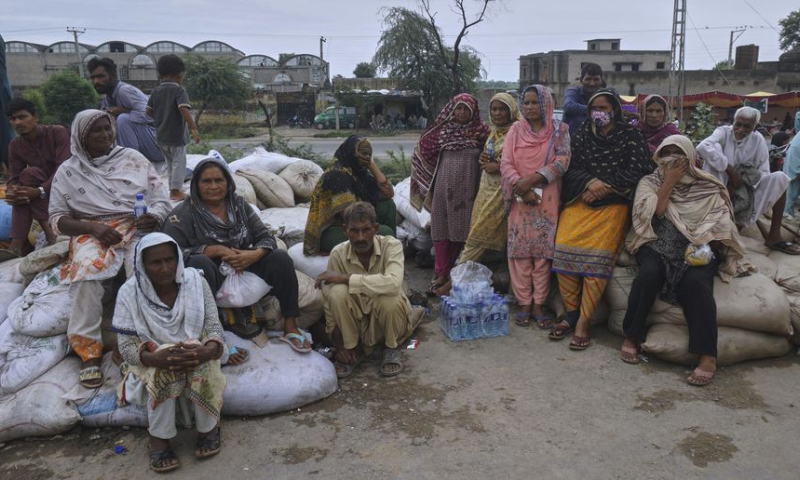
Islamabad, September 2, 2025: The European Union (EU) has announced Rs350 million (€1.05 million) in emergency assistance for victims of the devastating floods in Pakistan, which have claimed hundreds of lives, displaced thousands, and left many missing.
“Our heartfelt condolences go out to the families of the victims and all those affected by this disaster,” the EU said in a statement on Tuesday.
The aid package will provide life-saving health services, water, sanitation and hygiene (WASH) support, and cash assistance for vulnerable families to meet their basic needs. The funding will be delivered through humanitarian partner organisations on the ground.
“The EU remains committed to standing in solidarity with the people of Pakistan during this critical time,” the statement added.
Heavy monsoon rains, compounded by the release of massive water from India, have triggered widespread flooding across multiple provinces. Entire villages have been submerged, farmland destroyed, and thousands left stranded.
Authorities said the death toll continues to climb as rescue teams struggle to reach remote areas. According to the National Disaster Management Authority (NDMA), the hardest-hit province is Khyber-Pakhtunkhwa (K-P) with 480 deaths, followed by Punjab (191), Sindh (58), Balochistan (24), Gilgit-Baltistan (41), Azad Kashmir (29), and Islamabad (8). Children have borne the heaviest toll, with 219 minors among the deceased, along with 484 men and 128 women.
The disaster has caused catastrophic damage to infrastructure, with 238 bridges washed away, 661 km of roads submerged, and more than 9,000 homes destroyed. Over 6,000 livestock have also been lost.
More than 35,000 people have been displaced, with the majority moved to relief camps. K-P accounts for the largest number with 26,000 displaced, followed by 6,000 in Punjab and 3,000 in Gilgit-Baltistan.
Pakistan remains among the most vulnerable countries to climate-induced disasters. Experts warn that extreme weather linked to climate change will likely intensify the frequency of floods, droughts, and heatwaves in the coming years.