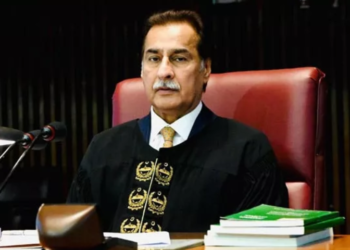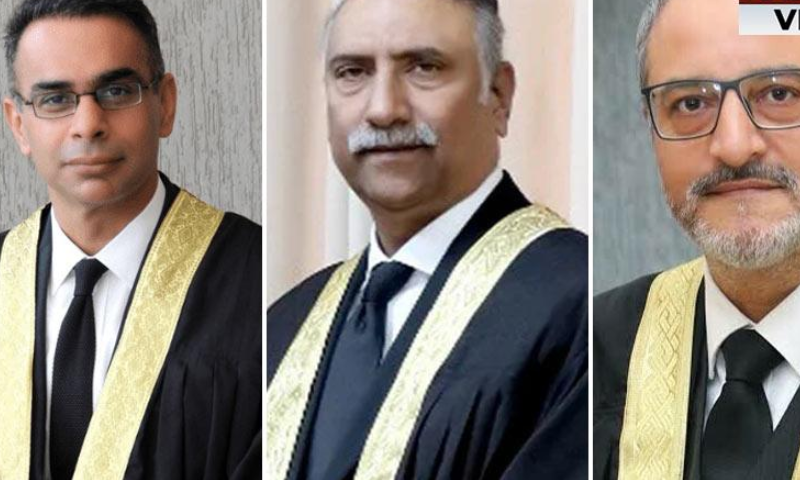
Islamabad, September 3, 2025: Justice Babar Sattar of the Islamabad High Court (IHC) has stirred intense debate within judicial circles after penning a strongly worded letter to Chief Justice Sarfraz Dogar, raising fundamental questions about transparency, independence, and the functioning of the high court.
The four-page letter, copies of which have been circulated to all IHC judges and the court’s registrar ahead of a scheduled full court meeting today (Wednesday), calls into question whether the court is truly fulfilling its constitutional mandate.
Justice Sattar bluntly asked: “Do the judges of the Islamabad High Court today believe that they are fulfilling their constitutional responsibilities? Do they believe that citizens still view them as protectors of their fundamental rights? Has the IHC made efforts to establish the district judiciary as an independent institution?”
The letter highlights serious concerns over roster preparation and case fixation, alleging a lack of transparency in the process. Justice Sattar pointedly noted that senior judges are being sidelined while transferred and additional judges are being assigned significant cases.
“Every day in our judgments, we tell officials that they are not kings, nor are their powers without limits or accountability,” he wrote, questioning whether judges themselves were adhering to the same principles.
The letter also accuses the chief justice’s office of refusing to issue cause lists in certain cases and of deliberately excluding specific judges, including Justice Sattar himself, from single-bench rosters. He further criticised the administrative committee’s composition, alleging that senior judges were excluded in violation of established rules, while additional and transferred judges were included.
In another stinging remark, Justice Sattar likened the requirement for judges to seek a No Objection Certificate (NOC) before travelling abroad to placing them on the Exit Control List (ECL), calling the practice an affront to judicial independence.
He cautioned that while institutions take decades to build, “it takes only a short time to destroy them,” urging the judiciary to restore transparency and accountability in its own ranks.
The letter, surfacing just hours before the full court meeting, has opened a fresh Pandora’s box inside the Islamabad High Court, raising the stakes for a debate on judicial independence, internal accountability, and the credibility of one of Pakistan’s most important constitutional courts.