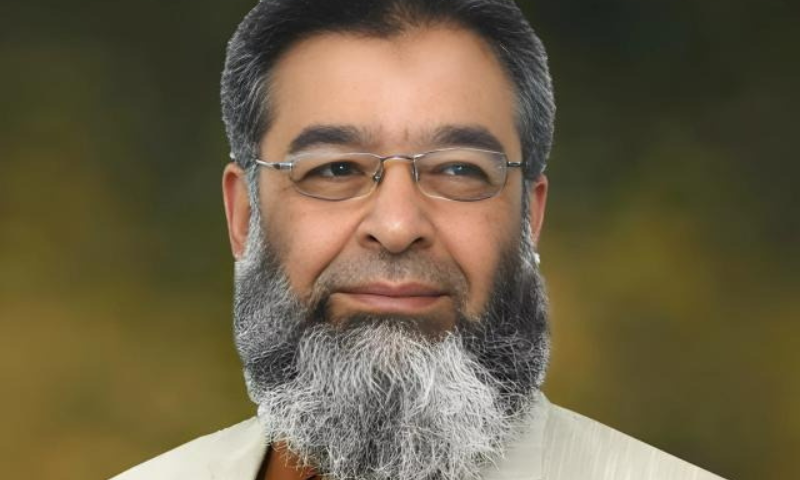
By Muhammad Mohsin Iqbal
The history of the life of the Holy Prophet Muhammad (Peace and Blessings of Allah Be Upon Him) is not merely a record of events, but a treasure of guidance for humanity in every age. His life, lived under the direct light of revelation, provided answers not only for spiritual matters but also for the practical realities of existence. Among these realities were natural disasters—earthquakes, storms, floods, droughts, and celestial signs—which shook the lives of people. The manner in which the Prophet (PBUH) and his noble companions responded during such moments forms a model of conduct that speaks across the centuries.
The Qur’an itself affirms that calamities are both a trial and a reminder. Allah the Exalted declares: “And We will surely test you with something of fear and hunger and a loss of wealth and lives and fruits, but give glad tidings to the patient. Those who, when disaster strikes them, say, ‘Indeed we belong to Allah, and indeed to Him we will return.’ They are the ones upon whom are blessings from their Lord and mercy. And it is they who are rightly guided.” (Al-Baqarah 2:155–157). In this divine verse lies the central foundation of how the early Muslim community, under the guidance of the Prophet (PBUH), endured the upheavals of nature—with patience, remembrance, and a return to Almighty Allah.
During the Prophet’s blessed time, when unusual natural events occurred, the response was never one of panic or hopelessness, but of turning to Allah. The earthquake, for example, which occurred in Madinah, was met with the Prophet (PBUH) immediately urging the people to remembrance, repentance, and prayer. He would say, “When you see such things, hasten to remembrance of Allah, supplication, and seeking His forgiveness.” (Sahih Muslim). Thus, the routine of life in those moments shifted from ordinary engagement to extraordinary devotion.
When the winds grew violent, darkening the skies and striking fear into hearts, the Prophet (PBUH) displayed both human concern and divine reliance. Hazarat Aisha (May Allah be pleased with her) narrates: “Whenever a strong wind blew, anxiety appeared on the face of the Messenger of Allah (PBUH). He would move in and out of the house, and if he saw clouds forming, his face would change. I asked him once, and he replied, ‘O Aisha, what will assure me that this may not be a punishment? Nations before were punished with winds. When I see clouds, I fear it may bring punishment, while people rejoice when they see them, hoping for rain.’” (Sahih Bukhari, Sahih Muslim). His routine was thus not one of heedlessness but of deep consciousness, teaching that natural occurrences carry lessons, and must direct hearts toward Allah’s mercy and might.
At times of eclipse, whether solar or lunar, the Prophet (PBUH) established a special routine of prayer known as Salat al-Khusuf or Salat al-Kusuf. On one such occasion, he gathered the people in the mosque and led them in long prayers, recitation, bowing, and prostration, reminding them that these cosmic signs are not random but are controlled by the Almighty. He said: “The sun and the moon are two of the signs of Allah; they do not eclipse for the death or life of anyone. When you see them, stand and pray.” (Sahih al-Bukhari). In this, the Prophet (PBUH) established a routine of worship, knowledge, and reflection during natural occurrences that might otherwise have been misunderstood as mere omens.
Droughts and scarcity of rain were also a reality of the Arabian Peninsula. At such times, the Prophet (PBUH) would lead the community in Salat al-Istisqa, the prayer for rain. He would go out to the open field, supplicate with humility, raise his hands toward the heavens, and even reverse his cloak as a sign of hope for transformation. The Qur’an reinforces this attitude: “And it is He who sends down rain after they have despaired, and spreads His mercy.” (Ash-Shura 42:28). Thus, the routine during drought became one of collective repentance, prayer, and supplication, with trust in the unseen mercy of the Almighty Allah.
Floods and heavy rains also occurred, and the Prophet (PBUH) would teach the people to seek protection. He would supplicate, “O Allah, let it be a beneficial rain.” (Sahih al-Bukhari). If the rain became excessive, he would pray, “O Allah, around us and not upon us, upon the hills and mountains, the valleys and the roots of trees.” (Sahih al-Bukhari). These simple yet profound prayers show that his routine was one of moderation—welcoming Allah’s bounty but also seeking refuge from harm.
The companions followed this Prophetic example with sincerity. They did not view natural disasters merely as blind forces, but as signs calling for reflection, patience, and correction of deeds. Their routines in such moments were marked by increased prayer, charity, and unity. For they understood that calamities are not merely afflictions, but also opportunities for spiritual awakening.
Indeed, the Prophet (PBUH) taught that for the believer, even suffering carries goodness. He said: “Wondrous is the affair of the believer, for there is good for him in every matter, and this is not the case with anyone except the believer. If he is happy, he thanks Allah, and that is good for him; if he is harmed, he shows patience, and that is good for him.” (Sahih Muslim). This was the routine of faith, unshaken by disaster, and illuminated by trust in Allah’s decree.
Thus, the routines during the Prophet’s time in natural disasters were not disordered nor despairing, but rather harmonized with the eternal rhythm of remembrance, patience, and hope. They were routines that transformed fear into faith, calamity into closeness to Allah, and disasters into reminders of the ultimate reality—that this world is fleeting, and the true refuge lies in the mercy of the Almighty.