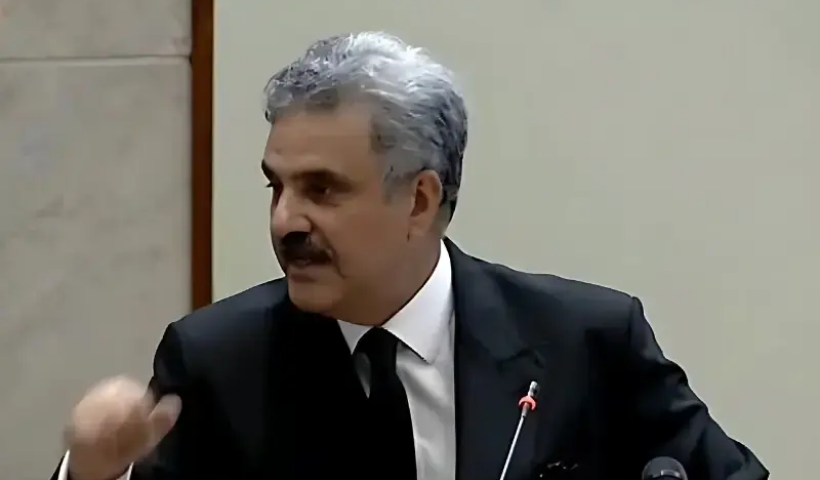
Islamabad, September 8, 2025: Chief Justice of Pakistan (CJP) Justice Yahya Afridi announced on Monday that the National Judicial Policymaking Committee (NJPC) will convene on October 17 to deliberate on major judicial issues, including the matter of missing persons.
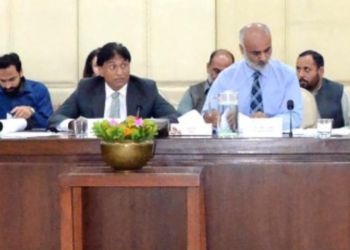
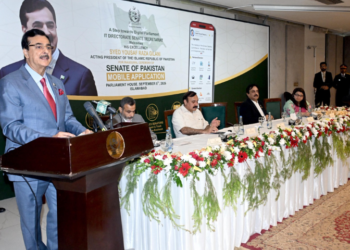
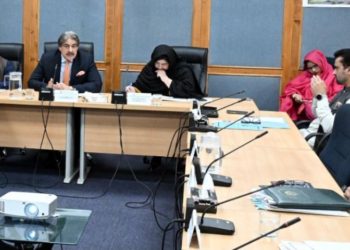
Addressing the Judicial Conference in Islamabad, attended by judges of the superior courts, Attorney General Mansoor Usman Awan, and bar representatives, the CJP outlined his reform agenda, placing emphasis on technology, transparency, and speedy justice.
Justice Afridi said the Supreme Court had begun transitioning towards a digital and paperless system, with case registration, records, and judgments already accessible online. A facilitation centre for litigants will become fully operational from October 1, while over 61,000 case files are being digitised.
“We are moving towards scheduling cases through artificial intelligence. However, the judiciary is not yet fully ready for its immediate use,” he noted, adding that transparency and efficient case management were central to his vision.
The CJP disclosed that the Supreme Judicial Council (SJC) had disposed of 64 complaints against judges, with 72 still under consideration. He clarified that pending cases would be taken up on a first-come, first-served basis to ensure fairness.
On administrative reforms, Justice Afridi highlighted new rules on judges’ leave and internal audits, and said draft regulations had been circulated for review by the full court. He also noted a reduction in judicial security, revealing that his own security convoy had been scaled down from nine vehicles to two.
Acknowledging the importance of outreach, the chief justice said he had toured remote areas to review judicial facilities and instructed that reforms benefit the entire judiciary nationwide.
Bar leaders and government officials praised the CJP’s initiatives. Pakistan Bar Council Vice Chairman Tahir Nasrullah lauded measures such as solar power provision, internet access in far-flung areas, and video-link hearings. Supreme Court Bar Association President Rauf Atta appreciated electronic filing and hearings during summer vacations, though he urged further improvements in case scheduling.
Attorney General Mansoor Usman Awan commended the reduction in pending cases compared to last year and backed the judiciary’s adoption of AI and digital tools to enhance efficiency.