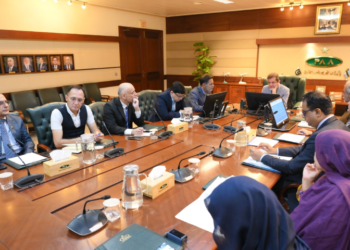
Islamabad, September 29, 2025: A new study by global professional services firm Alvarez & Marsal (A&M) has revealed alarming gaps in Pakistan’s cigarette production and taxation, pointing to a massive rise in illicit trade.
The report, presented by Nick Hodsman, Global Head of Anti-Illicit Trade Policy at British American Tobacco (BAT), employed a novel methodology by tracking acetate tow — the key raw material used in cigarette filters — to estimate the country’s production capacity.
According to the findings, Pakistan imported enough acetate tow in 2023 to manufacture 60–80 billion cigarettes. Of these, legitimate companies produced 39 billion sticks, including 2 billion for export, leaving nearly 41 billion cigarettes attributed to non-duty-paid manufacturers. Federal Excise Duty (FED) and GST data from the Federal Board of Revenue (FBR) confirm taxes were collected on only 37 billion sticks, highlighting a major shortfall in revenue.
“The data shows a troubling mismatch between declared volumes and production potential,” Hodsman noted, adding that acetate tow tracking provides a “clear window” into Pakistan’s illicit cigarette market.
In FY 2024–25, the government introduced an adjustable FED of PKR 44,000 per kilogram on acetate tow imports to improve documentation. However, weak enforcement has triggered increased smuggling and misdeclaration. Official imports fell sharply from 2.36 kilotons in 2023 to just 0.145 kilotons in the current fiscal year, even as the supply of local non-duty-paid brands remained steady — a sign of growing illegal inflows.
Recent seizures by the FBR at Sost (China border) and Torkham (Afghanistan border) point to the emergence of new smuggling routes. Hodsman warned that without stricter border enforcement and tighter import checks, Pakistan risks widening its illicit cigarette trade gap — undermining government revenues, hurting legitimate businesses, and weakening the economy.