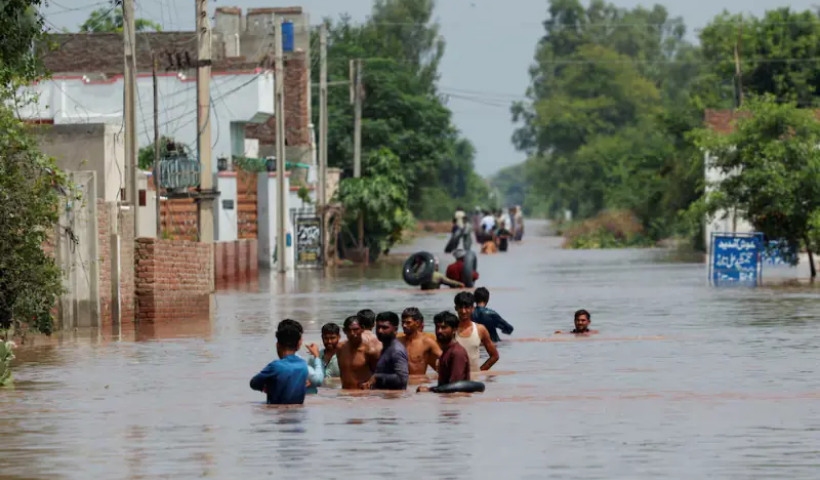
Lahore, October 4, 2025: Pakistan is bracing for a sharp turn in weather conditions, with heavy rainfall predicted in the coming days and authorities warning of potential flooding in several regions.
Director General of the Punjab Provincial Disaster Management Authority (PDMA), Irfan Ali Kathia, issued a detailed briefing on Saturday, urging residents to remain vigilant.
“From the 5th of this month, rain is expected from Rawalpindi to Lahore, and it could be heavy,” Kathia said. Light rain is likely in parts of Punjab on Saturday, while southern Punjab is forecast to receive 10–15mm on Sunday. “Tomorrow, the intensity of rain will be more than today’s, averaging 30–35mm.”
According to PDMA projections, October 6 may bring 50–70mm of rainfall across northern, north-eastern, and central Punjab, with further intensification on October 7. “Residents in vulnerable areas should remain alert and take precautions,” Kathia cautioned.
The first heavy winter rain fell on October 3 in Rawalpindi and Islamabad, ending a six-week dry spell of heat and humidity. The sudden chill sent residents reaching for sweaters and blankets, while roadside vendors quickly set up stalls selling seasonal favourites like peanuts and roasted chickpeas.
Meanwhile, the Potohar region and northeastern Punjab—covering Rawalpindi, Murree, Chakwal, and Gujrat—are set for intermittent rain and thunderstorms until October 7. Meteorologists warn that alternating hot, dry spells and sudden rain bursts will likely persist through early October.
Floodwaters continue to batter 27 districts nationwide, with Punjab alone reporting devastation in 28 districts, affecting 407,000 people. More than 612,800 residents and 2 million livestock have been displaced.
In South Punjab, 331 relief camps shelter around 106,000 people, supported by 425 medical camps and mobile clinics. Agriculture has been severely hit, with 2.58 million acres of farmland damaged—worst in Gujrat and Faisalabad—destroying maize, rice, sugarcane, and cotton crops.
Rivers are also rising. At Head Marala, the Chenab is carrying 20,000 cusecs, with an additional 100,000 cusecs expected from India within 48 hours due to silt-flushing at Dulhasti. Marala’s outflow currently stands at 23,000 cusecs, while Mangla Dam levels are reported high. The Sutlej may also receive 50,000 cusecs from India, with 35,000 cusecs possibly released into the Ravi.
According to DG Kathia, 11,500 personnel across 27 districts, including Army officers and local administration teams, are engaged in emergency operations. A total of 2,213 survey teams are assessing damages in real time, monitored via an online dashboard. Surveys across 69 tehsils are expected to conclude by October 27.
Relief distribution has also begun, with Bank of Punjab booths set up in every tehsil. Over 50,000 flood-hit residents have already received financial aid cards, while a new complaints platform—developed with the Punjab Information Technology Board—promises resolution of grievances within seven days.
“The current floods have caused greater damage than all previous events, including the loss of homes, crops, livestock, and lives,” Kathia said, noting that Rs51 billion has been disbursed over the past 15 years for flood relief.
Pakistan’s recent flood history shows the scale of recurring disasters:
- 2010: 350,000 people affected
- 2012: 38,196 people affected
- 2014: 359,000 people affected, Rs14 billion disbursed
- 2022: 56,000 people affected, Rs10 billion distributed
With 2025 already recording wider devastation than past events, officials warn that preparedness and community-level resilience will be critical to reducing long-term losses.