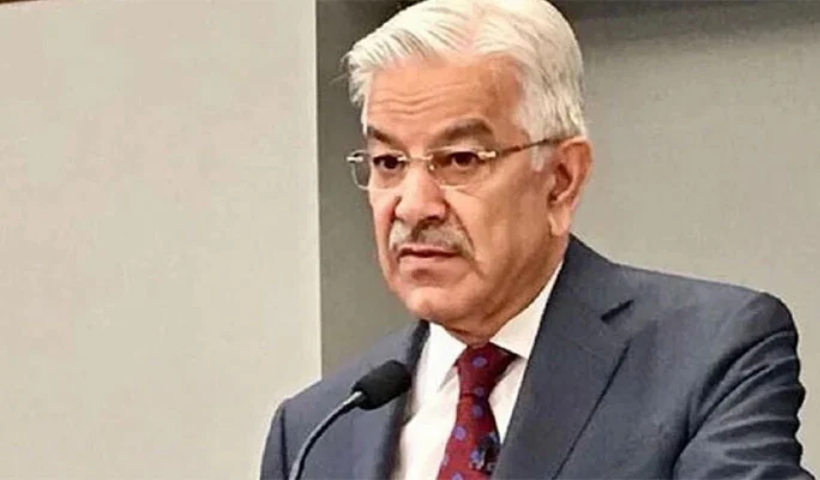
Sialkot, October 11, 2025: Defence Minister Khawaja Asif has warned that Pakistan’s relations with Afghanistan are deteriorating, cautioning that the current atmosphere could further strain bilateral ties — something Islamabad does not desire.
Speaking to a private news channel, Asif said relations between the two neighbours “had never been ideal,” adding that terrorism was being exported from Afghan soil into Pakistan.
“Pakistan wants relations of respect and dignity — just like good neighbours,” the minister said, urging Kabul to cooperate in addressing cross-border terrorism.
The remarks come amid heightened tensions between Islamabad and Kabul, as Pakistan accuses the Taliban-led interim government of failing to act against terrorist groups operating from Afghan territory.
Pakistan has witnessed a sharp rise in cross-border terror incidents since the Taliban returned to power in 2021, particularly in Khyber Pakhtunkhwa and Balochistan. The two countries share a porous 2,500-kilometre border, which serves as a vital link for regional trade and local communities on both sides.
Despite repeated assurances, Pakistan maintains that groups such as the Tehreek-e-Taliban Pakistan (TTP) continue to use Afghan soil to launch attacks.
A report by the United Nations Security Council’s Analytical Support and Sanctions Monitoring Team recently confirmed Islamabad’s concerns, revealing evidence of a nexus between the Taliban administration and the TTP, including logistical and financial support.
During the interview, Asif also remarked that residents in areas sheltering militants often know about their presence.
“If someone from outside enters a neighbourhood, I would surely know within three days,” he said, adding that silence from locals in such cases amounts to “partial consent.”
He reiterated that the state would not allow harm to come to patriotic citizens and vowed continued action against terrorist networks.
The defence minister further accused India of exploiting Afghan territory to support terrorism in Pakistan.
“New Delhi’s recent statements indicate it might attempt another misadventure,” Asif warned. “If it does, Pakistan will respond even more forcefully than before. The delusion India once had has already been dispelled.”
Pakistan has hosted millions of Afghan refugees for over four decades, from the Soviet invasion to the Taliban takeover in 2021. Many have since integrated into local communities, while others await relocation abroad.
Following a crackdown on undocumented migrants under the Illegal Foreigners Repatriation Plan, more than 554,000 Afghans have returned since April 2025 — including around 145,000 in August, according to official data.
A day earlier, Director-General Inter-Services Public Relations (DG ISPR) Lt Gen Ahmed Sharif Chaudhry said Pakistan had engaged Afghanistan through multiple channels — including the United States, Saudi Arabia, Qatar, Turkey, and the UAE — both before and after the Doha Agreement.
“Yet the space given to non-state actors in Afghanistan is not only against Pakistan’s interests but also dangerous for Afghanistan itself,” he warned.
He urged the Afghan authorities to “seal the border” and prevent their territory from being used for attacks on Pakistan.
The DG ISPR further noted that India was using Afghan soil for proxy operations, adding that a large cache of American weapons left behind after the U.S. withdrawal had fallen into the hands of terrorist groups.
“Afghanistan must ensure that its soil is not used by non-state actors. Pakistan has provided concrete evidence of such activities to Afghan authorities,” he said.