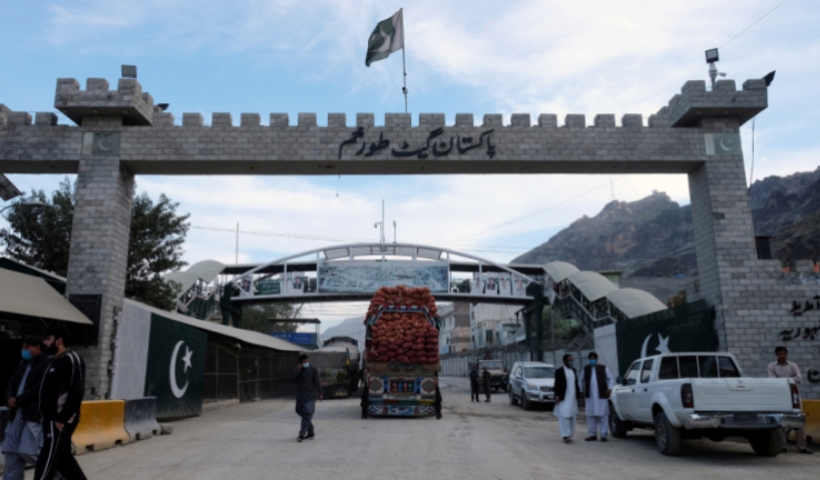
Peshawar, October 16, 2025: Trade activities through the Torkham and Chaman border crossings with Afghanistan remained suspended on Sunday amid what authorities described as an “escalating security situation” along the Pak-Afghan frontier, officials confirmed on Thursday.
The closure follows a fresh wave of cross-border hostilities between Pakistan and Afghanistan earlier this week, which prompted both sides to agree to a temporary ceasefire to prevent further escalation.
According to Pakistan’s Foreign Office (FO), the 48-hour ceasefire — requested by the Taliban authorities in Kabul and mutually agreed upon — came into effect at 6 p.m. local time on October 15.
A notification issued by the Directorate General of Transit Trade (DGTT) on October 15, stated that transit vehicles bound for Afghanistan have reached the border terminals but are unable to exit Pakistani territory due to the ongoing closure.
“These vehicles are mounted with tracking devices and RFID (Radio Frequency Identification) seals under the new tracking and monitoring system launched on October 1,” the notification said. It warned that limited parking capacity at the border terminals had caused severe congestion.
“Prolonged stoppage of vehicles can encourage device theft and seal tampering, potentially leading to pilferage of bonded cargo. Moreover, the absence of return journeys may cause a shortage of tracking devices at port terminals,” it added.
As of Wednesday, the DGTT reported that 107 vehicles had arrived at Torkham and 357 at Chaman, while an additional 37 and 85 vehicles, respectively, were still en route.
“To avoid congestion and ensure the security of bonded goods,” the directorate said, “the processing of transit consignments has been temporarily halted until border operations normalise.”
Torkham and Chaman serve as vital trade corridors between Pakistan and Afghanistan, handling significant volumes of goods including fresh produce. Official data shows Pakistan’s exports to Afghanistan rose 38.68 percent to $773.89 million in FY25, compared to $558.03 million in the previous fiscal year.
Cross-border trade disruptions have become increasingly frequent. Earlier this month, an internet outage on the Afghan side hampered customs clearance at Torkham, while in March, the movement of people across the border was suspended after a standoff between Pakistani and Afghan security forces over construction activities on both sides.