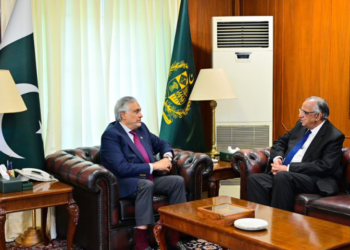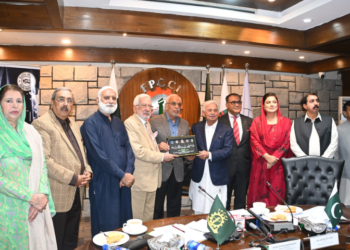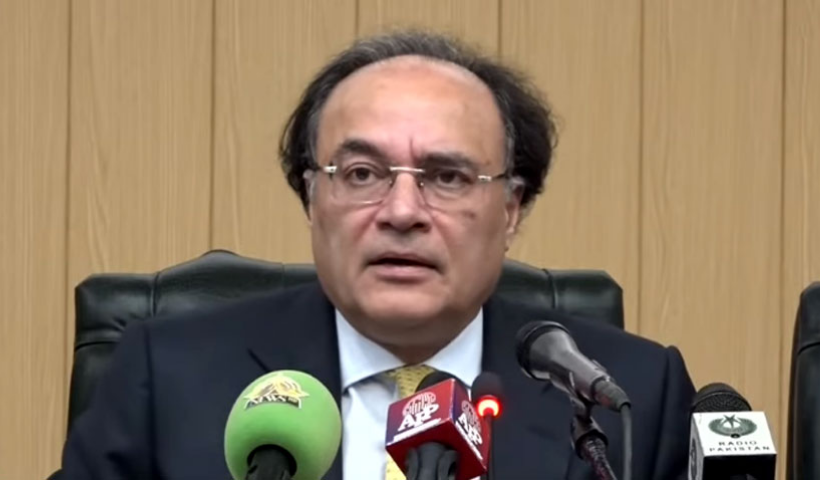
Islamabad, November 3, 2025: Finance Minister Muhammad Aurangzeb said on Monday that Pakistan’s economy is moving in the right direction, with “visible signs” of improvement across key sectors.
Addressing a joint press conference alongside members of the government’s economic team, Aurangzeb said significant progress has been made toward achieving macroeconomic stability, noting that the recent staff-level agreement with the International Monetary Fund (IMF) validates the country’s ongoing recovery efforts.
“The government’s primary objective is to ensure sustainable economic stability through structural reforms,” he said. “Fundamental reforms in the tax system, energy sector, and other key areas are essential for long-term growth.”
The finance minister added that pension reforms and right-sizing within government departments are also key components of the broader reform agenda. He reaffirmed the government’s commitment to maintaining fiscal discipline and implementing structural reforms to strengthen the national economy.
Aurangzeb said that three major global rating agencies had confirmed Pakistan’s macroeconomic stability and expressed gratitude to the Gulf Cooperation Council (GCC), China, and the United States for their continued support to Pakistan.
Federal Board of Revenue (FBR) Chairman Rashid Langrial reported that Pakistan’s tax-to-GDP ratio has increased by 1.5% — the first such rise in recent years. He said the number of individual income tax filers has grown to 5.9 million, reflecting an 18% increase compared to the previous year.
Langrial said the government’s target is to raise the tax-to-GDP ratio to 18% in the coming years, but acknowledged that “comprehensive tax reforms cannot be achieved within a single year.” He ruled out the immediate imposition of new taxes, emphasising instead the need to improve compliance and broaden the tax base to boost revenue.
Energy Minister Awais Leghari said the government is reorganising the energy sector “on modern lines” and has provided maximum possible relief to the public wherever feasible.
He noted that over the past 18 months, electricity tariffs have been reduced by up to 10.5%, while the Electric Vehicle (EV) charging rate has been brought down from Rs71 to Rs39. He said technical improvements and operational efficiencies in the energy sector have resulted in savings worth billions of rupees.
Leghari added that the task force on independent power producers (IPPs) has made notable progress, reducing circular debt by Rs700 billion in one year, while a Rs1,200 billion loan agreement has been concluded to further address the issue.
He announced that the government will no longer purchase electricity from IPPs and is introducing automated and prepaid metering systems. “The entire electricity network will shift to automated metering within the next three years,” he said.
Adviser to the Prime Minister on Privatisation Muhammad Ali said the government is ensuring transparency in all privatisation transactions while enhancing the capacity of the Privatisation Commission.
He said the pace of privatisation would accelerate in the coming months, noting that the First Women Bank had been sold for Rs5 billion to a UAE-based company, which has now entered Pakistan’s financial market.
On the national airline, he said four consortiums are now in the running for its privatisation after the first phase of the transaction could not be completed earlier. “We are working to finalise the airline’s privatisation before the end of this year,” he said, adding that the selected business group would be expected to make major investments in the carrier.
Muhammad Ali also confirmed that the government has initiated the process to privatise key power distribution companies, including IESCO, LESCO, and FESCO, as part of its broader economic reform strategy.